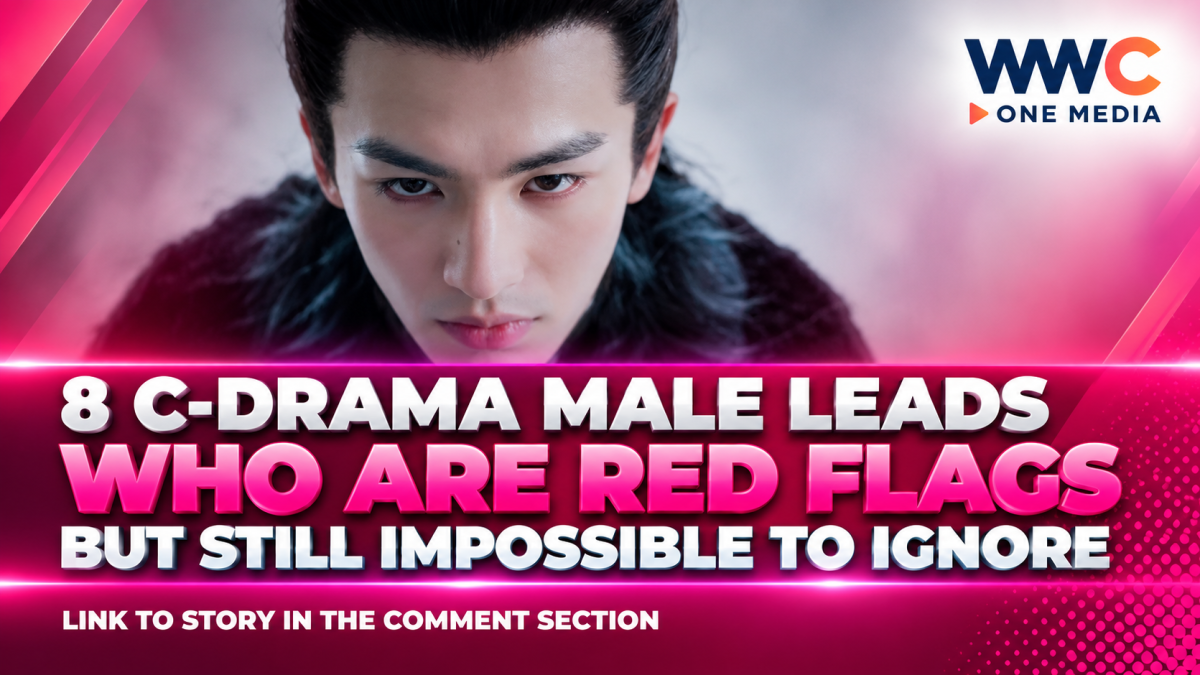
C-dramas have perfected a particular kind of romantic male lead: powerful, intimidating, emotionally guarded and often surrounded by enough questionable behavior to qualify as a walking red flag. Yet these characters remain irresistible to viewers because their dangerous traits are often paired with fierce loyalty, competence and unexpected tenderness toward the person they love.
The appeal of the “greenest red flag” archetype comes from contradiction. A character may be ruthless in political battles, feared by enemies or capable of manipulating entire courts, but become remarkably gentle and dependable in private. In historical and fantasy dramas, that contrast is often presented as a form of romantic fantasy rather than a model for a healthy real-world relationship.
Here are some C-drama leading men who embody that complicated formula.
- Xie Zheng — Pursuit of Jade
Played by Zhang Linghe, Xie Zheng is a disgraced nobleman living under a false identity while quietly planning his return to power. His calculated personality and mysterious past make him intimidating, but his relationship with the female lead reveals a much softer side.
The drama builds their romance around trust and reliability before open declarations of love. His ability to remain calm, observant and protective turns traits that make him dangerous in one setting into qualities that feel reassuring in another.
- Xie Wei — Story of Kunning Palace
Xie Wei, also played by Zhang Linghe, is far less reassuring. He is manipulative, possessive and morally complicated, making him one of the clearest examples of the C-drama red-flag fantasy.
His appeal comes from the character’s emotional intensity. In a world filled with political alliances and betrayal, his fixation on the heroine becomes a form of extreme devotion. The character is compelling precisely because the same qualities that make him dangerous also drive his determination to protect her.
- Ling Buyi — Love Like the Galaxy
Leo Wu’s Ling Buyi is a feared military general whose intimidating reputation follows him everywhere. He is ruthless when dealing with enemies and carries deep trauma connected to his past.
Yet beneath his controlled exterior is an intense emotional attachment to the heroine. His difficulty expressing himself verbally is balanced by actions that repeatedly demonstrate the depth of his feelings, creating the classic C-drama combination of emotional restraint and unwavering devotion.
- Tantai Jin — Till the End of the Moon
Luo Yunxi’s Tantai Jin may be one of the most extreme examples of the trope. Raised without affection and treated as disposable, he grows up with a deeply distorted understanding of relationships and emotions.
His vulnerability makes the character difficult to dismiss as simply evil. The drama presents his cruelty alongside isolation and emotional deprivation, turning his relationship with the heroine into a complicated struggle between love, destiny and his own destructive tendencies.
- The Ruthless Protector Archetype
One recurring version of the C-drama male lead is the man who appears frightening to everyone except the heroine. He may command armies, control political networks or possess extraordinary abilities, but his behavior changes dramatically when the woman he loves is threatened.
The appeal is largely built around selective softness: audiences see a character who is powerful enough to intimidate everyone else but chooses to be gentle with one person.
- The Emotionally Repressed Strategist
Another familiar type is the brilliant strategist who seems incapable of normal emotional communication. He rarely explains what he feels and may appear cold or calculating, but his affection is expressed through actions rather than words.
Historical C-dramas frequently turn this emotional restraint into romantic tension, using lingering glances, quiet acts of protection and silent sacrifices to communicate feelings that the character refuses to say aloud.
- The Morally Grey Power Player
C-dramas also frequently place their romantic leads inside worlds where morality is rarely straightforward. Palace politics, revenge plots, criminal organizations and supernatural conflicts create environments where manipulation and violence can become part of survival.
That setting allows morally grey characters to remain sympathetic even when their behavior would be deeply concerning outside fiction. Their intelligence, determination and loyalty become central parts of their romantic appeal.
- The “I Can Fix Him” Fantasy
At the extreme end of the trope is the male lead whose destructive behavior becomes part of his romantic storyline. Tantai Jin is a particularly striking example because his emotional development is tied closely to his traumatic upbringing and his struggle against his own darker destiny.
The popularity of these characters highlights one of the enduring formulas of C-dramas: audiences are often drawn not simply to perfect heroes, but to complicated men whose relationships reveal a softer side hidden beneath power, trauma and emotional distance.
On screen, the contrast can create compelling romance. Outside fiction, however, the qualities that make these characters fascinating—possessiveness, manipulation, violence or emotional repression—are not automatically signs of a healthy relationship.