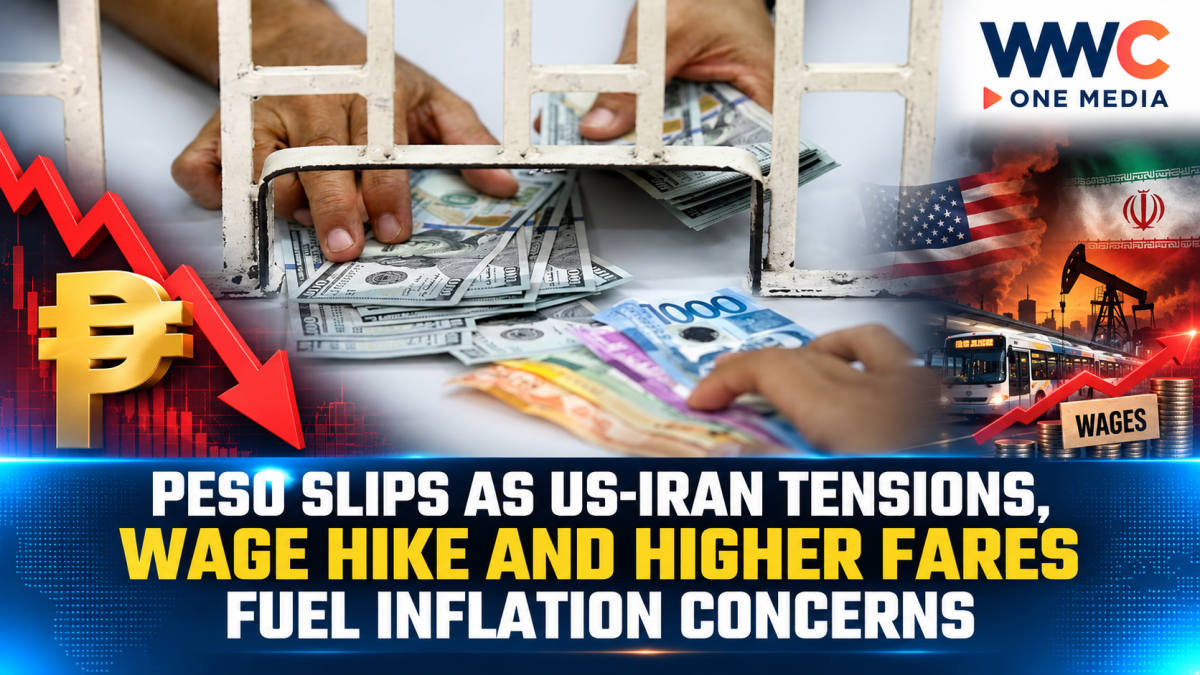
The Philippine peso weakened against the US dollar on Monday as renewed US-Iran tensions pushed global oil prices higher, while new wage and public transport fare increases added to concerns about domestic inflation.
The peso closed at P62.545 against the dollar on Sept. 28, down eight centavos from its P62.465 finish on Friday, according to data from the Bankers Association of the Philippines. The local currency opened at P62.45 and traded between P62.43 and P62.555 during the session.
Market activity was relatively subdued, with dollar transactions falling to about US$1.405 billion from US$1.826 billion in the previous session. A trader said the peso-dollar pair was mainly affected by higher global oil prices as tensions between Washington and Tehran remained elevated.
Oil prices have become a major source of pressure for the Philippine economy because the country relies heavily on imported fuel. Rising crude prices can increase the cost of transportation, electricity and other goods while also raising demand for US dollars to pay for imports.
Domestic inflation concerns are adding another layer of pressure. A P60 daily minimum wage increase for workers in Metro Manila took effect on Sept. 26, raising the minimum wage for non-agricultural workers from P695 to P755 per day. The new rate covers about 1.1 million minimum wage earners in the region, according to the government.
Higher public transport fares also took effect on Sept. 28. The minimum fare for traditional jeepneys increased to P14 from P13, while modern jeepney fares rose to P17 from P15. Bus, taxi and transport-network fares were also adjusted upward.
The fare increases came as transport groups continued to protest the impact of elevated fuel costs. Some groups launched a three-day transport strike in Metro Manila, calling for lower fuel costs and other measures to reduce the burden on drivers and commuters.
The combination of higher wages and transportation costs could feed into consumer prices as businesses adjust operating expenses. At the same time, the stronger purchasing power from higher wages could provide some support to household spending, making the overall inflation effect dependent on how businesses and consumers respond.
The peso’s latest decline also came despite expectations that domestic fuel prices would fall sharply on Sept. 29. The Department of Energy announced a P7.57-per-liter reduction in diesel, a P5.85 rollback for kerosene and a P0.24 reduction in gasoline prices after three consecutive weeks of increases.
That rollback provides some near-term relief, but international oil markets remain vulnerable to developments in the Middle East. Any prolonged disruption to crude supplies or major shipping routes could quickly reverse recent improvements in Philippine fuel prices and put renewed pressure on the peso.
For financial markets, the central issue is therefore the interaction between external and domestic pressures. A weaker peso can make imported commodities more expensive, while higher fuel, transport and labor costs can influence inflation expectations and the outlook for monetary policy.
The peso’s movement in the coming sessions will depend heavily on developments in global oil markets, US-Iran tensions and incoming Philippine economic data. At home, investors will also be watching whether the recent wage and fare adjustments translate into broader price pressures as the economy absorbs higher operating and transportation costs.