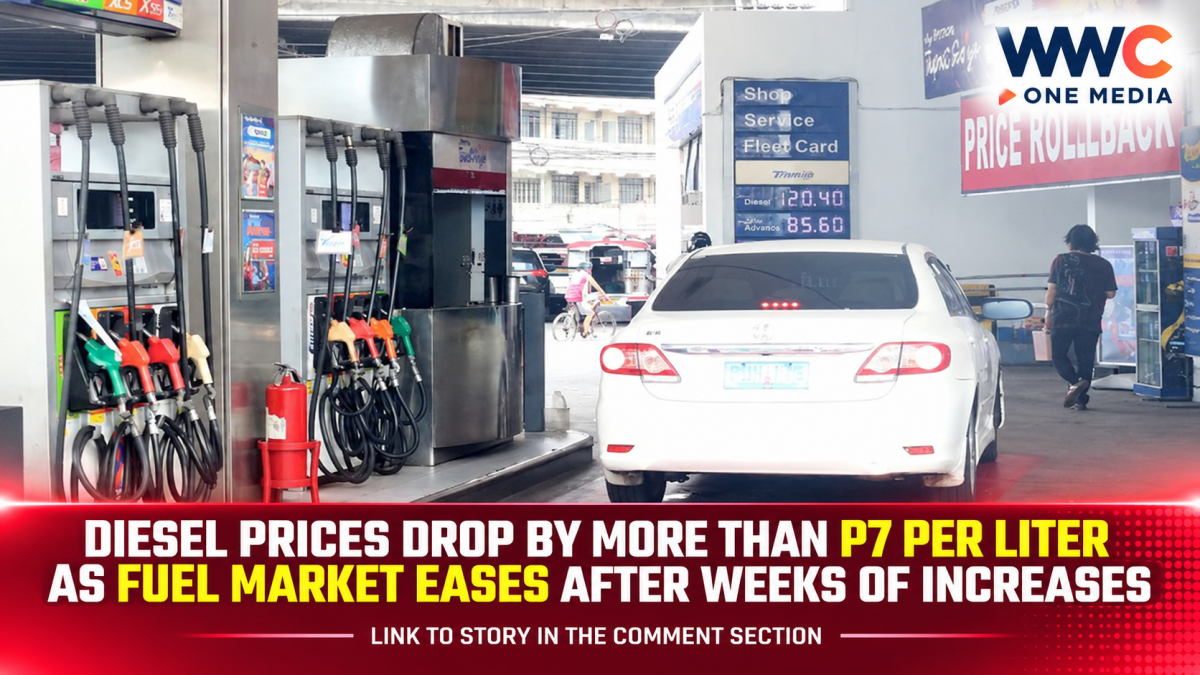
Motorists in the Philippines are set to receive significant relief at the pump this week, with diesel prices falling by more than P7 per liter as global oil prices eased and concerns over supply disruptions began to soften.
Oil companies announced that diesel prices will be reduced by as much as P7.60 per liter starting Tuesday, Sept. 29. Gasoline prices will also decline, although by a much smaller amount, while kerosene prices will fall by nearly P6 per liter.
The Department of Energy indicated a minimum diesel rollback of P7.57 per liter, while some major retailers announced a P7.60 reduction. Gasoline adjustments ranged from P0.24 to P0.30 per liter, while kerosene was reduced by P5.85 to P5.90 per liter.
The cuts follow three consecutive weeks of substantial fuel price increases. Last week alone, diesel prices rose by around P8.80 to P8.82 per liter, while gasoline increased by roughly P4.80 to P4.88 and kerosene by more than P6 per liter.
Despite the latest rollback, fuel prices remain substantially higher than at the start of the year. Cumulative adjustments have left diesel with a net year-to-date increase of more than P73 per liter, while gasoline and kerosene have also recorded large increases.
The latest decline reflects a change in international oil-market conditions. Global crude prices eased amid renewed diplomatic efforts surrounding the conflict involving the United States and Iran, while improving supply conditions from Saudi Arabia helped reduce some of the immediate pressure on global energy markets.
The price movement is particularly significant for the Philippine economy because diesel is widely used by public transportation, delivery fleets, commercial vehicles, agriculture and other businesses. Lower diesel costs can reduce operating expenses and, over time, ease some of the pressure on transportation and logistics costs.
However, the rollback does not eliminate the risks facing the domestic fuel market. Global oil prices remain highly sensitive to developments in the Middle East, particularly the possibility of renewed disruptions to crude production and shipping routes.
The government has also taken separate measures to cushion consumers from elevated energy costs. President Ferdinand Marcos Jr. ordered the suspension of excise tax collection on liquefied petroleum gas and kerosene amid high international crude prices and continuing geopolitical tensions.
For motorists, the immediate effect will be lower pump prices beginning Tuesday. For the wider economy, the bigger issue is whether international oil prices can remain lower long enough for the relief to translate into more manageable transportation, delivery and operating costs.
After several weeks of steep increases, the latest rollback offers a temporary reprieve — but the direction of fuel prices will continue to depend heavily on global oil supply, Middle East developments and the stability of international energy markets.