South Korea’s rapidly growing international student population is putting a new question at the center of higher education: What happens after students arrive?
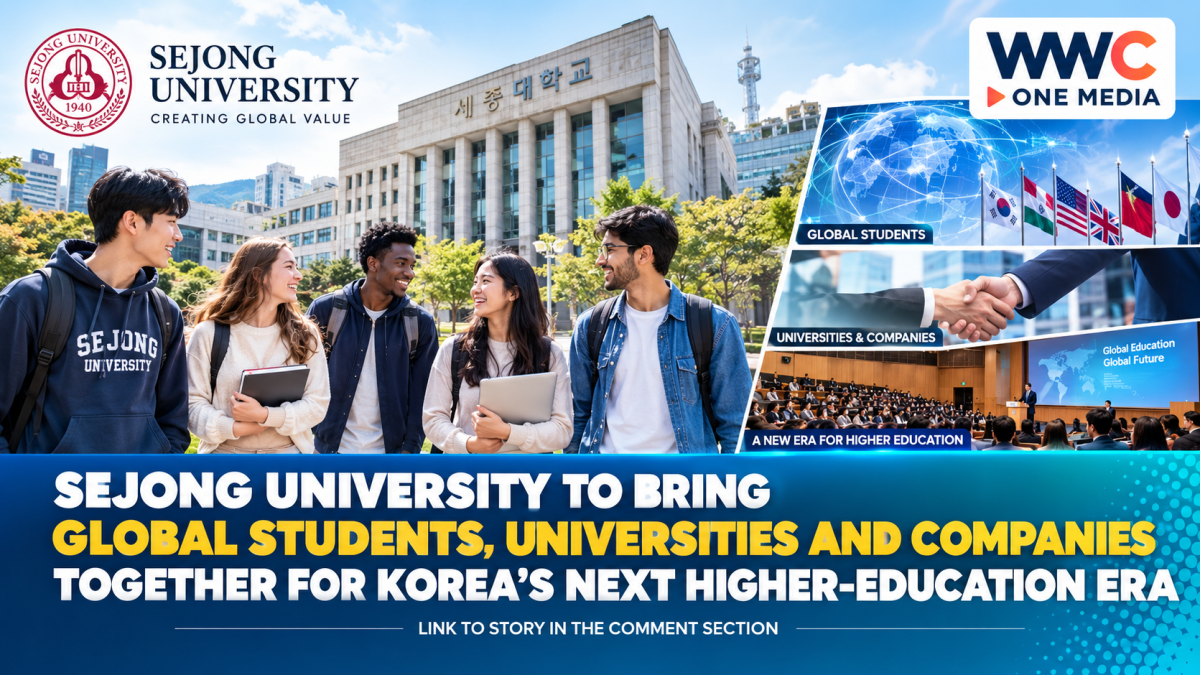
Sejong University will host the 8th International Student Future (ISF) Higher Education Forum at its Seoul campus on Oct. 1, bringing together universities, companies and education organizations to discuss how Korea can improve education, career development and support systems for international students.
The event comes at a significant moment for Korea’s international education strategy. According to figures released by the Ministry of Education, the country had 307,464 international students in 2026, surpassing the government’s target of 300,000 under its Study Korea 300K initiative a year ahead of schedule.
From Recruiting Students to Supporting Their Future
The forum reflects a broader shift in Korea’s approach to international education.
Rather than focusing only on attracting more students, organizers say the discussion will examine how universities can provide quality education, academic support and career pathways after admission.
The forum will operate under the theme “Quality Education for International Students and University Responsibility in the Age of AI.”
Its subtitle — “From Trusted Selection to Academic and Career Support” — points to some of the challenges facing universities as international enrollment expands.
Topics will include the use of artificial intelligence in admissions administration, academic credential verification, and academic and career support systems for international students.
A Career Fair Will Put Opportunities Directly in Front of Students
The Oct. 1 event will feature two connected programs: the Career Fair for international students and the International Higher Education Forum.
The career fair will run from 10 a.m. to 4 p.m., while the higher-education forum is scheduled from 2 p.m. to 5:40 p.m. at Sejong University’s Seoul campus.
Around 60 organizations are expected to participate, including about 20 universities in Korea and abroad, 20 companies, more than 20 startup-support organizations and foreign embassies.
International students will be able to participate in job interviews, receive guidance on entrepreneurship and explore graduate-study opportunities in Korea and overseas.
The format reflects an increasingly interconnected approach to international education — linking study, employment, entrepreneurship and settlement rather than treating university enrollment as the end goal.
Why Korea’s 300,000-Student Milestone Matters
Korea’s international student population has grown into a significant part of the country’s higher-education landscape.
The government originally set its 300,000-student target for 2027, but the latest figure means that threshold has already been passed.
That growth also creates new responsibilities for universities.
As international enrollment increases, institutions must address questions surrounding educational quality, academic credentials, language and career support, while helping students navigate opportunities beyond graduation.
The March edition of the ISF event drew more than 600 international students from 43 countries, according to Sejong University.
AI Is Changing the Higher-Education Conversation
Artificial intelligence is another major focus of the upcoming forum.
Universities are increasingly exploring AI for administrative processes, including admissions, while also confronting questions about how academic credentials can be verified and how students can receive appropriate academic and career assistance.
The Sejong forum will feature university case studies involving AI in admissions administration, followed by a panel discussion examining credential verification and support for international students.
That makes the event more than a conventional international-student career fair. It places the rapidly changing relationship between AI, universities and global talent at the center of the discussion.
Seoul Campus Becomes a Meeting Point for Global Talent
The event is being organized in collaboration with global study-abroad platform Stuvisor and international student employment and startup platform Careertus.
The combination of universities, employers, startup organizations and international students reflects the broader ecosystem Korea is trying to build around global education and talent.
With international enrollment already above 300,000, the next phase of Korea’s strategy is increasingly about what happens after students enter the country and begin their studies.
For Sejong University, the Oct. 1 forum provides a platform to examine that question with the institutions and organizations directly involved.
And with AI rapidly changing how universities recruit, educate and connect students with careers, Korea’s international-student boom may be entering a very different chapter.
WWC ONE MEDIA G,A