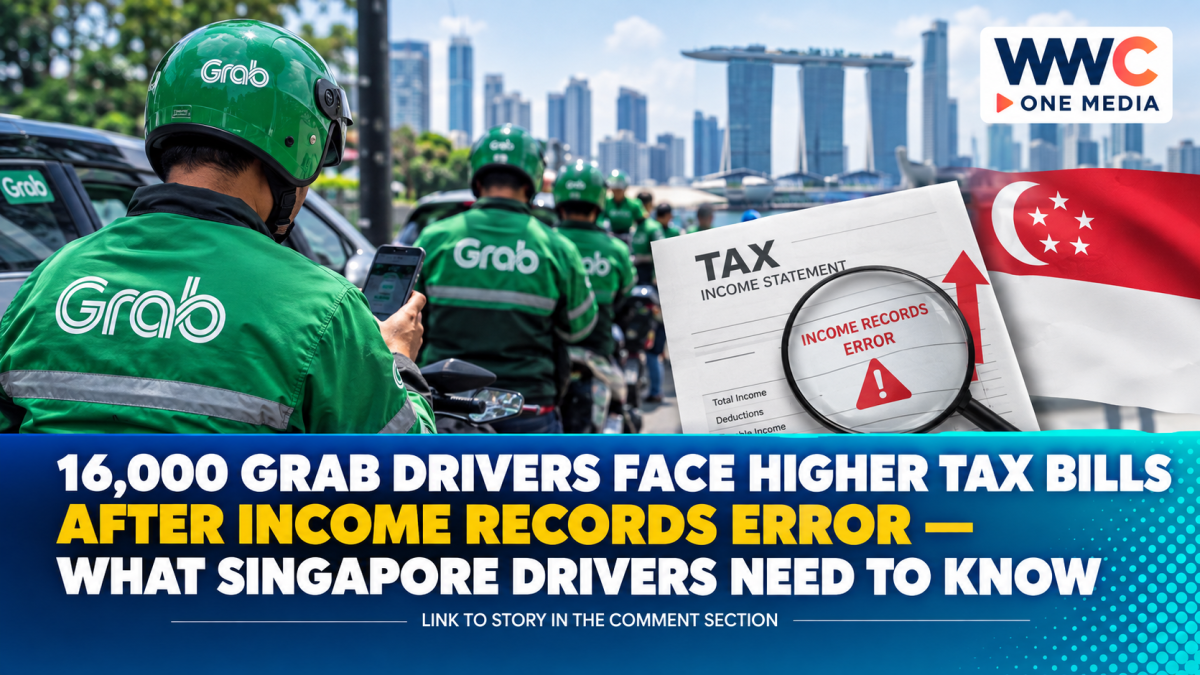
About 16,000 Grab private-hire car drivers in Singapore are set to receive higher tax bills after incomplete income information was submitted to the Inland Revenue Authority of Singapore (IRAS).
The issue affected around 28,000 GrabCar drivers who had opted into IRAS’ pre-filing income initiative for Year of Assessment 2026. IRAS said their income had initially been understated in the tax records because some earnings were missing.
The majority of affected drivers are expected to see an additional tax bill of less than S$100, although the final amount depends on factors including each driver’s eligible tax reliefs and income-tax bracket.
What Went Wrong With the Grab Tax Records?
According to Grab, a system error caused certain payments to be left out of the income information submitted for affected drivers.
The missing amounts included incentives, tips and miscellaneous payments, resulting in some drivers having lower income figures recorded for their tax assessments than they should have had.
Grab informed IRAS about the problem at the end of July.
IRAS has since received corrected income records from the ride-hailing company and is now revising the affected Notices of Assessment (NOAs).
Drivers Do Not Need to Act Immediately
For affected taxpayers, IRAS said there is no need to take action before receiving a revised NOA.
Most affected drivers were expected to receive their revised assessments by September.
Drivers who pay their taxes through GIRO instalment plans will have their payment arrangements adjusted automatically.
Those who do not use GIRO should follow the payment deadline stated on their revised NOA.
Grab Drivers Should Check Their Revised Assessment
Grab has advised affected drivers to compare the income figure shown on their revised NOA with their 2025 annual partner statement.
The statement should account for the relevant earnings and Grab service fee components, allowing drivers to check whether their reported income has been correctly reflected.
The incident highlights the importance of checking automatically pre-filled tax information even when taxpayers have opted into a system designed to make filing easier.
How Singapore’s Grab Pre-Filing System Works
IRAS introduced the pre-filing initiative in 2018, allowing eligible GrabCar drivers to have their income information automatically populated in their electronic tax returns.
The system is intended to reduce the amount of information drivers need to enter manually during tax filing.
However, the latest incident shows how an error in the underlying income records can lead to adjustments later.
In this case, the initial records understated the income of affected drivers, meaning revised assessments are necessary to reflect the corrected information.
Most Drivers Face Relatively Small Adjustments
While 16,000 drivers are expected to receive higher tax bills, IRAS stressed that the majority will owe less than S$100 more.
The final amount will differ from driver to driver because Singapore’s income-tax calculations take into account individual circumstances, including applicable reliefs and tax brackets.
For drivers affected by the error, the immediate priority is therefore to review the revised assessment once it arrives and ensure that the corrected income figure matches their records.
What began as a technical reporting error has now become a tax adjustment affecting thousands of Singapore’s private-hire drivers — and the revised bills are putting renewed attention on how automated income reporting works.
WWC ONE MEDIA G,A