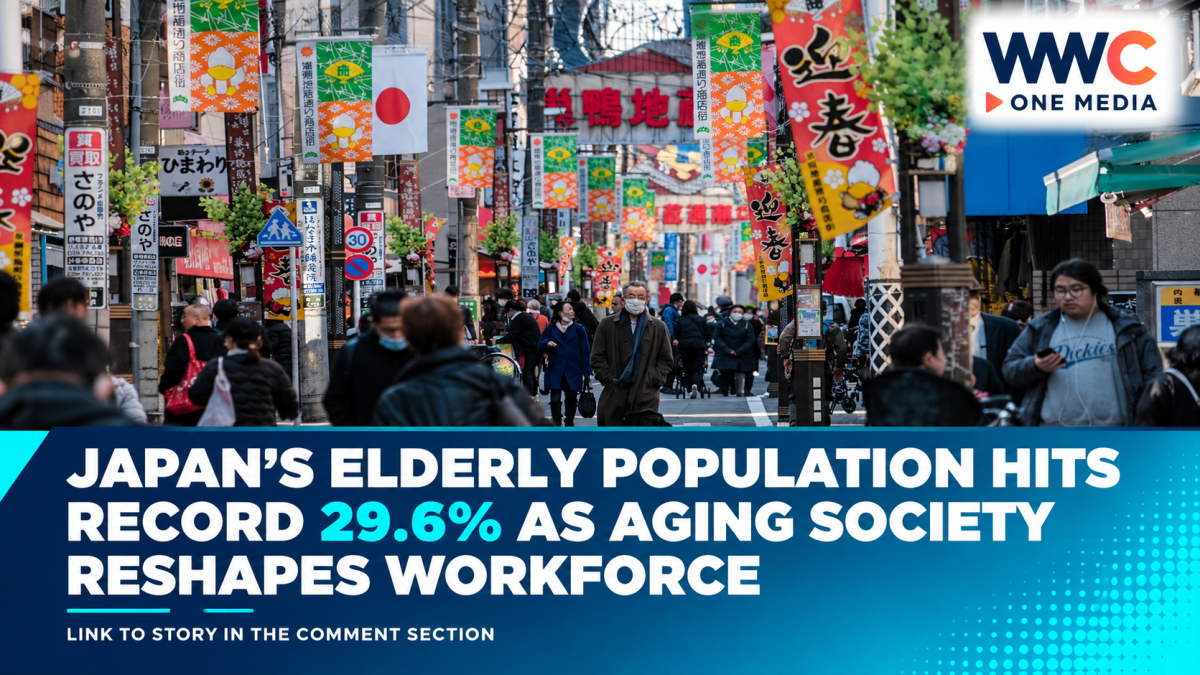
Japan’s population is aging at a record pace, with people aged 65 and older now accounting for 29.6% of the country’s total population, according to government figures released ahead of Respect for the Aged Day. The share is the highest ever recorded in Japan and remains the highest among countries with populations of more than 40 million.
The number of people aged 65 and older reached an estimated 36.24 million as of September 15, an increase of 20,000 from a year earlier. Women accounted for 20.54 million of the total, compared with 15.71 million men.
Japan’s aging population is particularly pronounced among those aged 75 and older. This group represents 17.7% of the country’s population, the highest proportion among nine major countries. The figure highlights how longer life expectancy and decades of low birth rates are continuing to transform Japan’s demographic structure.
The trend is also changing Japan’s labor market. The number of employed people aged 65 and older reached a record 9.43 million in 2025, marking the 22nd consecutive year of growth. Older workers accounted for 13.8% of everyone employed aged 15 and above, another record high.
Among employed people aged 65 and older who were not company executives, 76.1% were working in non-regular positions, including part-time and contract employment. Older workers were particularly numerous in industries such as wholesale and retail, healthcare and social welfare.
The demographic shift is expected to continue for decades. Japan’s National Institute of Population and Social Security Research projects that the proportion of people aged 65 and older could reach 34.8% by 2040, as the large generation born during the second baby boom of 1971 to 1974 moves further into old age.
Japan’s position stands out internationally. Among 39 countries with populations of at least 40 million, its 29.6% elderly share was followed by Italy at 25.6% and Germany at 24.2%.
The record figures come as Japan faces a combination of demographic pressures, including a shrinking working-age population and growing demand for healthcare, social services and support for older residents. At the same time, the rising number of older workers shows how people over 65 are becoming an increasingly important part of the country’s workforce.
Japan’s latest population figures therefore point to more than a milestone in longevity. They underscore a long-term transformation that is reshaping employment, social services and the way the country prepares for an increasingly elderly society.