The Imperial Japanese Army secretly studied the possibility of imposing martial law in Tokyo in January 1945, as Japan faced growing fears that large-scale US air raids could devastate the capital and disrupt public order.
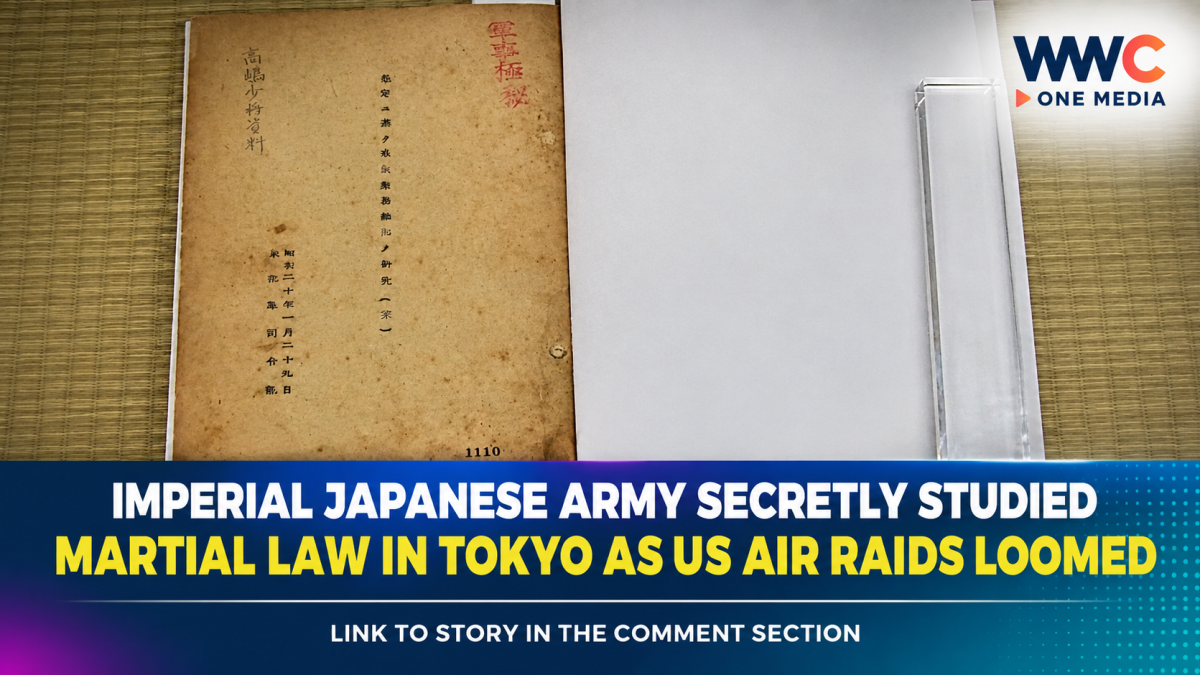
A newly reviewed document titled “Study of Details of Martial Law Operations Based on Assumptions (Draft)” was prepared by the Eastern District Army, which was responsible for defending eastern Japan, including Tokyo. The document was marked “Military Top Secret” and is held by the Defense Ministry’s National Institute for Defense Studies.
The study outlined scenarios in which repeated air raids could overwhelm civilian authorities. Under martial law, the military would have taken on administrative authority and other powers in an effort to maintain order and manage the aftermath of attacks.
The army’s projections, however, dramatically underestimated the destruction that would eventually occur. One scenario involving about 200 B-29 bombers estimated 2,500 deaths, 25,000 injuries and 150,000 people affected. A second scenario involving attacks around the Tokyo-Yokohama area projected another 11,250 deaths and 51,250 injuries in Tokyo.
The document therefore estimated more than 13,700 deaths from the two hypothetical raids. The actual Great Tokyo Air Raid on March 10, 1945, killed around 100,000 people, mostly in densely populated central areas of the capital, vastly exceeding the military’s projections.
The study also anticipated severe disruption to everyday life. Government offices, police stations and schools could be destroyed, while railways, communications, electricity, gas and water supplies could be disrupted.
Another section considered the possibility that prolonged attacks would lead to growing public despair and criticism of the military. If civilian recovery efforts failed and public order deteriorated, the Eastern District Army could conclude that martial law had become unavoidable and begin procedures for its implementation.
The document also described how such a decision would ultimately be reported to Emperor Hirohito following an emergency government meeting, reflecting the constitutional framework of wartime Japan.
The historical document provides a glimpse into how Japan’s military leadership was preparing for the possibility of catastrophic attacks in the final months of World War II. It also shows how significantly the military underestimated the scale of destruction that the March 10 firebombing would bring to Tokyo.