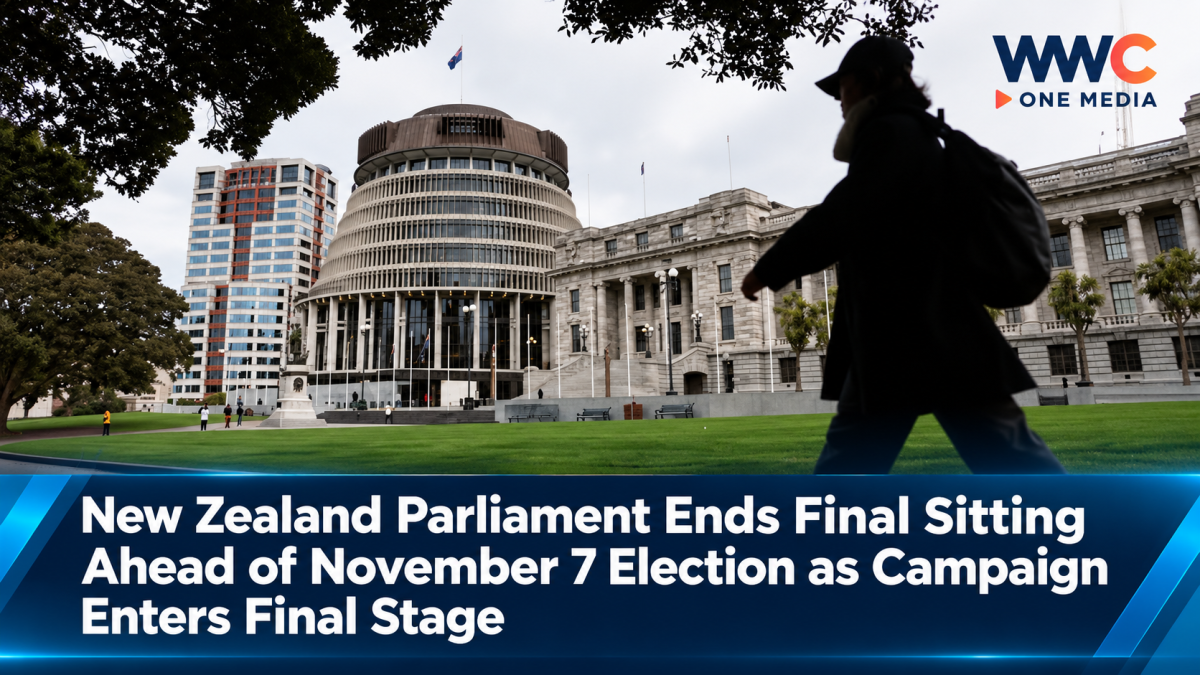
New Zealand’s Parliament has completed its final sitting before the country heads to the polls on Nov. 7, formally closing the legislative phase of the current three-year parliamentary term and moving the country into the final stretch before the general election.
The House concluded its last sitting on Sept. 23, with Prime Minister Christopher Luxon and opposition Labour Party leader Chris Hipkins using the closing debate to present competing assessments of the government’s record and the issues facing voters. Reuters reported that the campaign is expected to focus heavily on the cost of living, economic management and public services.
Parliament Has Finished Sitting — But Dissolution Comes Later
Although Parliament has now risen for the final time before the election, the 54th Parliament will not be formally dissolved until Oct. 1.
New Zealand Parliament’s official election timetable says the final adjournment is followed by several days before dissolution, allowing parliamentary processes such as Royal assent for legislation and the completion of select-committee reports.
On Oct. 1, a proclamation will be read on the steps of Parliament, formally ending the 54th Parliament and initiating the formal process leading to the election.
The election itself will take place on Saturday, Nov. 7, with polling stations scheduled to open from 9 a.m. to 7 p.m.
Luxon Highlights Government Record
During his final parliamentary speech, Prime Minister Christopher Luxon highlighted what he described as achievements of his centre-right coalition government, including economic growth, record exports and lower government debt.
Luxon also used the speech to appeal to voters ahead of the election, as his National Party seeks another term in government alongside its coalition partners.
The election will determine the composition of the next New Zealand Parliament, with the governing parties seeking to retain office and opposition parties campaigning for enough support to form the next government.
Hipkins Challenges Government’s Record
Labour leader Chris Hipkins offered a sharply different assessment.
Hipkins argued that the government had not delivered on its promises, particularly regarding household costs, and criticized its priorities and approach to public services. His comments reflected the central political divide that is expected to shape the campaign in the weeks ahead.
The competing messages underline the issues likely to dominate the election campaign: household affordability, economic performance, government services and the direction of the country over the next parliamentary term.
What Happens Between Now and Election Day?
The transition from Parliament to the election will happen in several stages.
After the Oct. 1 dissolution, the Governor-General will issue the formal writ for the election on Oct. 4. Candidate nominations are due on Oct. 8, overseas voting begins Oct. 21, and advance voting starts Oct. 26.
The regulated election period will continue until midnight on Nov. 6, the day before polling. Election Day follows on Nov. 7, while official results are scheduled to be declared on Nov. 27 after special votes have been counted.
Economy and Cost of Living Remain Key Issues
Economic conditions could play an important role in the campaign.
The Reserve Bank of New Zealand has recently highlighted continuing risks to the country’s economic recovery, including inflation pressures linked to higher global oil prices. Governor Anna Breman said persistent increases in oil prices could push inflation above previous forecasts.
That economic backdrop gives both the government and opposition competing arguments to present to voters as the election approaches.
New Zealand Enters the Final Election Countdown
With the final parliamentary sitting now complete, New Zealand has moved into a transition period between the end of the current legislative term and the formal election campaign.
The next major constitutional milestone will come on Oct. 1, when Parliament is dissolved. From there, candidates and parties will enter the final weeks of campaigning before New Zealanders vote on Nov. 7.
The closing parliamentary debate has ended, but the political contest is now moving outside the chamber — and toward the voters who will determine the makeup of the next Parliament.
WWC ONE MEDIA G,A