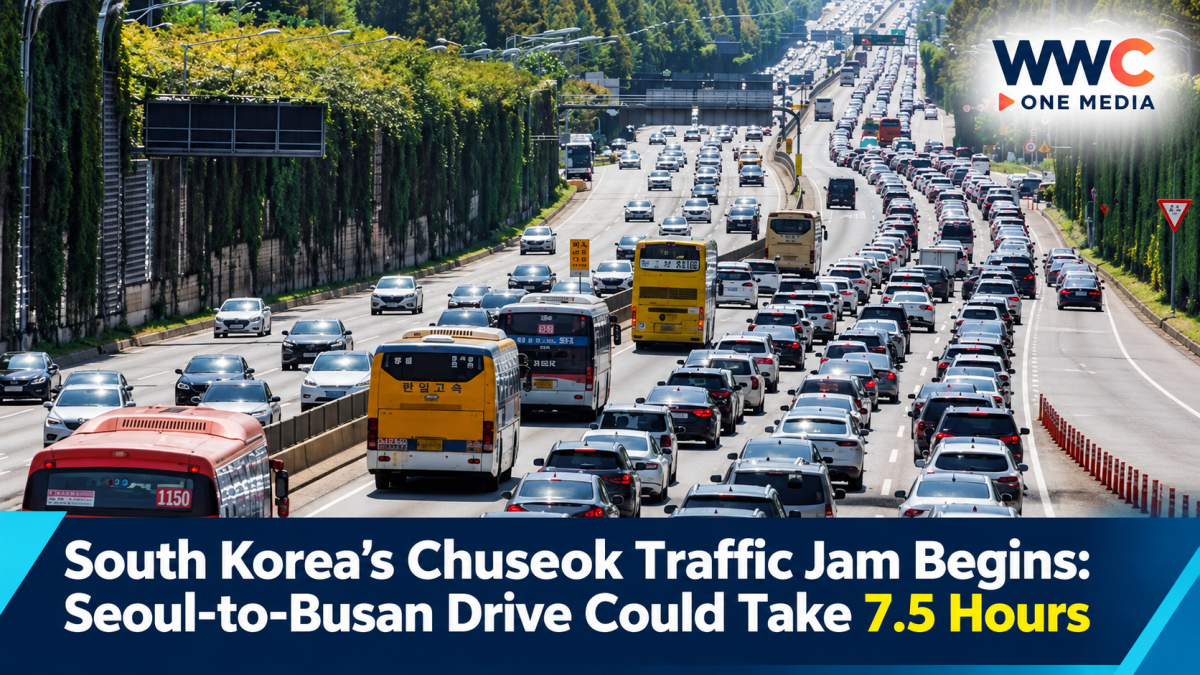
South Korea’s annual Chuseok travel rush has already begun, with major expressways experiencing heavy congestion on Wednesday, Sept. 23, as millions of people head to their hometowns and travel for the four-day holiday.
The Korea Expressway Corp. estimated that 6.13 million vehicles would be on South Korean roads on Wednesday, making traffic significantly heavier than on a typical weekday. About 510,000 vehicles were expected to travel from the Seoul metropolitan area toward other regions, while around 450,000 were projected to move in the opposite direction.
Seoul-to-Busan Journey Stretches to 7 Hours 30 Minutes
The congestion was already affecting major routes Wednesday afternoon.
According to the Korea Expressway Corp., the approximately 420-kilometer journey from Seoul to Busan could take up to 7 hours and 30 minutes. Travel from Seoul to Gwangju was estimated at 6 hours and 50 minutes, while motorists heading to Gangneung could face journeys of around 3 hours and 20 minutes.
Yonhap reported that congestion on roads heading away from Seoul was expected to continue through Thursday, as more people begin their holiday journeys.
Shorter Holiday Means More Concentrated Traffic
The traffic buildup comes as South Korea enters a relatively short Chuseok holiday period running from Sept. 24 through Sept. 27.
The Ministry of Land, Infrastructure and Transport designated Sept. 23–27 as a special transportation-management period. Government estimates put total holiday travel at approximately 30.93 million people, down 3.5% from the previous year, but the shorter holiday is expected to concentrate journeys into fewer days.
Average daily expressway traffic is forecast at approximately 6.05 million vehicles, an increase of 11.8% from last year’s 5.41 million. Private vehicles are expected to account for 88.4% of travel.
When Will Chuseok Traffic Be Worst?
Government forecasts indicate that the main outbound rush is expected on the morning of Sept. 24, while return traffic is projected to be heaviest on the afternoon of Sept. 25, Chuseok Day.
For the outbound journey, the Seoul-Busan trip could take as long as 10 hours and 30 minutes, while Seoul-Mokpo could reach approximately 10 hours and 45 minutes during the peak period. Return journeys could take about nine hours from Busan to Seoul and 7 hours 40 minutes from Mokpo to Seoul.
Separate traffic analysis from TMAP Mobility and SK Telecom also indicated that congestion patterns would vary by destination, with Seoul-Busan traffic expected to be particularly heavy around Chuseok Day.
Government Activates Holiday Traffic Measures
Authorities are preparing additional measures to keep traffic moving during the holiday.
The government has identified 299 congestion-prone sections covering about 2,312 kilometers of expressways and national highways for intensive management. Shoulder lanes will also be operated on 64 expressway sections covering about 374 kilometers.
Public transportation capacity is also being expanded. Train services are set to increase by 11.8%, while bus capacity will rise by 11.1%. The government is also increasing airport and transportation-facility preparations as passenger numbers rise.
Another measure will provide free expressway tolls from Sept. 24 through Sept. 27, while Korea Expressway Corp.-managed highway service stations are set to reduce fuel prices by 100 won per liter during the holiday period.
The Chuseok Exodus Is Only Beginning
Wednesday’s traffic provides an early indication of how concentrated this year’s holiday travel could become. While the overall number of travelers is expected to decline slightly from last year, the shorter holiday period is putting more journeys into a narrower window.
For families traveling from Seoul to the country’s major cities, the biggest delays are expected as the Chuseok homecoming rush intensifies on Sept. 24, followed by another major wave of traffic as travelers return to the capital after the holiday.
With millions of vehicles expected on the roads, South Korea’s Chuseok holiday has officially entered its busiest travel phase — and the longest journeys may still be ahead.