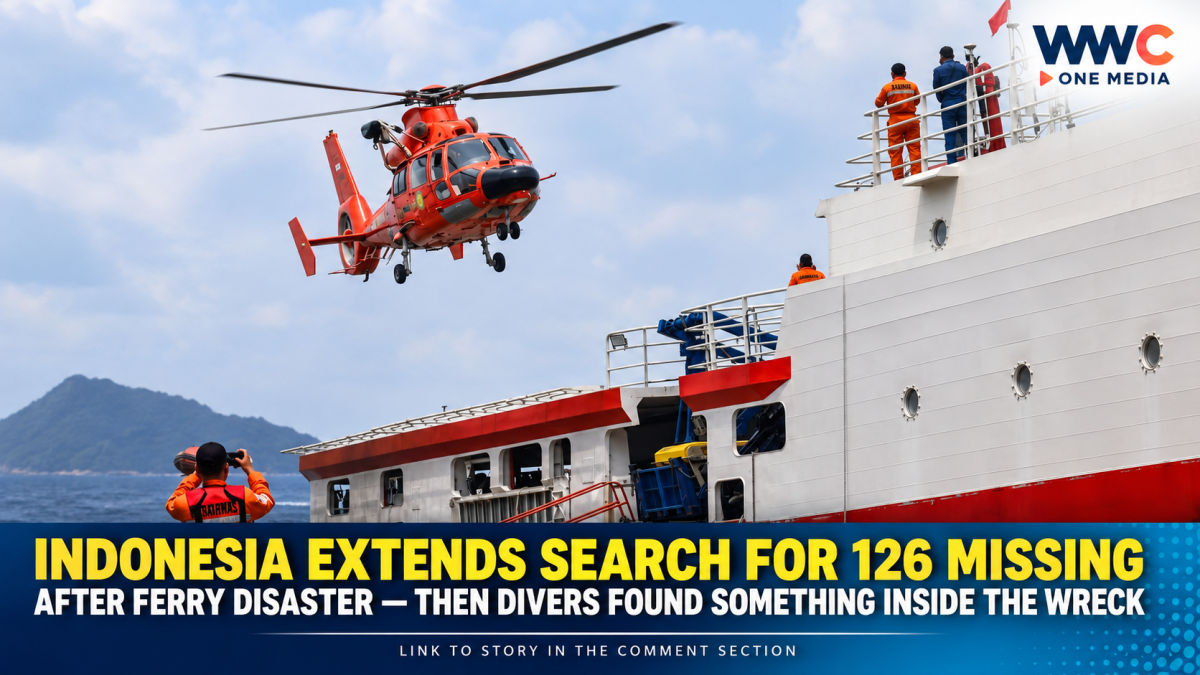
BANJARMASIN, Indonesia — Indonesia has extended a massive search-and-rescue operation for 126 people still missing after the Virgo Transport 8 ferry capsized and sank in the Java Sea, more than a week after the disaster left families waiting for answers.
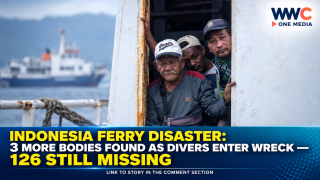
The latest figures from Indonesia’s National Search and Rescue Agency, Basarnas, show that 108 people have been rescued and nine bodies recovered, leaving 126 people unaccounted for from the ferry’s manifest of 243 people.
The operation has entered a critical phase, with rescuers searching both the waters around the wreck and the vessel itself.
Search Area Expanded as Rescue Teams Remain on Standby
On Saturday, Sept. 19, Basarnas said maritime teams were operating across four search sectors covering roughly 6,200 square nautical miles.
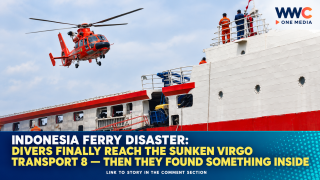
A helicopter was also placed on standby to evacuate any victims found during the continuing operation. Rescuers reported finding another empty liferaft, bringing the number of liferafts located since the accident to about nine. Six had washed ashore in Central Kalimantan, while three were found near the wreck.
The continuing deployment underscores the scale of the search, which has been complicated by difficult sea conditions and the location of the sunken ferry.
Divers Recover Three More Bodies From the Wreck
The latest major breakthrough came on Friday, when Indonesian divers entered the overturned vessel and recovered three bodies — two men and one woman.
The recovery increased the confirmed death toll from six to nine. The operation was subsequently complicated by strong underwater currents, which forced divers to suspend portions of the search.
Reuters reported that rescuers have faced strong currents, poor visibility, high waves and the difficult configuration of the overturned vessel. Around 60 divers have been involved in the wider operation, while more than 1,100 personnel have been committed to the rescue effort.
Why the Wreck Is So Difficult to Search
The Virgo Transport 8 is lying underwater after initially capsizing during its voyage from Surabaya in East Java to Banjarmasin in South Kalimantan.
The ship’s position and condition have made direct access particularly dangerous for divers.
Indonesian authorities had been preparing a salvage operation to right the overturned vessel, allowing rescue teams to search more thoroughly inside the ship.
The operation is not simply a matter of reaching the wreck. Strong currents can make underwater entry hazardous, while the ferry’s structure can restrict access to compartments where people could potentially be trapped. Reuters reported that rescuers were also concerned about the risks associated with entering enclosed sections of the vessel.
Ferry Was Carrying 243 People
The Virgo Transport 8 departed Surabaya on Sept. 12 on a roughly 20-hour voyage to Banjarmasin.
According to Indonesian authorities, the manifest listed:
- 243 people aboard
- 213 passengers
- 30 crew members
- 108 survivors rescued
- 9 confirmed dead
- 126 still missing
The ferry was also carrying 89 vehicles. The vessel was built in Japan in 1987 and had previously operated there before being sold to its Indonesian operator.
Bad Weather Preceded the Disaster
The ferry encountered severe weather in the Java Sea before communications were lost.
The captain reportedly issued a distress call after the vessel began listing in rough seas, with waves reaching around 3 metres.
A crew member later told Indonesian media that the vessel appeared to capsize extremely quickly, leaving passengers with little time to react. He said he woke to find the ship already listing and jumped into the sea wearing a life jacket.
Five crew members reportedly survived by clinging to an empty LPG cylinder for approximately nine hours before being rescued, according to ANTARA.
Investigation Also Turns to the Ferry’s History
While the immediate priority remains finding the missing, Indonesian authorities have also begun examining questions surrounding the vessel itself.
The Transportation Ministry said it would investigate the circumstances surrounding the ferry’s entry into Indonesia after concerns were raised about its age.
ANTARA reported that the ship was about 38 to 39 years old when it entered Indonesian service, while Indonesian regulations governing certain imported used goods include age limits for ships. Officials stressed that the matter required further investigation rather than drawing conclusions before the examination was completed.
Transportation Minister Dudy Purwagandhi has also said the ferry was operating at less than half its maximum passenger capacity, pushing back against early speculation that overloading contributed to the accident.
Families Still Waiting for Answers
For families gathered in Banjarmasin, the continuing operation offers little certainty.
The search has now moved beyond the initial surface rescue effort toward a technically difficult underwater recovery operation.
Authorities are continuing to deploy ships, aircraft and specialist divers while maintaining a broad search area around the accident site. Basarnas has also kept a helicopter ready to evacuate victims should additional survivors or bodies be located.
The tragedy has once again highlighted the risks surrounding maritime transport in Indonesia, an archipelago of more than 17,000 islands where ferries and other vessels remain an essential part of everyday transportation.
For now, however, the focus remains firmly on the 126 people who have yet to be accounted for.
And beneath the Java Sea, rescuers are still working to determine what the overturned Virgo Transport 8 may contain.