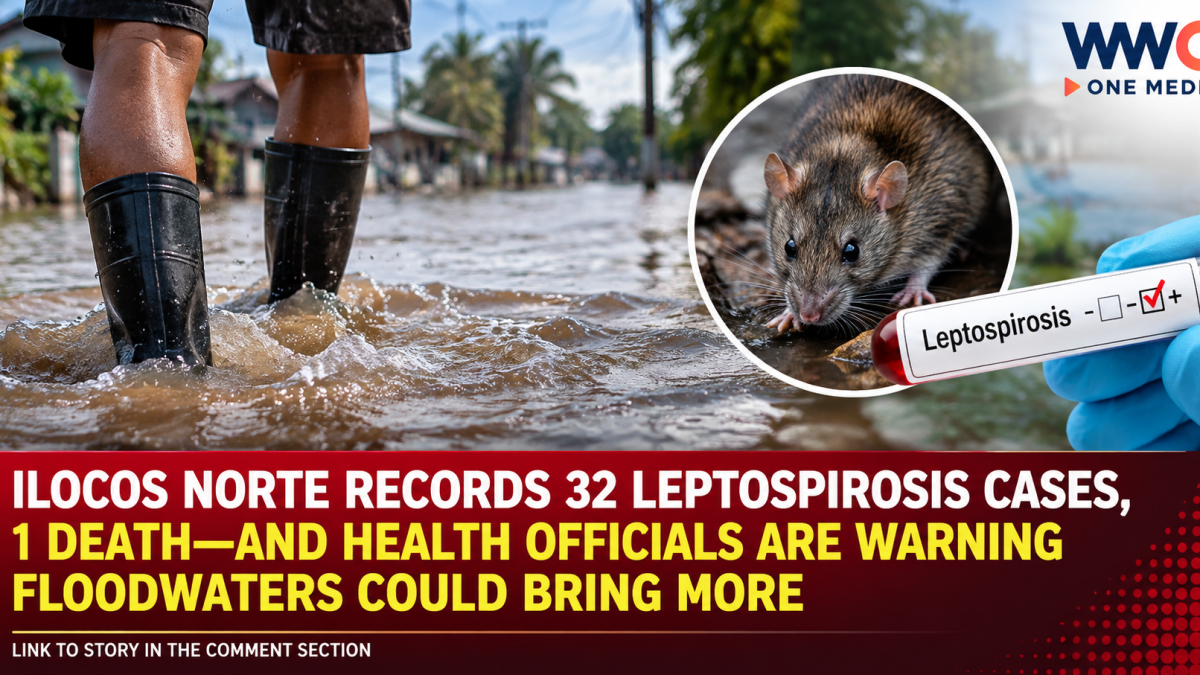
LAOAG CITY, Ilocos Norte — Ilocos Norte has recorded 32 leptospirosis cases and one confirmed death as of September 16, 2026, prompting provincial health authorities to intensify warnings against exposure to potentially contaminated floodwaters amid continued rains.
The latest figure represents a notable increase from the 12 cases recorded in Ilocos Norte from January 1 to August 8, according to earlier data from the Department of Health (DOH) Ilocos Region. At that time, the entire Ilocos Region had logged 85 cases and six deaths.
Dr. Rickson Balalio, chief of the Ilocos Norte Provincial Health Office, confirmed the province’s latest tally and warned residents not to underestimate the disease. The province’s first confirmed death from the current tally has further heightened concern among health authorities.
Why floodwaters are a concern
Leptospirosis is a bacterial infection caused by Leptospira. People can become infected when they come into contact with water or soil contaminated by the urine of infected animals, particularly rats. The bacteria can enter through cuts, wounds and other openings in the skin, while exposure involving the eyes, nose or mouth can also pose a risk.
The DOH Ilocos Region has repeatedly advised residents to avoid unnecessary wading, swimming or walking through floodwaters.
For people who cannot avoid flooded areas, health officials recommend using protective equipment such as waterproof boots when possible and washing exposed areas thoroughly with clean water and soap afterward.
Symptoms can appear days after exposure
Health authorities are also reminding residents that symptoms may not appear immediately.
Possible warning signs include:
- Fever
- Headache
- Muscle or calf pain
- Chills
- Vomiting
- Abdominal pain
- Red eyes
- Yellowing of the skin or eyes
The DOH Ilocos Region says symptoms can develop days or even weeks after exposure, meaning people who recently came into contact with floodwater should continue monitoring themselves.
Fast lane established at Batac hospital
A dengue and leptospirosis fast lane has been established at the Mariano Marcos Memorial Hospital and Medical Center in Batac City to facilitate the assessment and treatment of suspected cases.
The development comes as health authorities across the country monitor a broader rise in leptospirosis following widespread flooding and heavy rains.
The DOH reported 6,253 leptospirosis cases nationwide as of August 29, with 378 deaths recorded from January 4 to August 29. The agency said cases were expected to increase following recent flooding.
By September 5, The Philippine Star reported that the nationwide total had reached 8,317 cases and 457 deaths, based on DOH data. The figures cover a later reporting period and therefore should not be directly compared with the earlier August 29 tally without accounting for the difference in dates.
DOH warns: Don’t self-medicate
One important point in the health advisories is that people exposed to floodwater should not automatically take doxycycline on their own.
The DOH Ilocos Region specifically advises exposed residents to seek assessment at a health center because the need for post-exposure prophylaxis depends on the type and level of exposure. Doxycycline is a prescription medicine.
The DOH has also emphasized that avoiding high-risk floodwater exposure remains a key preventive measure.
What residents should remember
With rains and flooding continuing to create potential exposure risks, health authorities are urging Ilocos Norte residents to:
Avoid floodwater whenever possible.
Cover wounds and cuts.
Wear waterproof protective gear if exposure cannot be avoided.
Wash exposed skin with clean water and soap.
Seek medical advice after significant floodwater exposure.
Watch for symptoms even after leaving the flooded area.
The latest 32-case, one-death tally in Ilocos Norte underscores why health officials are urging residents to take precautions rather than wait for symptoms to become severe.