
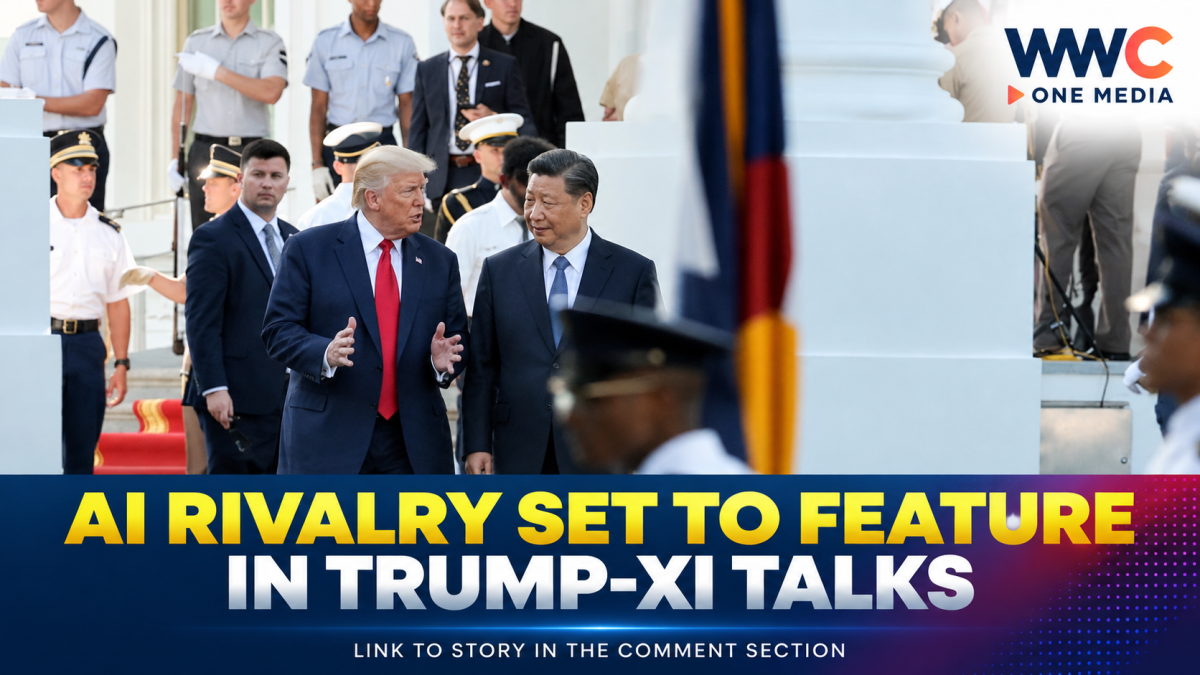
The growing competition between the United States and China over artificial intelligence is expected to be a major issue when US President Donald Trump and Chinese President Xi Jinping meet in Washington next week.
Both countries view advances in AI as important to their economic and military capabilities, but tensions remain over access to advanced computer chips, allegations of technology copying and how the rapidly developing industry should be regulated.
US Treasury Secretary Scott Bessent is scheduled to meet Chinese Vice-Premier He Lifeng ahead of the leaders’ summit, with AI-related issues expected to form part of their discussions.
One area of concern is the potential use of AI in military systems. US and Chinese security experts have urged both governments to establish safeguards around nuclear command systems and significant cyber operations, including maintaining human control over critical decisions and creating communication channels for incidents involving autonomous AI.
Technology sharing and alleged copying have also become contentious. US officials have accused several Chinese companies of using a technique known as distillation to replicate American AI products. The process involves training a smaller model using the outputs of a larger model. Chinese officials have rejected the allegations as baseless.
Access to advanced chips remains another major point of disagreement. Since 2022, the US has imposed restrictions on exports of advanced chips and chipmaking equipment to China in an effort to limit access to technologies considered important to AI development.
Washington has also been examining ways to prevent Chinese companies from accessing advanced US chips through overseas data centres. At the same time, the Trump administration has permitted limited sales of Nvidia’s H200 chips to China, a move that has drawn criticism from some US officials and policymakers concerned about strengthening China’s AI capabilities.
The two countries also take different approaches to AI regulation. Trump has pushed back against calls for additional federal AI rules, while China has introduced regulations covering AI algorithms and training data, including requirements for clearly identifying AI-generated content.
The technological gap between the two countries is also narrowing. US officials have previously estimated that Chinese AI models were several months behind their American counterparts, but some industry figures now describe the two countries as increasingly competitive.
Hugging Face chief executive Clement Delangue said in August that China was already ahead in open-weight AI models and could potentially close the gap in frontier AI models as well.
With AI increasingly tied to economic competitiveness, national security and technological development, the issue is expected to remain an important part of the broader US-China relationship as Trump and Xi prepare for their meeting.


Leave a Reply