
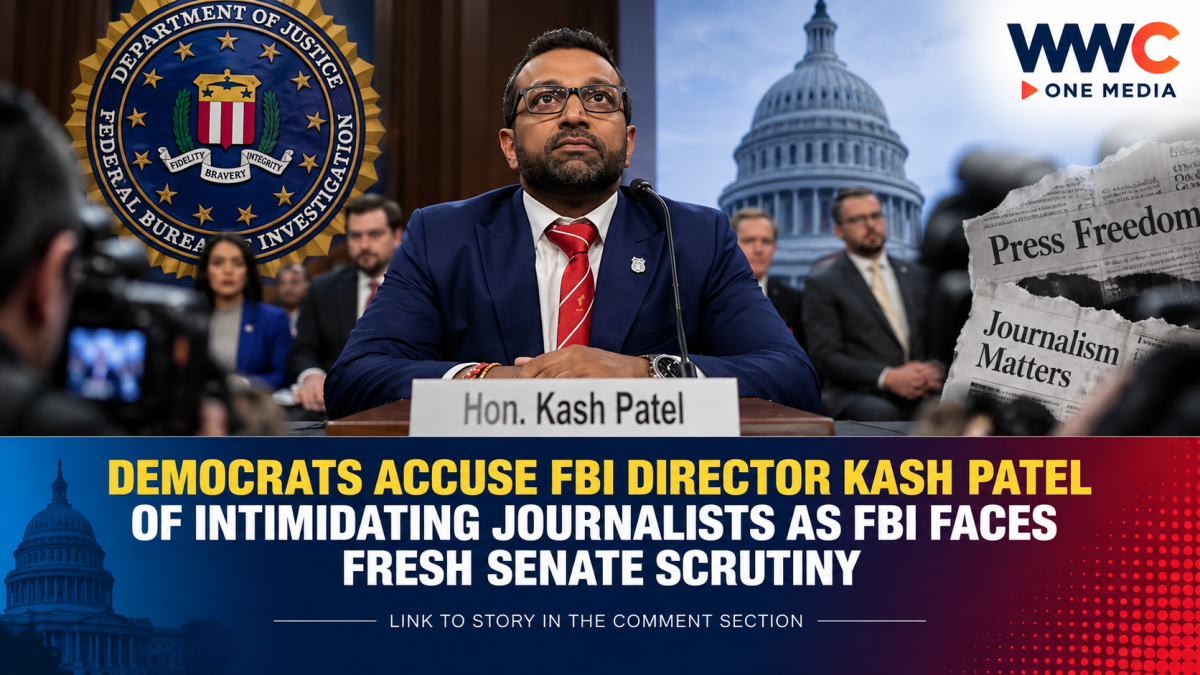
WASHINGTON — FBI Director Kash Patel faced another contentious round of questioning Tuesday as Senate Democrats accused him of using the bureau’s power in ways that could intimidate journalists, while Patel rejected the allegations and defended his leadership.
The confrontation came during a lengthy Senate Judiciary Committee oversight hearing on Sept. 15, 2026, where lawmakers from both parties questioned Patel about the FBI’s investigations, personnel decisions, election activities, handling of sensitive files and its relationship with the news media.
Democrats Raise Concerns Over Journalists
Democratic senators pointed to reports that the FBI had investigated journalists or pursued information connected to reporting critical of Patel.
The concerns include an earlier 2026 episode involving a New York Times reporter. The Times reported that the FBI investigated reporter Elizabeth Williamson after she wrote about security arrangements involving Patel’s girlfriend. The episode prompted press-freedom concerns over whether federal investigative powers were being used against journalists because of their reporting.
Another controversy emerged after The Atlantic published reporting about Patel. Multiple outlets reported that the FBI was examining whether classified information or other sensitive material had been improperly disclosed to the journalist behind the story. The FBI subsequently denied that it was investigating the reporter personally.
During Tuesday’s hearing, Democrats used those episodes to question whether the bureau under Patel was creating a chilling effect on journalists.
Patel rejected the accusation.
According to the Straits Times, Patel said the claim that he had used FBI resources to target reporters was a “total lie.”
The Dispute Goes Beyond the Press
The press-freedom controversy is only one part of the increasingly intense scrutiny surrounding Patel’s tenure.
Republican and Democratic senators also questioned him over the FBI’s handling of investigations connected to former President Donald Trump, personnel changes inside the bureau, election-related operations and the treatment of national-security officials.
Patel defended the FBI’s record and pointed to increased arrests and other law-enforcement achievements while pushing back against accusations that the bureau had become politicized.
Democrats, meanwhile, challenged Patel over decisions they said raised questions about the bureau’s independence and leadership.
A Wider Press-Freedom Debate
The dispute comes after several high-profile confrontations between federal investigators and journalists in 2026.
In January, the FBI searched the home of a Washington Post reporter as part of a leak investigation involving a government contractor. The incident generated concern among press-freedom advocates about the government’s use of investigative powers in cases involving journalists.
Separately, reporting in April said the FBI had examined a leak connected to an Atlantic article about Patel. The bureau’s treatment of journalists has since become part of a broader debate over how aggressively federal agencies should pursue suspected leaks while protecting legitimate newsgathering.
Those cases do not establish that Patel personally ordered intimidation of journalists. They do, however, form part of the factual backdrop behind the questions raised by Democratic senators.
Patel Faces Pressure on Multiple Fronts
Tuesday’s hearing also highlighted several other controversies surrounding the FBI director.
Patel was questioned about changes to FBI hiring policies, including rules concerning applicants with certain past conduct. He defended the changes as an effort to avoid automatically excluding people who may themselves have been victims of trafficking or abuse.
Lawmakers also pressed him about the FBI’s handling of the Jeffrey Epstein files, travel involving government resources, personnel dismissals and the bureau’s approach to election security.
The hearing became increasingly heated, underscoring the deep partisan divide over Patel’s leadership.
What Happens Next?
The dispute over journalists is unlikely to disappear with the end of the hearing.
For Democrats, the central question is whether the FBI’s investigative authority is being used appropriately when reporters publish information embarrassing or critical to senior officials.
For Patel and his defenders, the issue is whether legitimate investigations into potential leaks or security violations are being incorrectly portrayed as attacks on the press.
Those are competing interpretations, and the available reporting does not establish that every investigation involving a journalist was ordered to intimidate that journalist.
What is clear is that the FBI’s relationship with the news media has become one of the most closely watched issues surrounding Patel’s tenure — and Tuesday’s Senate showdown has pushed that debate back into the national spotlight.
WWC ONE MEDIA G.A




Leave a Reply