Ukrainian President Volodymyr Zelenskyy has warned that Russia could face a difficult winter if Moscow rejects efforts to halt attacks on energy infrastructure, as Kyiv pushes for an energy ceasefire before temperatures fall.
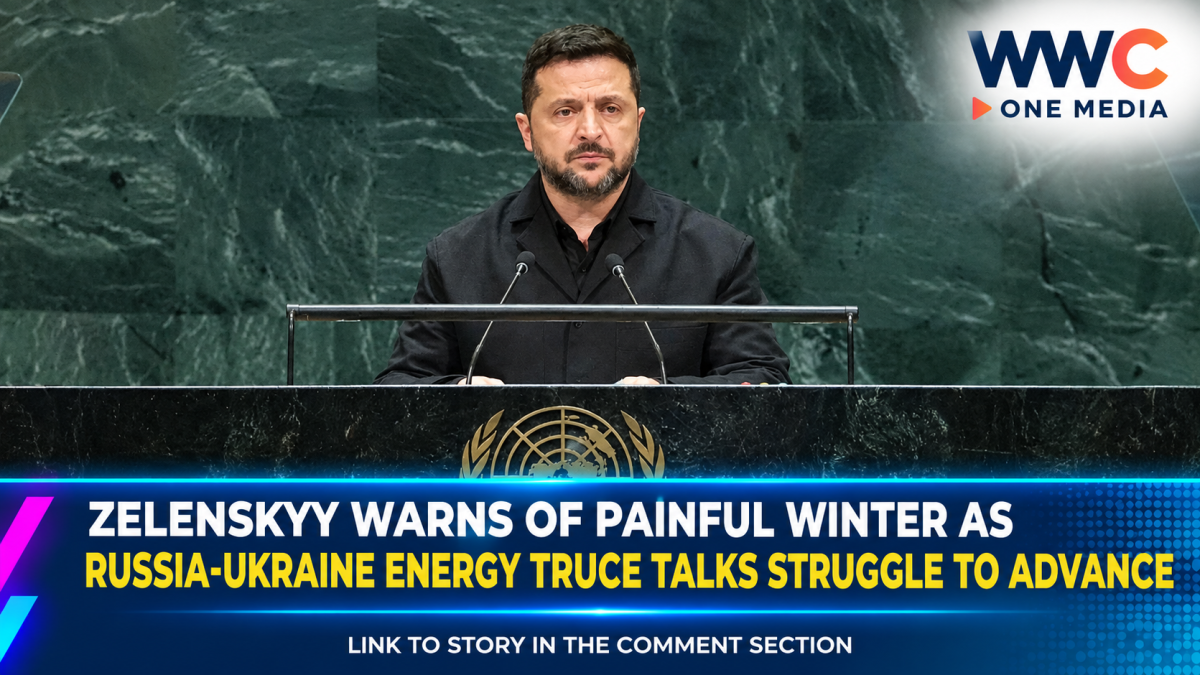
Speaking during the United Nations General Assembly in New York, Zelenskyy said Ukraine was prepared to stop targeting Russian energy facilities if Russia agreed to halt strikes on Ukraine’s power, heating and water systems. He has presented the proposal as a possible first step toward broader diplomacy.
The proposal comes after weeks of intensified attacks by both sides. Russia has repeatedly targeted Ukraine’s energy and critical infrastructure, while Ukraine has expanded long-range drone attacks against Russian oil refineries and other energy facilities.
Zelenskyy said Ukraine remained ready to act reciprocally, but he warned that Kyiv would continue defending itself if Russian attacks persisted. Ukraine’s president has also said intelligence indicated Moscow could be preparing another major assault as winter approaches.
The United States has been trying to advance the idea of an energy truce. Secretary of State Marco Rubio said Washington would work to secure an agreement, while acknowledging that negotiations would be difficult because both Russia and Ukraine view attacks on energy infrastructure as strategically important.
The issue has become increasingly urgent as Ukraine prepares for another winter of war. Last winter, prolonged attacks contributed to disruptions in electricity, heating, water and sewage services in major cities, and Ukrainian authorities are preparing for further pressure on the energy system.
Zelenskyy has also asked Washington for additional air-defense support, particularly Patriot interceptors, as Kyiv prepares for another possible wave of Russian missile and drone attacks. He has proposed arrangements that could allow Ukraine to receive additional U.S. interceptors while replacing them later through deliveries from European partners.
The energy issue is complicated by Ukraine’s campaign against Russia’s oil industry. Ukrainian long-range drones have struck refineries and other energy facilities deep inside Russia, including the Moscow oil refinery, which was forced to halt crude processing after a September attack, according to industry sources cited by Reuters.
Russia has previously expressed interest in an energy moratorium but has also sought broader conditions, including measures affecting Russian energy exports and sanctions. The two sides have yet to establish a durable agreement that has stopped attacks on energy infrastructure.
The diplomatic effort is unfolding alongside other attempts to reopen negotiations over the wider war. Zelenskyy has continued discussions with U.S. and European leaders, while Moscow has also indicated that it has not completely closed the door to renewed peace talks. Major disagreements over the terms of a settlement remain.
For Ukraine, an energy truce could reduce the immediate threat to its electricity and heating systems before winter. For Russia, a halt in attacks could reduce pressure on its oil and energy infrastructure.
Whether the two sides can turn the proposal into a functioning agreement remains uncertain. With winter approaching and both countries continuing to attack energy targets, the coming weeks could determine whether the proposed truce becomes a limited confidence-building measure or another diplomatic effort that fails to stop the strikes.