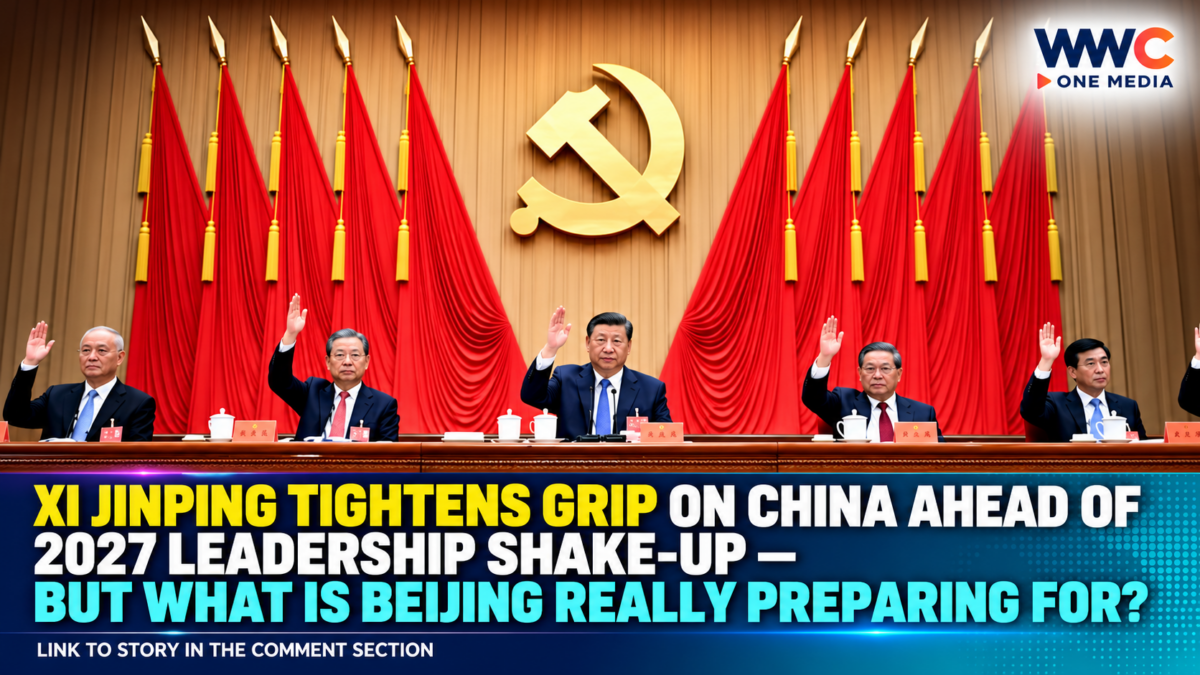
BEIJING, China | October 23, 2026 — China’s political leadership is preparing for a high-stakes gathering that could provide crucial clues about President Xi Jinping’s plans for the Communist Party ahead of a major leadership reshuffle in 2027.
The Communist Party of China (CPC) will convene its fifth plenary session from October 26 to 29 in Beijing, bringing together more than 300 senior party officials to discuss stricter internal governance, political discipline and accountability.
Unlike previous fifth plenums, which traditionally focus on China’s long-term economic development strategy, this year’s gathering will concentrate on how the ruling party supervises its officials, combats corruption and maintains control throughout its vast political system.
The unusual agenda is attracting attention because the meeting comes just one year before the Communist Party’s 21st National Congress, when China’s political leadership and strategic direction for the next five years are expected to be determined.
The central question is whether Beijing’s intensified focus on party discipline represents another stage in Xi’s longstanding anti-corruption campaign — or the beginning of deeper institutional changes ahead of the country’s next political transition.
Why China Is Breaking With Political Tradition
China’s Communist Party normally holds seven plenary sessions between national party congresses, each dealing with different aspects of governance, policy and leadership.
The fifth plenum has traditionally played an important role in establishing the nation’s next five-year economic development blueprint.
But the usual sequence has changed.
In October 2025, the Communist Party’s fourth plenum adopted recommendations for China’s 15th Five-Year Plan, covering the 2026–2030 period.
That decision has left the fifth gathering available to concentrate on another priority: tightening the party’s internal governance.
On September 21, 2026, a Politburo meeting chaired by Xi confirmed that a draft decision concerning stricter party self-governance would be submitted for deliberation at the October gathering.
According to Chinese state media, the proposed framework is intended to strengthen party leadership, address governance weaknesses and reinforce accountability throughout the political system.
The shift highlights how Beijing views effective party management as a central component of national governance.
Xi Jinping’s Anti-Corruption Campaign Enters Another Critical Phase
Since taking power in 2012, Xi has made fighting corruption a defining feature of his leadership.
His administration’s sweeping disciplinary campaign has investigated officials across China’s government, Communist Party institutions and military establishment.
Reuters reported in July that millions of people within China’s bureaucracy had been investigated under the prolonged anti-corruption campaign, with hundreds of senior officials and military figures removed from their positions.
However, despite years of investigations and disciplinary measures, Beijing continues to describe corruption as a serious challenge.
In January 2026, Xi warned that the anti-corruption situation remained severe and complicated, underscoring the leadership’s determination to sustain its campaign.
The October plenum is expected to discuss a broader approach that extends beyond investigating individual misconduct.
The proposed agenda includes improving oversight, strengthening internal party rules, reinforcing political education and making officials more accountable for implementing central government directives.
These reforms could influence how Communist Party officials are evaluated, supervised and potentially promoted.
A Bigger Concern: Can Beijing Make Its Officials Deliver?
China’s leadership is not only confronting corruption.
It is also attempting to address weaknesses in how government officials carry out policies.
A party-wide education campaign launched in 2026 has emphasized what Chinese authorities describe as a correct approach to official performance.
The initiative targets problems such as wasteful prestige projects, abrupt policy reversals and bureaucratic inaction.
Such concerns matter because local government officials play an important role in implementing Beijing’s economic, industrial and social policies.
When officials prioritize appearances over practical results, or delay decisions because of political uncertainty, national initiatives can become more difficult to execute.
China is simultaneously navigating demographic pressures and economic challenges, increasing the importance of effective local administration.
The fifth plenum may therefore provide an indication of how Xi intends to improve the Communist Party’s ability to implement policy across the country.
Why the 2027 Communist Party Congress Matters
The timing of the meeting is especially significant.
China’s 21st Communist Party National Congress is expected in autumn 2027, when the party will determine its leadership lineup and establish major political priorities for the following five years.
Xi, who began his third term as Communist Party general secretary in 2022, is widely expected to remain a central figure in the leadership discussions.
However, no final decision about the 2027 leadership lineup should be assumed before official announcements.
According to the South China Morning Post, the heightened emphasis on party discipline ahead of the congress could also increase the importance of officials’ political and disciplinary records during leadership selection.
Analysts will be watching whether the coming months bring changes in senior appointments, new oversight arrangements or stronger institutional requirements for party officials.
These developments could offer early clues about how China’s next generation of political leadership may take shape.
Could Stronger Discipline Also Create New Challenges?
Tighter party supervision presents both opportunities and complications.
Supporters of stricter oversight argue that clear rules, stronger accountability and effective anti-corruption enforcement can improve administrative performance and public confidence.
However, stronger political scrutiny can also create challenges if officials become excessively cautious about making decisions.
For an economy that depends on effective policy implementation across provinces, cities and industrial sectors, the balance between political discipline and administrative initiative remains important.
The effectiveness of any reforms will therefore depend not only on how strictly Beijing supervises officials, but also on whether the new system encourages them to make sound decisions and deliver measurable results.
What the World Should Watch on October 29
The most important developments may emerge when the four-day plenum concludes on October 29.
Observers will scrutinize the official communiqué and any subsequently released policy document for signs of new disciplinary rules, institutional reforms and changes to oversight procedures.
Particular attention will focus on whether the leadership introduces concrete new mechanisms or largely reinforces existing anti-corruption policies.
Another important issue is whether the Communist Party strengthens supervision of the institutions responsible for investigating corruption and enforcing discipline.
Any major changes could have implications for China’s bureaucracy, military leadership and political succession process.
For foreign governments, businesses and investors, the meeting may also provide clues about the political environment in which China’s economic and foreign policy decisions will be made.
The Bigger Picture: China’s Next Political Chapter Is Taking Shape
Xi Jinping’s upcoming party meeting is not simply another routine gathering of Chinese officials.
It comes at a time when Beijing is seeking stronger institutional discipline, more effective political oversight and improved execution of government policies.
The meeting could help shape the operating rules of the Communist Party ahead of a potentially consequential leadership cycle.
But its ultimate significance will depend on what decisions are adopted, how they are implemented and whether they produce meaningful changes in governance.
As China’s political elite prepares to meet behind closed doors, one question remains: Will Xi Jinping’s latest push for party discipline deliver stronger governance — or signal a deeper reshaping of China’s political power structure before 2027?