
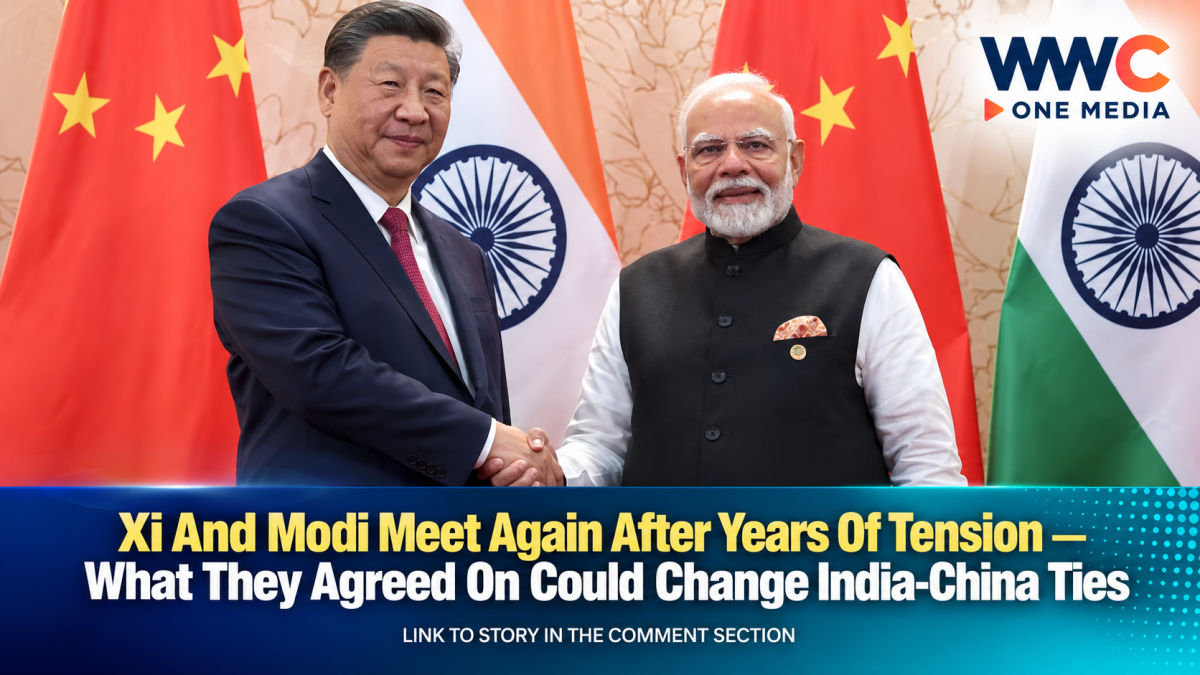
NEW DELHI — Chinese President Xi Jinping and Indian Prime Minister Narendra Modi have signaled a cautious effort to reset relations between the world’s two most populous countries, meeting on the sidelines of the BRICS Summit in New Delhi as both sides seek to move beyond years of military and diplomatic tensions.
The September 12 meeting marked Xi’s first visit to India in seven years and came against the backdrop of efforts by Beijing and New Delhi to stabilize relations following the deadly 2020 border confrontation in the Himalayan region.
India’s Ministry of External Affairs said the two leaders expressed a commitment to resolving the long-running boundary issue and maintaining peace and tranquility along the border. Modi also emphasized that existing agreements and understandings concerning the border must be respected.
Xi, meanwhile, said China views its relationship with India from a “strategic and long-term” perspective and argued that the two countries should regard each other as partners rather than rivals.
Chinese officials said both sides should continue working toward a resolution of the boundary question while simultaneously advancing bilateral relations.
From border confrontation to cautious cooperation
The meeting carries particular significance because India-China relations deteriorated sharply after a deadly clash in eastern Ladakh in 2020. Twenty Indian soldiers and four Chinese soldiers were killed in the confrontation, triggering a prolonged military standoff and a deep freeze in political and economic relations.
Since then, the two governments have gradually taken steps to reduce tensions. Military disengagement, renewed diplomatic contacts and the resumption of some exchanges have created room for a broader thaw.
Reuters reported that Modi and Xi discussed expanding business and transport links as the two countries attempt to rebuild ties damaged by the border crisis.
The Indian Express also reported that the leaders emphasized that differences should not automatically become disputes and backed efforts toward a fair, reasonable and mutually acceptable resolution of the boundary issue.
Trade becomes another test
Beyond the disputed frontier, economics is expected to be a major part of the relationship’s next chapter.
China and India have enormous commercial ties, but New Delhi remains concerned about its trade imbalance with Beijing and access for Indian businesses in the Chinese market.
The two sides are therefore trying to expand economic engagement while addressing concerns over market access, supply chains and trade. Reuters reported that the leaders backed efforts to strengthen business and transportation connections.
The thaw also comes as both countries navigate a rapidly changing global economy and increasingly complicated relations with the United States.
Why the BRICS meeting matters
The Modi-Xi talks took place as India hosted the 18th BRICS Summit, giving the encounter significance beyond bilateral relations.
BRICS has expanded well beyond its original five members and now includes Brazil, Russia, India, China, South Africa, Egypt, Ethiopia, Indonesia, Iran and the United Arab Emirates. The grouping represents more than 40 percent of the world’s population and roughly a quarter of the global economy.
Xi used the summit to call for a stronger role for BRICS in addressing global crises, including the conflict in the Middle East. China is also set to assume the BRICS chairmanship and host the group’s next summit.
For India, the summit provides an opportunity to strengthen its influence in the Global South while maintaining its strategic relationships with countries that do not always share the same geopolitical interests.
A thaw — but not yet a breakthrough
Despite the positive language, major obstacles remain.
The Himalayan border dispute has not been resolved, and strategic mistrust between New Delhi and Beijing remains significant. India is also increasingly concerned about China’s regional influence, while Beijing closely watches India’s expanding strategic cooperation with the United States and other partners.
Analysts have therefore described the current phase as a cautious thaw rather than a complete normalization of relations.
The significance of the Modi-Xi meeting may ultimately depend on what happens after the cameras leave the summit.
If the two governments can maintain peace along the border, expand direct connections, resolve economic disagreements and rebuild political trust, the meeting could become a turning point for one of Asia’s most consequential relationships.
For now, however, the message from New Delhi is more measured: India and China appear ready to cooperate again — but the hardest issues between them are far from settled.




Leave a Reply