
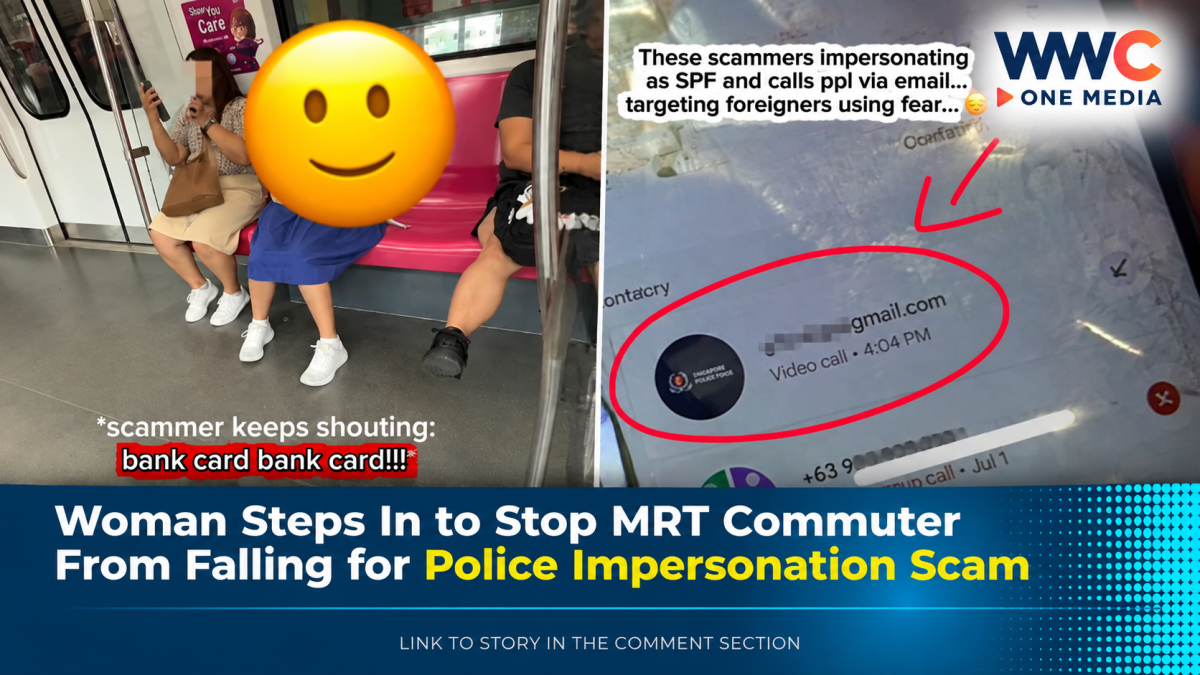
A Singapore woman has been praised after stepping in to stop a fellow MRT commuter from potentially falling victim to a police impersonation scam.
The incident happened while the two women were travelling on an MRT train. According to a social media post by commuter Vit Olivia Ng, she overheard a woman speaking to someone on the phone with the call on speaker mode.
The caller could reportedly be heard shouting and speaking aggressively. The woman appeared nervous and was seen showing her passport during a video call.
The caller then allegedly instructed her to show her bank card as well, prompting Ng to become concerned that she was about to reveal sensitive personal and banking information.
Ng approached the woman and told her: “I think it’s a scam.”
The woman immediately ended the call. Ng then typed an explanation on her phone to help her understand why the call appeared suspicious and advised her not to share personal or banking details with anyone over the phone.
The call history on the woman’s phone appeared to show that the caller was impersonating a police officer and had contacted her through an unknown email address.
The two women exchanged contact details after the incident, with the commuter thanking Ng for intervening.
Ng said the woman was from the Philippines and had moved to Singapore only three weeks earlier to look for work. She said the woman had not expected to encounter such scams and genuinely believed she might have been in trouble when the purported police officer contacted her.
The incident is an example of a government officials impersonation scam, in which criminals pose as police officers or other government officials and claim that victims are involved in criminal activities or investigations.
Singapore Police have repeatedly warned that genuine government officials will not ask members of the public to provide banking credentials, transfer money to a “safe account” or hand over bank cards and PINs as part of an investigation.
Authorities have also advised members of the public not to trust unsolicited calls simply because the caller appears to have personal information about them.
Anyone who is unsure about a suspicious interaction can check with the ScamShield service or call the 24-hour ScamShield Helpline at 1799.
For Ng, the decision to approach a stranger on the train may have felt awkward, but she believed it was important to intervene when she saw someone who appeared to be in danger of being scammed.



Leave a Reply