
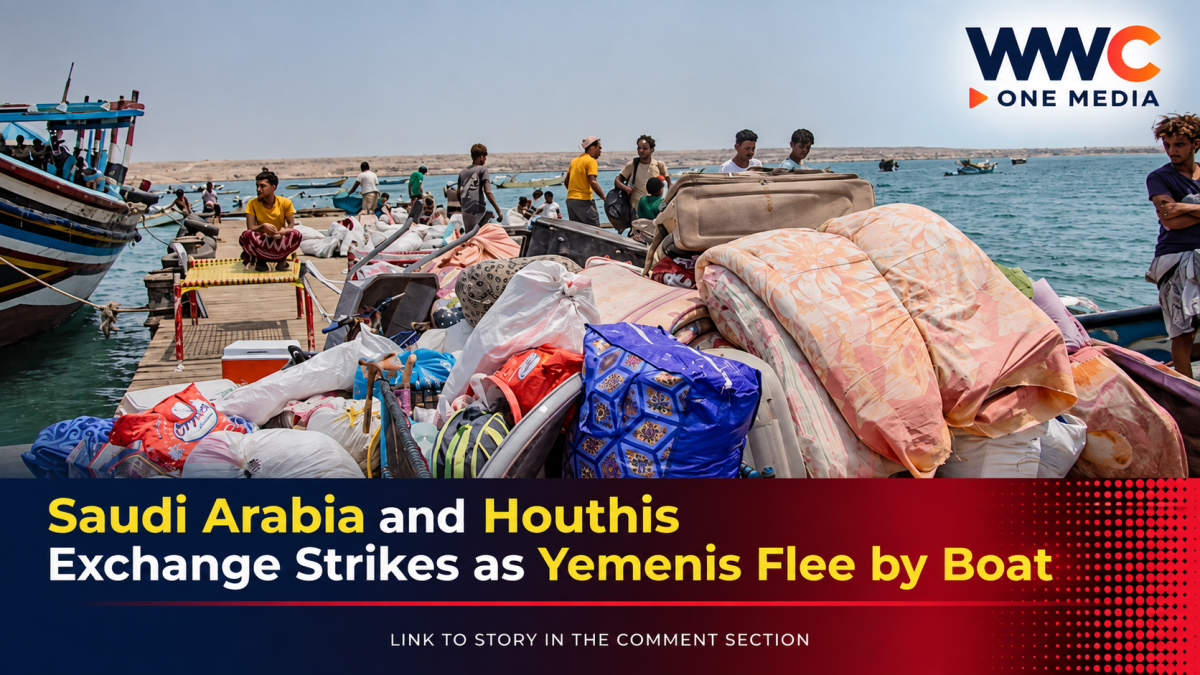
Saudi Arabia and Yemen’s Iran-backed Houthi forces exchanged fresh strikes on Thursday as fighting spread further across the region, prompting thousands of Yemenis to flee their homes, with some taking dangerous boat journeys across the Red Sea.
Houthi-controlled television reported Saudi airstrikes in Hajjah province near the Saudi border and around Taiz further south. The strikes came after the Houthis launched missiles and drones towards Saudi Arabia.
Saudi civil defence authorities said a Yemeni resident was killed by debris from a drone intercepted over the western Saudi city of Taif. It was the first death reported by Riyadh from the repeated Houthi attacks since the latest escalation began. Saudi authorities have previously reported more than 80 people wounded.
The renewed fighting has also triggered a new wave of displacement inside Yemen. More than 100,000 people have been displaced since the beginning of September as Houthi forces advanced through areas along the Red Sea coast.
Some civilians have taken to the sea to escape the fighting, crossing the Red Sea in crowded boats towards Djibouti and other parts of Africa.
One 70-year-old Yemeni who made the journey described rough conditions at sea, with children becoming seasick during the crossing. He said his family had fled after Houthi fighters entered their area and airstrikes followed, while shops closed and food became increasingly difficult to obtain.
The conflict has also raised concerns about Yemen’s already fragile humanitarian situation. Displaced families are arriving with limited belongings and face shortages of food, water and shelter, while humanitarian access has been complicated by insecurity and damaged infrastructure.
The latest escalation follows the breakdown of a period of relative calm between Saudi Arabia and the Houthis. The two sides had observed a fragile truce after years of conflict, but fighting has intensified again as the wider Middle East war involving Iran expands.
The renewed violence is also threatening key shipping routes. The Houthis control much of Yemen’s Red Sea coastline and have increased pressure around the Bab el-Mandeb Strait, a major maritime passage connecting the Red Sea with the Gulf of Aden.
The developments have raised fresh concerns about global energy supplies because the Red Sea provides an alternative route for Gulf oil exports while traffic through the Strait of Hormuz remains severely disrupted.
Saudi Arabia has already faced attacks affecting its oil infrastructure, including damage to its East-West pipeline, which allows crude to be transported towards the Red Sea without passing through the Strait of Hormuz.
The spreading conflict therefore presents risks beyond Yemen’s borders, with the safety of civilians, regional shipping and global energy markets increasingly linked to the continuing escalation.
For Yemenis caught in the fighting, however, the immediate concern remains finding a safe place to escape as the latest round of violence forces more families from their homes.




Leave a Reply