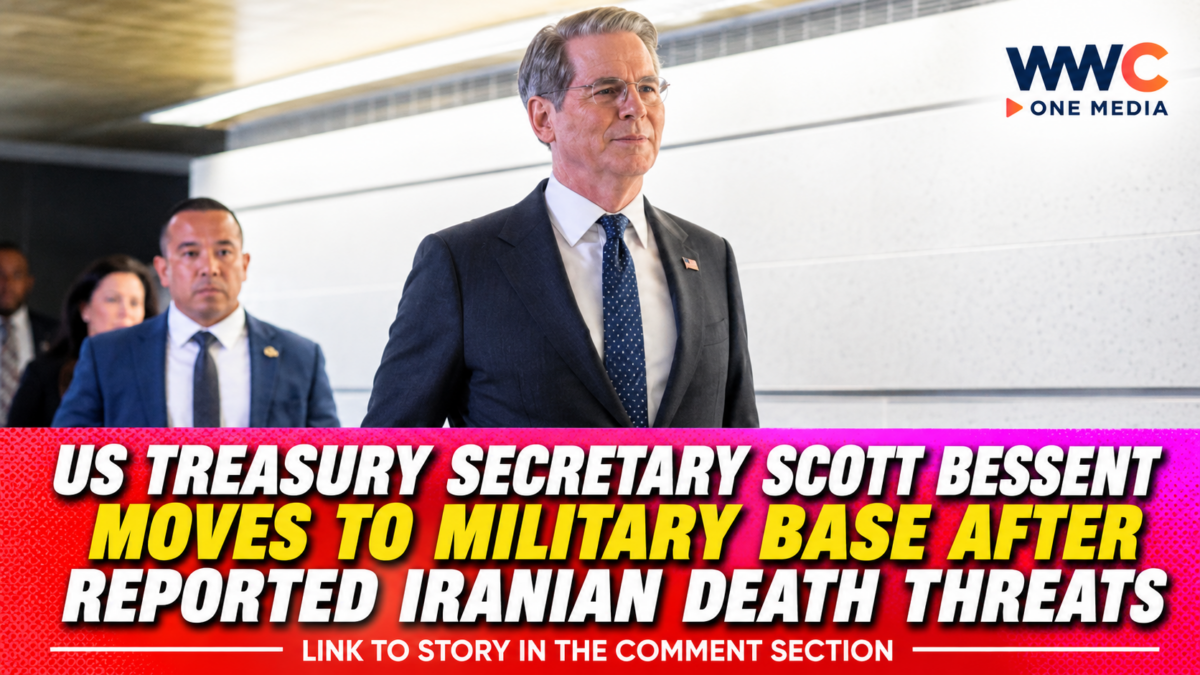
US Treasury Secretary Scott Bessent has reportedly moved out of his private residence and into a military base following threats against his life allegedly linked to Iran, raising fresh concerns about the security of senior Trump administration officials as the US-Iran conflict continues.
The reported relocation was first disclosed by The New York Times, which cited people familiar with the matter. Reuters subsequently reported the development, also citing the newspaper’s account and sources familiar with the situation.
The precise nature and seriousness of the threats against Bessent have not been publicly established. The US Treasury Department did not immediately respond to requests for comment, and there has been no public announcement detailing the specific security arrangements surrounding his relocation.
The development is particularly significant because Bessent has become one of Washington’s most prominent figures in its economic pressure campaign against Tehran.
His role in directing sanctions and financial restrictions against Iran has placed him at the centre of one of the administration’s most consequential foreign-policy strategies.
Why Scott Bessent Is Reportedly Being Protected at a Military Base
Bessent’s reported move comes amid heightened American intelligence concerns about possible Iranian operations targeting US personnel and citizens.
A senior intelligence official in the Trump administration warned in a memorandum reviewed by Reuters late last month that Iranian plots against American citizens had reached advanced stages.
However, officials have also assessed that Iran’s ability to carry out large-scale attacks inside the United States and other overseas locations remains limited.
Those assessments are important. Intelligence warnings indicate security concerns, but they do not establish that an attack against Bessent was imminent or that Iran had successfully organised an operation against him.
Iran has previously denied plotting attacks against American officials or individuals on US soil.
The distinction between an intelligence warning, a specific threat and a confirmed operational plan remains crucial as Washington increases security measures around government personnel.
Bessent’s reported relocation also comes amid wider concerns about the safety of senior administration figures. The latest report describes him as one of several Trump administration officials who have sought more secure living arrangements over the past year.
Bessent Has Become a Key Figure in Washington’s Economic War Against Iran
Bessent’s position makes the reported security concerns especially sensitive.
As Treasury secretary, he has helped lead the administration’s campaign to restrict Iran’s access to international financial networks, petroleum revenues and commercial services.
The strategy extends beyond sanctions against Iranian government institutions. Washington has increasingly targeted foreign businesses, shipping intermediaries, financial service providers and other entities accused of helping Tehran evade restrictions.
One example is the US campaign against companies allegedly facilitating Iran-linked maritime and aviation operations.
WWC ONE MEDIA previously reported on Washington’s sanctions against Indian and Turkish firms accused of supporting Iranian-linked shipping and airline networks:
The measures illustrate how the Treasury Department has become an important instrument of US foreign policy. Its actions can affect companies and financial institutions far beyond Iran’s borders.
Bessent has also been associated with the administration’s wider effort to increase economic pressure on Tehran through restrictions targeting oil exports, international transactions and commercial networks.
WWC ONE MEDIA has examined the expansion of this strategy in its report on US sanctions targeting Iran’s automotive and railway sectors:
Iran War Raises Security Concerns Beyond the Middle East
The reported threat against Bessent comes as the conflict between the United States, Israel and Iran continues to affect regional security.
The war began on February 28, 2026, and has involved American and Israeli strikes against Iranian targets, Iranian retaliation and attacks affecting other parts of the region.
The conflict has also raised concerns about the safety of US military personnel and facilities outside the Middle East.
In October, American forces withdrew B-1 bombers and other aircraft from RAF Fairford in England following reported Iran-linked security concerns. US President Donald Trump acknowledged that a threat had prompted the aircraft relocation, although the details were not fully disclosed.
British authorities also investigated a security incident involving men arrested near the airbase. Subsequent reporting described concerns about a possible plot targeting American aircraft and personnel.
More recently, US aircraft were moved from RAF Mildenhall in England to Germany and other locations following another reported Iran-linked threat. Security at RAF Mildenhall and nearby RAF Lakenheath was raised to Force Protection Condition Charlie, a heightened security level used when intelligence indicates that terrorist action is likely.
The US military has cautioned that aircraft routinely move between installations for operational reasons and has declined to disclose sensitive details about individual movements.
The separate developments demonstrate the wider security challenges facing American personnel and assets as tensions with Iran continue.
An Associated Press investigation published in October also found that Iranian or Iran-backed drone and missile attacks had damaged or destroyed structures at 26 US military bases and other sites across the Middle East through August.
The investigation, which used satellite imagery and interviews with regional officials, documented damage to aircraft facilities, radar systems, communications equipment, warehouses and troop accommodations.
The findings underline how the conflict has placed pressure on American military infrastructure across the region.
Could the Threats Be Connected to Washington’s Sanctions Campaign?
Bessent’s position in the administration’s economic campaign has naturally drawn attention to whether the reported threats could be connected to Washington’s pressure on Iran.
The Treasury secretary has been one of the public faces of the effort to restrict Tehran’s financial resources.
Sanctions are intended to limit the ability of targeted governments and organisations to generate revenue, conduct international transactions and obtain goods or services through overseas intermediaries.
But there is no publicly established evidence proving that the reported threats against Bessent were directly ordered by Iranian authorities in retaliation for a specific sanctions decision.
That distinction matters because the reported relocation is based on security information that has not been fully disclosed.
The allegations should therefore not be treated as proof of Iranian government responsibility.
Still, the broader political context is difficult to ignore. Washington and Tehran remain locked in a confrontation involving military operations, economic restrictions, maritime security and disagreements over Iran’s nuclear programme.
WWC ONE MEDIA has previously examined how sanctions and the continuing conflict have placed increasing pressure on Iran’s economy:
US-Iran Tensions Continue Despite Diplomatic Efforts
The reported security concerns also come as diplomatic efforts attempt to prevent another major escalation.
The United States and Iran remain divided over sanctions relief, maritime restrictions, nuclear commitments and the future of the Strait of Hormuz.
President Donald Trump has recently indicated that additional large-scale military action may not be necessary under current circumstances, while maintaining that American forces remain prepared if the situation changes.
Qatar has been involved in efforts to facilitate dialogue between the two sides.
However, no comprehensive settlement has resolved the major disagreements.
WWC ONE MEDIA previously reported on the distance between Washington and Tehran over a possible peace agreement:
The continuing confrontation means senior American officials involved in Iran policy may remain exposed to heightened security concerns.
For Bessent, the reported move to a military installation highlights how the conflict’s consequences may extend beyond diplomatic negotiations and battlefield operations.
What Happens Next for Bessent and US Security?
For now, several important details remain unanswered.
Authorities have not publicly explained the exact nature of the threats against Bessent, when they were received or whether investigators have identified individuals suspected of being involved.
The Treasury Department has also not provided a detailed public account of the secretary’s security arrangements.
The reported relocation nevertheless highlights the level of caution surrounding senior officials involved in the administration’s Iran strategy.
It also raises broader questions about how Washington will protect government leaders, military personnel and diplomatic representatives while the conflict remains unresolved.
The United States continues to use economic restrictions as a major tool against Tehran, while Iran has repeatedly warned that further attacks could trigger retaliation.
Whether the reported threats against Bessent lead to additional security measures or new investigations remains unclear.
But one thing is evident: the confrontation with Iran is no longer being measured only by military strikes, sanctions and diplomatic negotiations. The personal security of senior American officials has also become part of the growing national security challenge.