
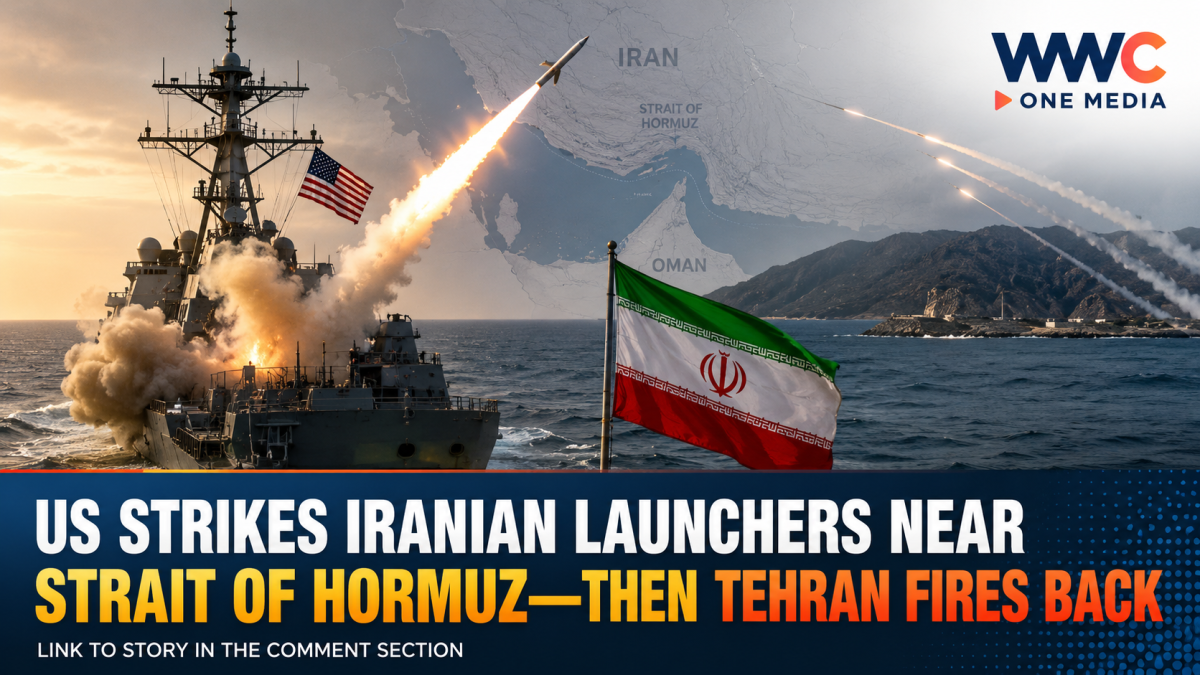
WASHINGTON/TEHRAN — U.S. forces struck two Iranian military launchers on Larak Island, a strategically located island near the Strait of Hormuz, in what officials described as the first known American military strikes against Iran since late July.
The latest confrontation has raised fresh fears of a wider escalation in one of the world’s most strategically important waterways, with Iran reportedly responding by launching missiles toward U.S. forces in Jordan.
According to a U.S. official cited by Reuters and carried by GMA News, the American military targeted two Iranian launchers on Larak Island on Sunday. The official said the action was linked to concerns over Iranian military activity near the Strait of Hormuz.
Why Larak Island—and the Strait of Hormuz—Matter
The location of the strike is significant.
Larak Island sits close to the Strait of Hormuz, a narrow maritime passage connecting the Persian Gulf to the Gulf of Oman. The waterway is critical to global energy markets, making any military confrontation in the area a potential concern far beyond the Middle East.
Recent reporting indicates that protecting shipping routes and preventing further disruption in the Strait of Hormuz has become an increasingly important focus of U.S. policy during the prolonged conflict with Iran. The Associated Press reported that the strategic waterway has emerged as a central concern as the wider confrontation enters its sixth month.
Axios, citing U.S. military information, reported that the American operation was intended to prevent what Washington described as an imminent threat involving Iranian preparations near the waterway. Those claims, however, remain part of the U.S. government’s account of the operation and should be viewed in that context.
Iran Responds as Both Sides Trade Fire
The strike was quickly followed by reports of Iranian retaliation.
Reuters reported that Iran launched ballistic missiles toward U.S. forces based in Jordan, although reports indicated that most were intercepted and there was no immediate indication of major damage. The exchange marked a sharp escalation after more than a month without a similar direct exchange of fire between the two sides.
Iranian authorities and the Islamic Revolutionary Guard Corps have also condemned the U.S. action and vowed a response. Reports carried by international media said Iranian officials acknowledged casualties, though independently verified details about the number of people killed or injured were not immediately available.
Oil Markets Feel the Pressure
The renewed military confrontation is also being closely watched by financial markets.
Reuters reported that oil prices and Asian markets reacted to the heightened geopolitical uncertainty, underscoring how quickly tensions around the Strait of Hormuz can affect the global economy.
For energy-importing countries, including the Philippines, major disruptions to global oil supply routes can potentially contribute to higher international crude prices—although the full economic impact of the latest confrontation remains uncertain.
What Happens Next?
The latest exchange highlights just how fragile the situation has become.
A limited strike on two launchers has now been followed by reported missile retaliation, renewed threats and heightened concerns over security in the Strait of Hormuz. With both Washington and Tehran maintaining sharply opposing accounts and showing little sign of backing down, the risk is that a single new incident could trigger another—and potentially larger—round of confrontation.
For now, the world is watching the narrow waters near Larak Island.
The biggest question is no longer just what was struck—but whether this latest exchange is the beginning of another major escalation.




Leave a Reply