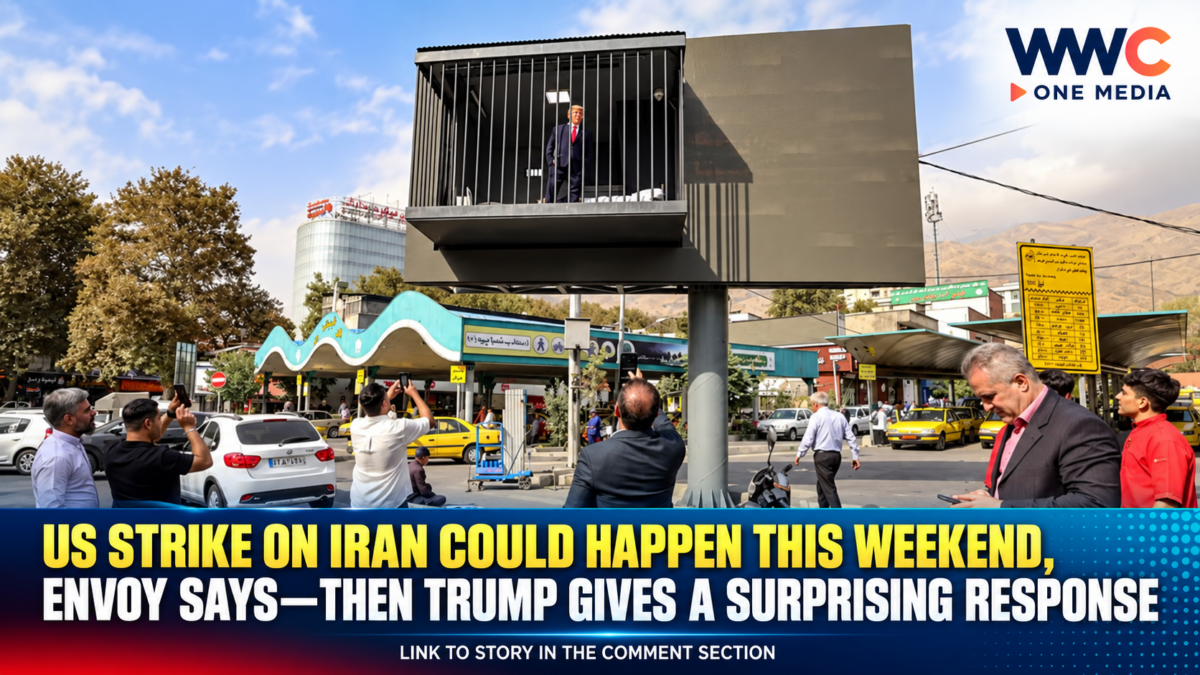
The United States could launch another military strike against Iran as early as this weekend, a senior American envoy has warned, raising fresh concerns about a wider Middle East conflict as diplomatic efforts remain deadlocked.
Tom Barrack, the US ambassador to Turkey and special presidential envoy for Syria, made the remarks during an interview with commentator Mario Nawfal on Friday, October 23. Asked whether an American strike against Iran could happen over the weekend, Barrack responded, “Absolutely,” according to reports by the Channel NewsAsia and other international news outlets.
However, Barrack also stressed that President Donald Trump remained open to reaching an agreement with Tehran, saying negotiations had been ongoing for months. His comments therefore pointed to two possibilities facing Washington: renewed military action or a diplomatic breakthrough.
The crucial question remains whether the weekend warning reflects an imminent military decision—or a signal intended to increase pressure on Iran.
Trump’s reaction adds uncertainty to strike speculation
Barrack’s remarks drew additional attention after Trump was questioned about the possibility of an attack.
According to reporting by The Times of Israel and Anadolu Agency, Trump appeared to distance himself from the envoy’s prediction, saying he did not know of any such plan. His response left uncertainty over whether the comments reflected an approved operational decision or Barrack’s assessment of the situation.
The distinction is important: a statement that a strike is possible does not establish that military orders have been issued, and no confirmed attack date can be inferred from the envoy’s remarks alone.
Iran tensions intensify as Washington and Israel weigh their options
The warning comes amid renewed threats involving Washington, Tehran and Israel. US officials have signaled that further military action remains an option if negotiations fail, while Israeli Prime Minister Benjamin Netanyahu has continued to issue strong warnings against Iran’s leadership.
Barrack also made clear that the stated US objective was not regime change. Instead, he described Washington’s aim as reducing threats to the United States, its allies and regional security. He cautioned that removing a government would raise difficult questions about what happens afterward.
The difference between Washington’s stated goals and the more sweeping rhetoric heard from some Israeli leaders highlights a key question in the crisis: whether the two allies would pursue the same endgame if military operations resumed.
Why the timing matters
The potential for renewed strikes comes as the United States approaches its November 3 congressional midterm elections. Earlier statements from Trump had indicated that further action would not occur before the elections, making Barrack’s weekend prediction particularly significant.
But the envoy’s comments alone do not confirm that the administration has abandoned that position. The timing, scope and targets of any potential operation remain uncertain.
Meanwhile, the broader confrontation is creating concerns beyond the battlefield. The Associated Press reported on October 24 that the US State Department was reducing staffing at diplomatic missions in Jordan, Lebanon, Qatar and the United Arab Emirates amid increased security threats. Officials said the staffing changes were connected to regional threats, while denying that they were specifically linked to possible new strikes against Iran.
Global markets and shipping could feel the consequences
Any escalation could have consequences far beyond the immediate conflict zone, particularly for energy markets and shipping through the Strait of Hormuz, a strategic waterway for international oil trade.
CBS News reported on October 23 that Brent crude briefly climbed above $117 a barrel amid the continuing conflict and disruptions around the strait. Prolonged instability could add pressure to fuel prices, shipping costs and the wider global economy.
For countries dependent on imported fuel, renewed fighting could create additional economic uncertainty. The ultimate impact would depend on whether military action actually occurs, how Iran responds and whether commercial shipping routes remain accessible.
Diplomacy remains possible—but the risks are growing
Despite the increasingly confrontational rhetoric, Barrack’s comments indicate that the possibility of a deal has not been entirely ruled out. Washington continues to insist that Iran address its security concerns, while Tehran faces mounting pressure amid the standoff.
For now, the prospect of a weekend strike remains a warning, not a confirmed military announcement.
The next major development to watch is whether the White House clarifies its position, diplomatic channels produce progress, or further official statements signal that military action is becoming more likely.