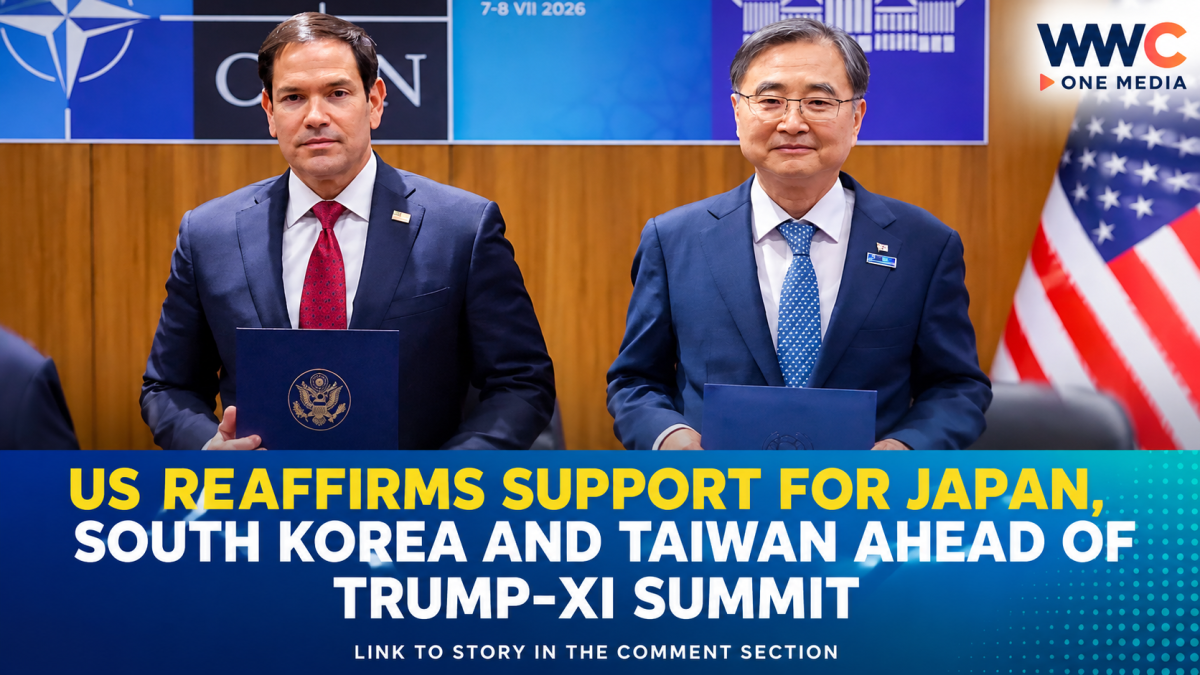
The United States has reaffirmed its defence commitments to Japan and South Korea while Washington, Tokyo and Seoul jointly voiced support for maintaining peace and stability across the Taiwan Strait, just days before President Donald Trump is due to meet Chinese President Xi Jinping at the White House.
US Secretary of State Marco Rubio met Japanese Foreign Minister Toshimitsu Motegi and South Korean Foreign Minister Cho Hyun in New York on Sept. 21 on the sidelines of the United Nations General Assembly. The three countries issued a joint statement covering defence, Taiwan, North Korea and economic security.
The United States said its defence commitments to Japan and South Korea remain “ironclad”, including extended deterrence backed by US military capabilities. The statement also stressed the importance of maintaining peace and stability across the Taiwan Strait and expressed support for Taiwan’s meaningful participation in appropriate international organisations.
The meeting comes as Trump prepares to host Xi in Washington on Sept. 24. Taiwan is expected to remain one of the most sensitive issues in the broader US-China relationship, with Beijing continuing to oppose US arms sales to the island and Washington maintaining its longstanding policy framework toward Taiwan.
The timing is significant because China is expected to press Trump over US arms sales to Taiwan during Xi’s visit. Reuters reported that Beijing may invoke the 1982 US-China joint communiqué, under which Washington said it intended to gradually reduce arms sales to Taiwan. A separate Reagan-era assurance, however, conditioned that position on China maintaining a peaceful approach toward Taiwan.
A separate US$14 billion potential arms package for Taiwan has also remained on hold. Trump previously described the package as a negotiating tool, while US officials and lawmakers have continued to publicly affirm support for Taiwan’s ability to defend itself.
For Japan and South Korea, the summit carries economic as well as security implications. The three governments agreed to launch a new trilateral consultation mechanism focused on economic security, supply chains and critical technologies. They also pledged to oppose economic coercion, non-market practices and export restrictions that disrupt supply chains.
North Korea was another major concern. The three countries reaffirmed their commitment to the complete denuclearisation of North Korea and called for a return to dialogue, amid renewed missile activity by Pyongyang.
Japan and South Korea are also watching the economic side of the Trump-Xi meeting closely. Seoul is negotiating details of a US$350 billion investment package agreed under a previous trade deal with Washington, while South Korean lawmakers have raised questions about the financial risks associated with parts of the arrangement.
The latest diplomatic moves therefore place security commitments, Taiwan, trade, technology and supply chains in the same conversation ahead of the Trump-Xi summit. While the United States has publicly reaffirmed its existing commitments to its Asian allies, the precise outcome of the US-China talks remains dependent on what Trump and Xi agree during their meetings in Washington.