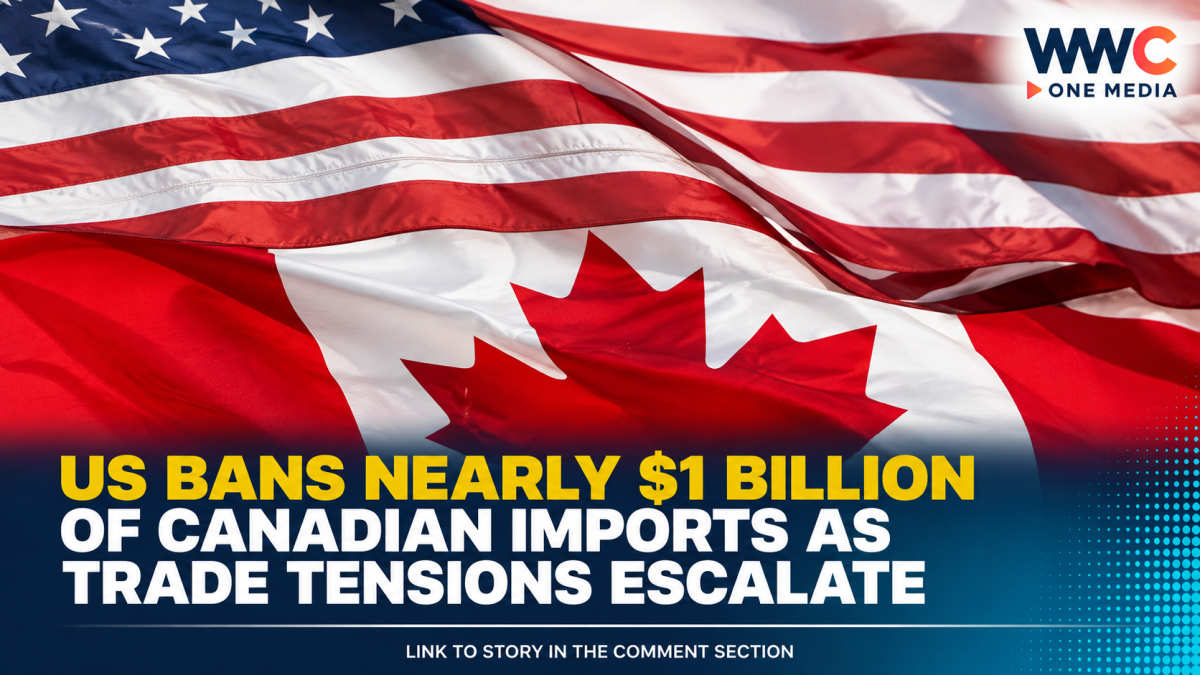
The United States has imposed a ban on nearly US$1 billion worth of Canadian imports, including alcoholic beverages, selected dairy products and motorcycles, further escalating trade tensions between the two longtime North American trading partners.
The restrictions took effect at 12:01 a.m. Eastern time on Sept. 29. The move follows a series of tariff disputes after Canada imposed retaliatory measures in response to US tariffs on Canadian goods.
The banned products represent a relatively small share of the roughly US$880 billion in annual two-way trade between the United States and Canada. Trade policy analysts cited in reports estimated that the restrictions cover about US$967 million in Canadian imports based on 2025 figures.
Alcohol accounts for about 87% of the affected imports. The ban also covers certain dairy products, including whey, as well as motorcycles manufactured by Canadian companies.
Bombardier Recreational Products confirmed that its three-wheel Can-Am Spyder and Canyon motorcycles will be excluded from the US market under the restrictions. The company said the immediate impact may be limited because most production and shipments for the current season have already been completed.
Some major Canadian brands may also have ways to reduce the effect of the ban. Crown Royal whisky, for example, can be shipped in bulk for processing elsewhere, while Labatt has US bottling operations that could allow some products to avoid the restrictions.
The latest measures stem from a broader dispute that intensified after the United States imposed 50% tariffs on about US$20 billion of Canadian imports. Canada responded with tariffs ranging from 15% to 50% on selected US products.
Trade analysts said the economic impact of the new ban could be limited because many of the affected products were already subject to high tariffs. However, the measures could create additional difficulties for smaller Canadian producers that depend heavily on the US market.
Canadian Prime Minister Mark Carney has said his government remains open to negotiations while also seeking to reduce Canada’s dependence on the US market. Canada has been pursuing expanded trade relationships with countries including India, China and members of the European Union.
The dispute could also complicate efforts to renew the United States-Mexico-Canada Agreement, the regional trade pact that has supported largely tariff-free trade across North America. The future of the agreement remains an important issue as the three countries review their trade relationship.
For businesses on both sides of the border, the latest restrictions add another layer of uncertainty. Canadian exporters and US importers affected by the measures are expected to continue pressing officials to find a negotiated solution as the trade dispute develops.