
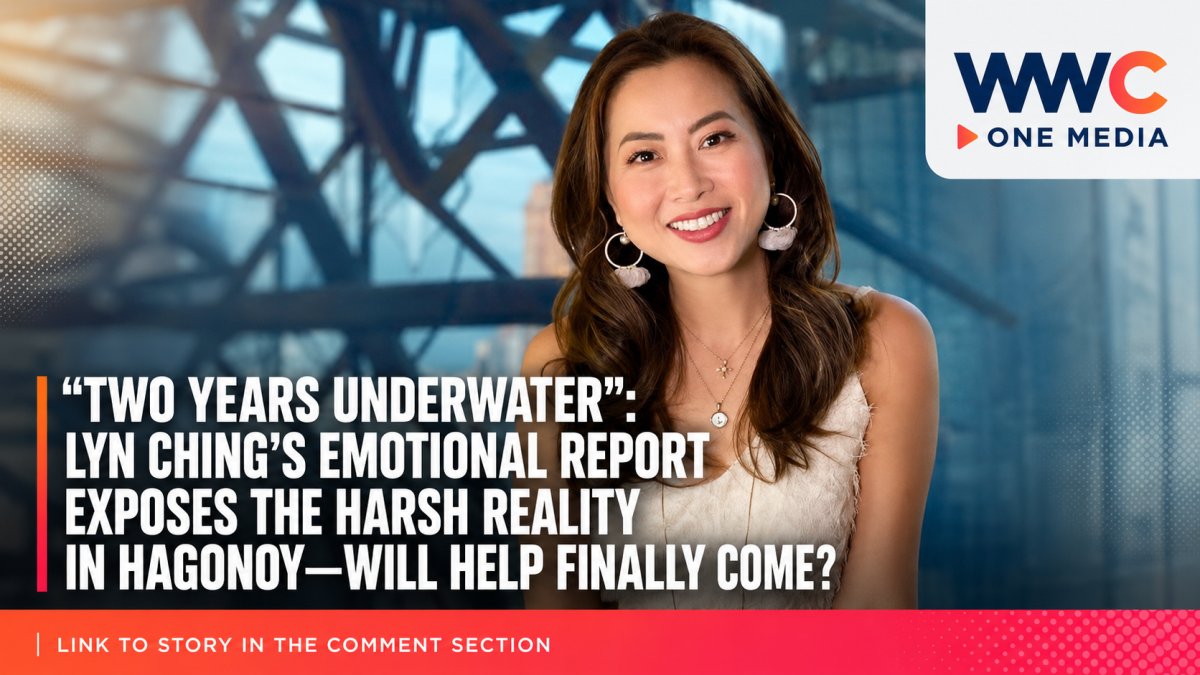
HAGONOY, BULACAN — What began as another live morning report turned into an emotional moment for Kapuso host Lyn Ching, who openly expressed her frustration over the devastating and prolonged flooding affecting residents of Hagonoy, Bulacan.
During a live report for Unang Hirit, Ching delivered her report while wearing a raincoat and life jacket and riding through flooded communities by boat. But beyond the images of rising water was a painful reality she said residents have been forced to endure for years.
According to Ching, some areas have been dealing with persistent flooding for around two years, with water levels at times reaching residents’ waists—and, in some places, even their chests.
“This is the ‘new normal’ that should not be accepted,” Ching said during her report, stressing that communities once completely dry have remained affected by floodwaters.
Her message struck a chord: Filipino resilience may help communities survive disasters, but Ching emphasized that resilience should never become an excuse for problems to remain unsolved.
A Crisis That Goes Beyond One Rainy Day
The situation in Hagonoy is part of a much wider flood emergency that has battered Bulacan in recent weeks.
Multiple reports have documented how a combination of heavy rains from the Southwest Monsoon or Habagat, tropical weather disturbances, high tides, and the geographical vulnerability of low-lying communities has contributed to widespread flooding across the province.
Hagonoy and other coastal and low-lying towns have been particularly vulnerable. Earlier reports from Bulacan disaster officials noted that high tides can raise water levels in coastal communities even without rainfall, making it more difficult for floodwaters to recede.
The crisis became severe enough for Bulacan to be placed under a province-wide state of calamity, allowing local authorities to speed up relief, emergency response, and rehabilitation efforts.
Residents Demand Answers as Flood Control Issues Come Under Scrutiny
The prolonged flooding has also intensified public concern over flood-control infrastructure.
Residents and various reports have raised questions about the condition and effectiveness of some flood-control projects in the area. In Hagonoy, residents have specifically expressed concerns about an unfinished flood-control structure and its possible impact on the movement of floodwaters. These concerns have been reported as residents’ allegations and complaints and should not be treated as established findings without the results of an official investigation.
Government officials have since inspected flood-control projects in Bulacan, while the Department of Public Works and Highways has discussed immediate and long-term measures for flood-prone communities, including Hagonoy and neighboring towns.
Officials have also pointed to a combination of factors behind the flooding—including extreme rainfall, high tide, backflow from surrounding waterways, and the geography of the province—underscoring that the crisis cannot be explained by a single cause alone.
“We Smile Automatically, But It’s a Miserable Morning”
Despite the difficult conditions, Ching acknowledged the familiar Filipino instinct to find humor even in the middle of hardship.
But her message remained clear: smiling through adversity should not mean accepting preventable suffering.
“We are resilient people,” she said in essence during her report—but resilience, she stressed, should not be used as a reason for anyone to stop demanding meaningful change.
As of August 29, more rainfall and flooding threats continued to affect parts of Bulacan, with disaster officials monitoring water levels in already flooded communities.
For the families still wading through water day after day, the question is no longer simply when will the rain stop?
The bigger question is: when will the flooding finally stop becoming a way of life?
Why Lyn Ching’s Message Matters
Lyn Ching’s emotional report has brought renewed attention to a reality that statistics alone cannot fully capture: behind every flooded road are families trying to work, children trying to go to school, and residents struggling to maintain a sense of normalcy.
Her frustration was not simply about one difficult morning.
For Hagonoy residents who say they have endured prolonged flooding, it was a call for something more than resilience.
It was a call for accountability, lasting solutions, and a future where no Filipino community has to accept living underwater as its “new normal.”




Leave a Reply