
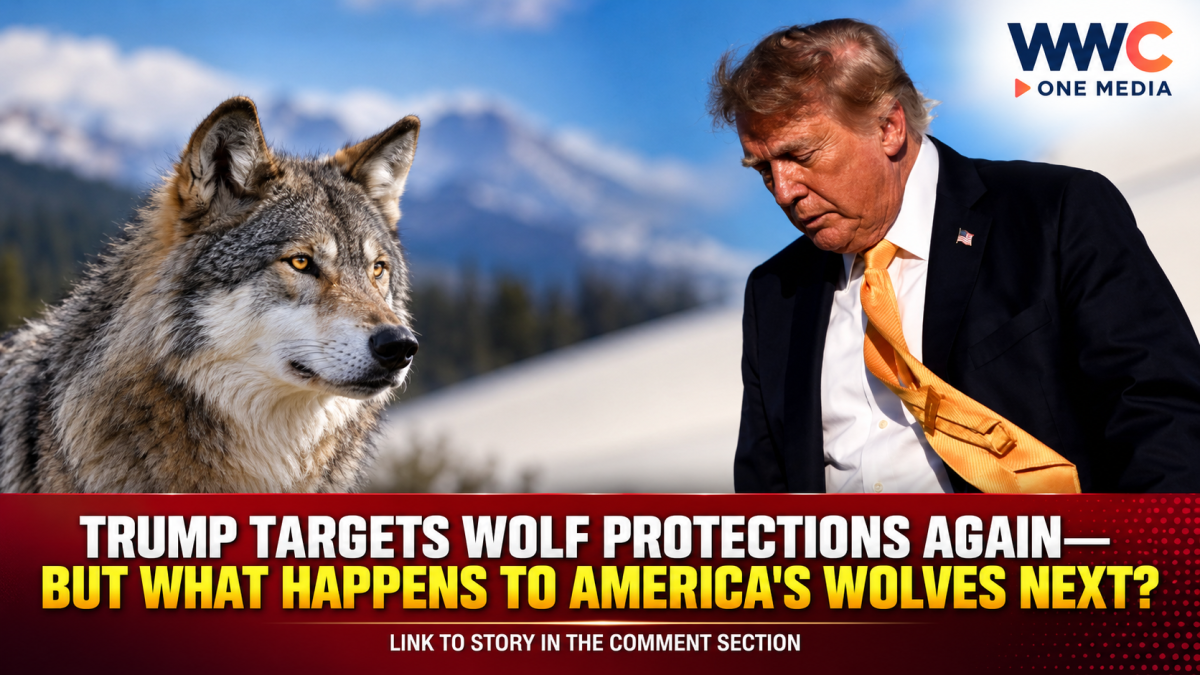
WASHINGTON, D.C. — U.S. President Donald Trump has reignited one of America’s most bitter wildlife battles after signing an executive order directing his administration to review whether federal protections for gray wolves and Mexican wolves should be removed.
The move, announced September 4, is aimed at helping cattle ranchers deal with livestock losses blamed on wolves. But conservation groups say the latest push could put decades of recovery efforts at risk and reopen the door to expanded wolf killing across the United States.
Importantly, Trump’s order does not immediately remove Endangered Species Act protections from wolves. Instead, it gives Interior Secretary Doug Burgum 90 days to determine whether gray wolves and Mexican wolves have met the recovery criteria required for delisting or downlisting under the Endangered Species Act. If officials conclude the animals qualify, the administration is directed to begin the formal process of changing their federal status.
Wolves Back in the Political Crosshairs
Trump’s executive order is part of a broader package of actions designed to support the U.S. cattle industry as the administration confronts historically high beef prices, shrinking cattle herds and pressure from ranchers over imported beef.
Reuters reported that the White House also announced measures involving meat processing and country-of-origin labeling as part of its effort to address challenges facing ranchers and consumers. The wolf order specifically focuses on giving ranchers greater protection from livestock losses.
Under the directive, federal officials are also expected to work with state authorities if a determination is made to reduce federal protections, potentially encouraging states to adopt policies that allow more aggressive management of wolf populations.
That prospect has triggered immediate outrage from conservationists.
How Many Wolves Are at Stake?
The debate is particularly sensitive because the two wolf populations are in very different stages of recovery.
The Wolf Conservation Center estimates that roughly 7,600 gray wolves live across the contiguous United States. Their recovery is often cited by supporters of delisting as evidence that federal protection has succeeded.
Mexican wolves, however, remain far more vulnerable.
Official estimates cited in recent coverage place the U.S. Mexican wolf population at just 317 animals at the end of 2025, making the subspecies one of North America’s most closely watched endangered predators.
Conservationists argue that those numbers show why the Mexican wolf, in particular, should not lose federal protection. They also point to concerns about genetic diversity and the challenges facing small, isolated populations.
Trump’s Wolf Policy Faces a Familiar Legal Fight
This is not Trump’s first attempt to remove federal protections from gray wolves.
During his first term, the Trump administration moved to delist gray wolves, but the policy became the subject of a lengthy legal battle. The previous federal delisting was ultimately reversed after court challenges, restoring protections across much of the country.
That history suggests the administration could face another courtroom battle if it moves forward with a new delisting proposal.
Environmental organizations have already signaled strong opposition, arguing that wolf recovery remains incomplete in several regions and that removing protections prematurely could reverse decades of conservation progress.
A Bigger Fight Over the Endangered Species Act
The wolf order also comes after the Trump administration made several broader changes to how the Endangered Species Act is implemented.
Recent actions have weakened automatic protections for species listed as threatened and changed how the government considers habitat and other factors under the landmark conservation law, moves that have drawn sharp criticism from environmental advocates.
Supporters of the administration’s approach argue that species recovery should lead to reduced federal intervention and greater state control. Critics counter that removing protections too soon could leave vulnerable populations exposed to hunting, habitat loss and other pressures before their recovery is secure.
Did Trump Make It Legal to Shoot Wolves Immediately?
No — not automatically.
The executive order directs the Interior Department to review the status of gray wolves and Mexican wolves. Federal protections are not instantly erased simply because Trump signed the order.
Recent reporting also noted confusion surrounding the announcement after Trump asked during an event whether wolves could be shot immediately. The policy itself, however, requires a formal determination and further action before any federal delisting or downlisting can take effect.
That distinction could become crucial as the debate spreads online, where claims about the immediate legal status of wolves may move faster than the actual federal regulatory process.
What Happens Next?
All eyes are now on Interior Secretary Doug Burgum and the 90-day review ordered by the White House.
The administration must determine whether gray wolves and Mexican wolves meet the scientific and legal recovery standards for delisting or downlisting. Any move toward changing their federal status is likely to trigger intense scrutiny from ranchers, wildlife advocates, scientists and state governments — and potentially another round of lawsuits.
For now, Trump’s order has done something immediate even before any wolf’s legal status changes:
It has put America’s wolves back at the center of one of the country’s fiercest political, environmental and cultural battles.
The question is no longer simply whether wolves have recovered.
The bigger question now is: if federal protections disappear, can their recovery survive what comes next?
WWC ONE MEDIA J.M.S




Leave a Reply