
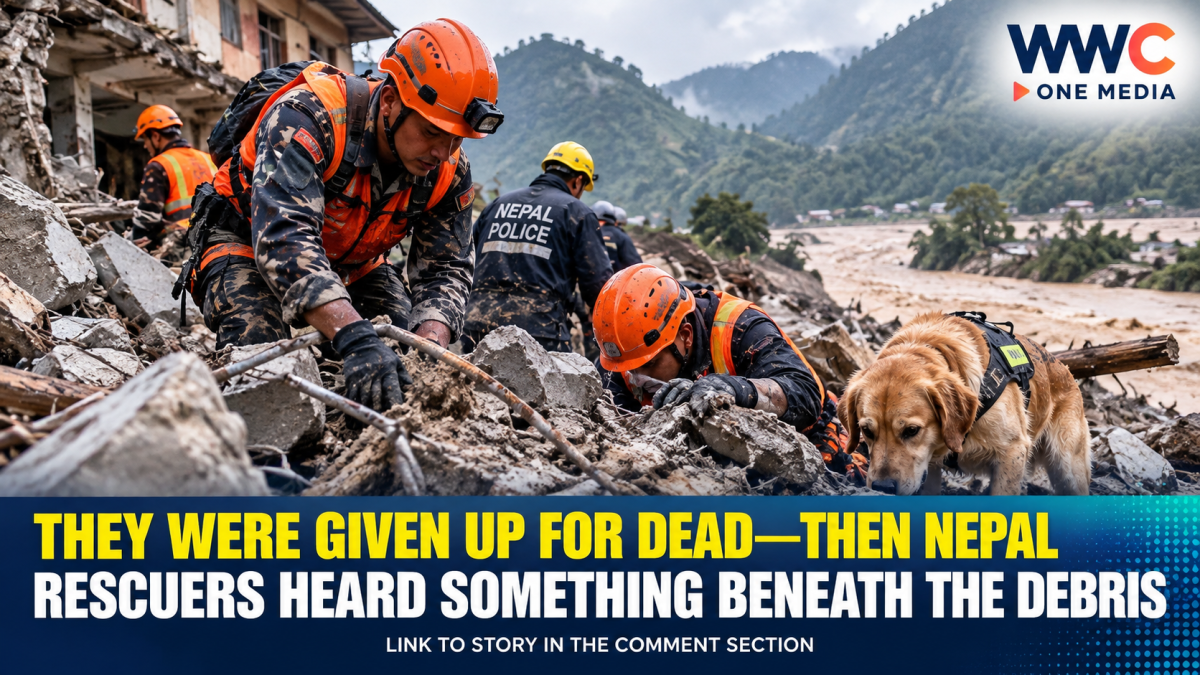
KATHMANDU, Nepal — Ten days after catastrophic floods tore through Nepal’s Himalayan region, rescue teams are refusing to give up.
A series of dramatic rescues has injected fresh hope into an increasingly grim search for survivors, even as the death toll climbs above 1,300 and thousands of people remain unaccounted for.
Emergency crews have been racing through mountains of mud, debris and destroyed infrastructure following the August 26 disaster, which authorities and international reports have linked to a massive glacier and rock collapse near Nepal’s border with China.
The latest developments have stunned rescuers and families alike: people believed trapped and possibly dead for days have been pulled out alive.
Survivors Found Alive After Days Underground
The rescue effort gained new momentum after two Nepali hydropower workers were pulled alive from a tunnel nine days after the devastating floods.
Then came another extraordinary breakthrough.
On Saturday, rescuers recovered a Chinese national, identified in international reports as Lu Haitao, alive from a 225-meter tunnel at the Upper Trishuli-1 Hydropower Project. He had been trapped since the disaster struck.
In a separate rescue operation, a woman was also found alive inside a damaged, flood-hit home in Nuwakot and taken for medical treatment.
The rescues came as a powerful reminder that, despite the rapidly diminishing chances of survival, some victims may still be alive beneath the destruction.
A ‘Miracle’ That Changed the Rescue Mission
Nepal’s emergency teams intensified their search after the earlier rescue of two workers trapped inside a hydropower tunnel.
The dramatic operation was described by international reports as a “miracle” rescue, reviving hopes that others could still be found alive in the disaster zone.
But the optimism is tempered by the enormous scale of the tragedy.
The disaster has left more than 1,300 people dead, while thousands remain missing across Nepal and the wider affected region. The exact casualty and missing-person figures continue to change as authorities reach isolated areas and reconcile lists of victims, missing residents, workers, tourists and foreign nationals.
Hundreds of Hydropower Workers Still Unaccounted For
One of the biggest concerns is the fate of workers at Nepal’s hydropower facilities.
International reports say around 900 workers connected to hydropower sites remain unaccounted for, with hundreds feared trapped inside tunnels that were flooded or buried under mud, rocks and debris.
Rescue teams have increasingly focused their efforts on these underground facilities, where the difficult environment has turned every operation into a race against time.
Some tunnels are narrow, winding and heavily damaged. Others are packed with mud and debris, making it difficult for rescuers, machinery and even drones to enter.
Experts and engineers have been working alongside emergency crews, using technical drawings and real-time information to understand tunnel layouts and identify possible locations where survivors could still be trapped.
Drones, Helicopters and International Teams Join Search
The scale of the disaster has forced Nepal to seek increasingly specialized international assistance.
Rescue teams have deployed drones, helicopters, excavators and advanced search technology to reach isolated areas. Drone operators have also attempted to search difficult terrain and confined spaces for signs of life.
Australia has sent disaster-response specialists and drone experts to assist Nepal’s search operations, while other countries have contributed technical expertise, aid, medical support and equipment.
But technology has limits.
Inside tunnels clogged with mud and debris, drones can struggle to navigate narrow passages. Collapsed roads and bridges have also slowed access to some of the worst-hit communities.
Families Still Waiting for Answers
For thousands of families, the rescue mission remains deeply personal.
Relatives have been searching desperately for missing loved ones, sharing photographs and traveling to affected districts in the hope of receiving information.
The disaster has also affected foreign nationals, including tourists and pilgrims, adding an international dimension to the search.
Reuters reported that families of some missing foreign nationals have been demanding more information about loved ones who disappeared in the disaster near the Nepal-Tibet border.
What Triggered the Nepal Disaster?
The devastating floods began on August 26 after a glacier and rock collapse triggered a massive surge of water and debris through vulnerable Himalayan valleys, according to international reports.
The force of the floodwaters swept away homes, roads, bridges and critical infrastructure.
The disaster also severely affected Nepal’s hydropower sector, with multiple facilities damaged and rescue teams still struggling to reach workers and communities cut off by the destruction.
Hope Is Fading—But Rescuers Refuse to Stop
As each day passes, the chances of finding survivors become smaller.
Yet the rescues of people days after the disaster have given emergency teams a reason to continue.
The discovery of survivors inside tunnels and beneath damaged structures has demonstrated that the search cannot simply be measured by the number of days that have passed.
For now, Nepal’s rescuers continue digging, searching and listening.
Somewhere beneath the mud, rubble and twisted remains of infrastructure, families are still hoping for the impossible.
And after several extraordinary rescues, Nepal has learned one painful lesson from this disaster:
Until every possible place has been searched, hope is not completely gone.
WWC ONE MEDIA J.M.S




Leave a Reply