Trump and Democrats Face a $1 Trillion Debt Crisis After Midterm Election Shock — Can Washington Save the US Economy?
WASHINGTON, November 11, 2026 — President Donald Trump and the newly empowered Democratic Congress face an increasingly difficult economic challenge as millions of Americans continue struggling with rising living costs, persistent inflation and uncertainty about the country’s financial future.
The November 3 midterm elections dramatically changed Washington’s political landscape, with Democrats winning control of Congress and placing Trump’s economic policies under greater scrutiny.
But an electoral victory does not automatically translate into cheaper groceries, lower gasoline prices or more affordable housing.
Instead, both parties now face mounting pressure to deliver tangible economic improvements while confronting a federal debt burden, rising borrowing costs and difficult decisions about government spending.
According to the Associated Press, annual inflation has reached 3.7%, with tariffs and the ongoing conflict involving Iran contributing to higher costs.
The challenge is particularly complicated because the administration must balance economic growth, household affordability and national security while Democrats prepare to use their congressional majority to challenge the president’s policies.
The central question is no longer simply who won the midterm elections.
It is whether Washington can deliver the economic relief voters demanded before political divisions make meaningful solutions even harder to achieve.
Democrats Win Congress as Trump’s Economic Agenda Faces New Pressure
The 2026 midterm elections delivered a significant setback to Trump’s Republican Party.
Democrats captured control of both chambers of Congress, giving the opposition greater influence over legislation, federal spending and investigations into the administration.
The outcome reflected widespread frustration among voters concerned about household expenses and the direction of the American economy.
The Associated Press’ nationwide voter survey found that economic concerns played a major role in the Republican losses.
Many voters expressed dissatisfaction with the cost of groceries, healthcare, gasoline and other everyday necessities.
The election also revealed that Democrats face their own political challenge.
Although voters supported Democratic candidates in numerous races, that support did not necessarily represent overwhelming confidence in the Democratic Party.
For many Americans, the election was an opportunity to demand a different approach rather than an unconditional endorsement of the opposition.
Trump has indicated that he is willing to cooperate with Democrats, but he has also warned that he would veto legislation he considers harmful to the country.
That creates an immediate challenge for both sides.
Democrats will have greater congressional authority, but Trump retains presidential veto powers and substantial influence over executive policy.
The result could be a period of difficult negotiations over taxes, spending, trade and economic reform.
Inflation Remains the Biggest Challenge for American Households
For ordinary Americans, the economic debate begins with a simple question: Why does everyday life remain so expensive?
Although inflation has moderated from the extreme levels experienced earlier in the decade, prices have continued increasing.
The AP reported that annual inflation reached 3.7%, keeping pressure on household budgets.
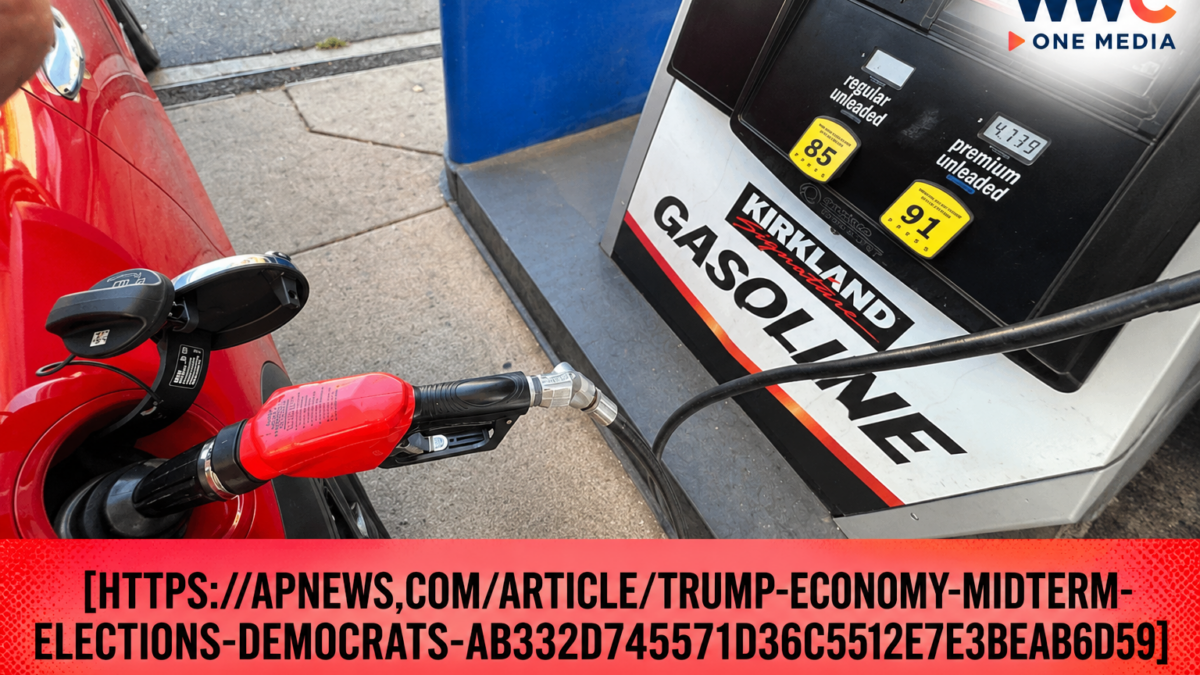
Tariffs on imported products have contributed to the debate over higher prices, while the war involving Iran has added pressure to global energy markets.
Higher fuel expenses can affect transportation, manufacturing, distribution and the cost of goods.
This creates a difficult situation for households already managing housing payments, healthcare expenses, groceries and other essential bills.
Reuters reported before the midterm elections that economic indicators presented a more complicated picture than public frustration alone suggested.
Employment and economic growth remained relatively resilient, but consumer confidence and personal financial sentiment were considerably weaker.
That distinction matters.
An economy can continue expanding while families feel that their incomes are not keeping pace with the cost of living.
For policymakers, the challenge is to improve purchasing power without triggering another period of inflation.
The $1 Trillion Interest Bill Raises Questions About America’s Debt
Another major concern facing Washington is the growing cost of financing the federal government’s debt.
According to the AP report, the US government borrows approximately $2 trillion annually, while interest payments on federal debt have surpassed $1 trillion.
That figure creates a difficult long-term problem for policymakers.
Money spent servicing existing debt is money that cannot be used for other government priorities without additional borrowing or changes to the federal budget.
Reducing the deficit, however, is politically complicated.
Possible approaches include reducing government spending, increasing certain taxes or restructuring expensive public programs.
Each option carries political and economic consequences.
Spending reductions could affect public services and government programs.
Tax increases could create additional pressure on households and businesses.
Changes to healthcare spending could also affect millions of Americans who rely on public assistance and insurance programs.
For Trump and congressional Democrats, the challenge will be finding a solution that addresses the country’s finances without worsening the affordability problems that contributed to the election results.
The disagreement is not simply about how much the government should spend.
It is also about which programs should receive funding, who should pay higher taxes and how quickly Washington should attempt to reduce its borrowing requirements.
Social Security Faces a Critical Financial Deadline
Beyond inflation and government borrowing, Social Security represents another major challenge for the next Congress.
The Associated Press reported that the program’s trust funds are projected to fall short of covering full scheduled benefits by the end of 2032 without legislative changes.
The consequences could affect millions of American retirees and people with disabilities.
If lawmakers fail to address the funding problem, beneficiaries could face an automatic reduction in payments.
The AP report warns that benefits could fall by nearly one-quarter under the projected shortfall scenario.
Several possible reforms have been discussed.
One proposal involves raising the maximum amount of earnings subject to Social Security payroll taxes.
Another possibility is increasing the retirement age.
Both approaches involve difficult political decisions.
Raising the payroll-tax cap could require higher contributions from some higher-income workers.
Increasing the retirement age could disproportionately affect people whose jobs involve physical labor or who have limited opportunities to continue working.
Neither solution is politically painless.
For Democrats and Republicans, Social Security could become one of the most important bipartisan issues facing the next Congress.
The challenge is finding a financially sustainable arrangement without placing an unfair burden on future generations or current beneficiaries.
Artificial Intelligence Could Become America’s Next Economic Opportunity — and Political Risk
While Washington debates inflation, spending and Social Security, artificial intelligence is creating another major economic question.
AI investment has become an important source of potential economic growth, particularly through data centers, computing infrastructure and technology development.
Large technology investments can generate demand for electricity, construction, specialized equipment and skilled workers.
However, the rapid expansion of artificial intelligence also creates concerns about employment displacement, electricity costs and cybersecurity.
The AP reported that voters remain divided over whether AI will ultimately benefit the American economy.
This presents a challenge for both parties.
Trump has generally supported a less restrictive approach to AI development, arguing that the United States must maintain its technological advantage.
Democrats, meanwhile, face pressure to address concerns about job security, consumer protection and the broader social consequences of automation.
WWC One Media previously examined the political risks surrounding Trump’s support for AI infrastructure in its report, Trump Is Betting Big on AI Data Centers — But His Own Voters Could Turn Them Into a GOP Midterm Nightmare.
The issue is becoming increasingly important because data centers require substantial electricity and infrastructure investment.
Another WWC One Media report, AI Data Centers Are Setting Off Alarms in Washington — And Now Congress Is Moving on the Power Bill, examines the growing debate over who should pay for the electricity infrastructure required by the AI industry.
The economic benefits could be substantial, but policymakers must also consider the costs passed on to consumers.
The employment question is equally important.
In a separate report, US AI Boom Sparks 26,000 Tech Jobs as Hiring Spreads Beyond Data Centers — But Could Artificial Intelligence Soon Replace the Workers It Creates?, WWC One Media examined how AI investment is generating demand for technology-related skills while raising questions about the long-term future of employment.
The next Congress will have to consider how to encourage innovation without ignoring the risks faced by American workers and consumers.
Why Trump’s Relationship With the Federal Reserve Matters
Controlling inflation will also require cooperation between fiscal policymakers and the Federal Reserve.
The central bank operates independently when making monetary-policy decisions, particularly when determining interest rates.
Higher interest rates can help moderate inflation by reducing borrowing and spending.
However, they can also make mortgages, business loans and other forms of financing more expensive.
The government itself can face higher borrowing costs when interest rates remain elevated.
That creates another difficult balancing act.
Policymakers must consider inflation, employment, investment and the federal deficit at the same time.
If Washington pursues policies that increase demand without addressing supply constraints or government borrowing, inflationary pressure could remain difficult to control.
At the same time, aggressive efforts to slow the economy could create additional risks for businesses and workers.
The political challenge is ensuring that economic policy supports sustainable growth rather than delivering short-term relief at the expense of long-term stability.
What the Midterm Results Mean for America’s Economy and Global Markets
The consequences of America’s economic direction extend beyond its borders.
The United States remains an important trading partner, financial-market center and source of international investment.
Changes in American trade policy, interest rates and government spending can influence economies throughout Asia and other regions.
For countries such as the Philippines, US economic developments matter because of trade relationships, overseas employment, investment flows and the peso-dollar exchange rate.
Higher US interest rates can influence international capital movements and borrowing conditions.
Changes in American demand can also affect exporters and businesses that depend on US consumers.
However, the midterm results alone do not establish that any particular change in Philippine economic conditions will follow.
The actual effects will depend on future decisions by the White House, Congress and the Federal Reserve.
For global investors, the immediate concern is whether the new political environment will produce greater economic stability or prolonged uncertainty.
Can Trump and Democrats Deliver the Economic Relief Voters Demanded?
The November midterm elections have given Democrats greater power in Congress, but the country’s economic problems will not disappear simply because political control has changed.
Trump still has significant authority over the executive branch, while Democrats will have new opportunities to influence legislation, government spending and oversight.
Both parties will have to confront the same underlying challenges.
Inflation continues to affect household affordability.
Federal borrowing and interest payments are putting pressure on government finances.
Social Security requires legislative attention before its projected funding shortfall.
Meanwhile, artificial intelligence offers major economic opportunities while creating new questions about employment, infrastructure and regulation.
These issues require more than political speeches or campaign promises.
They require policies that can produce measurable improvements without creating larger financial problems in the future.
For Democrats, the test will be whether their congressional majority can turn electoral momentum into practical economic solutions.
For Trump, the challenge will be demonstrating that his administration can work with an opposition-controlled Congress while defending its economic record.
The stakes extend far beyond the next legislative session.
They involve the financial security of American households, the sustainability of government programs and the country’s position in the global economy.
The Bottom Line
America’s 2026 midterm elections have changed the balance of political power, but they have not resolved the economic pressures facing the country.
Trump and Democrats now have to decide how to address inflation, government debt, Social Security and the growing influence of artificial intelligence.
The biggest challenge may be finding common ground before voters lose patience with both parties.
And with more than $1 trillion in annual federal interest costs and Social Security facing a projected funding deadline in 2032, the consequences of delaying difficult decisions could extend well beyond Trump’s presidency.