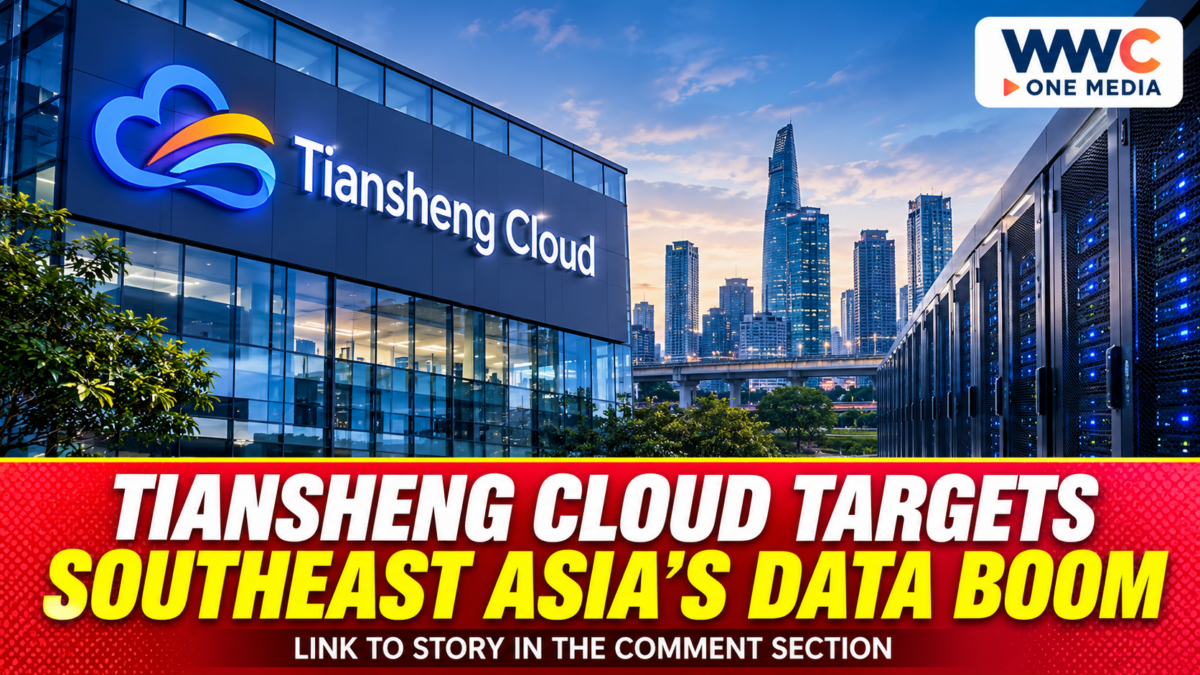
Shenzhen Tiansheng Cloud Technology Co., Ltd. is promoting enterprise server procurement services for Vietnam, Thailand and Indonesia, positioning its inventory, equipment preparation and cross-border logistics as solutions for companies expanding their digital infrastructure. The announcement, published on November 11, 2026, comes as Southeast Asia’s data centre industry continues to attract investment from major technology companies and infrastructure operators.
The company’s claims arrive against a genuine regional growth trend. However, its public descriptions contain an unresolved discrepancy about when the business was established, while several commercial and distributor claims have not been independently confirmed. For prospective customers, the distinction between a supplier’s advertised capabilities and independently documented credentials is important.
ASEAN server procurement enters a larger infrastructure market
The opportunity Tiansheng Cloud is targeting is supported by the region’s expanding data centre industry.
The ASEAN Investment Report 2026, published by the ASEAN Secretariat and the United Nations Trade and Development, says regional data centre capacity increased from approximately 800 megawatts in 2019 to more than 4,600 MW in 2024. The report values the market at US$12.6 billion and projects it could reach US$20 billion by 2030.
The report also identifies a growing number of facilities, from approximately 390 in 2024 to more than 530 by 2026. Rising digital adoption and artificial intelligence workloads are among the factors driving demand for computing infrastructure. ASEAN Main Portal+1
That expansion creates opportunities beyond the construction of data centre buildings. Operators also need servers, storage systems, networking equipment, replacement components, installation services and ongoing technical support.
This is the part of the infrastructure supply chain that Tiansheng Cloud says it wants to serve.
What Tiansheng Cloud says it can supply
In its November announcement, the company described a procurement model based on inventory held in several Chinese logistics locations, including Shenzhen, Hong Kong, Beijing and Shanghai.
It claimed to maintain more than ¥260 million in server and component inventory. The equipment identified in the announcement includes Dell PowerEdge R660 and R760 servers, xFusion 2288H V7 systems, Dell R760XD storage servers and FusionServer G5500 V7 platforms.
The company also listed components such as solid-state drives, registered error-correcting-code memory and network adapters. It said configured equipment could be dispatched within days rather than waiting for standard manufacturer production cycles. EIN Presswire+1
These figures should be understood as company-reported information. The announcement does not provide independently audited inventory statements, warehouse inspection records or customer purchase documentation establishing the stated stock value.
The distinction matters because advertised inventory does not necessarily mean every configuration is immediately available, export-ready or covered by the same delivery conditions.
For enterprise buyers, an actual procurement assessment would require model-specific stock confirmation, serial-number verification, shipping terms and a written delivery commitment.
The company’s establishment date needs clarification
One issue stands out in the company’s public information.
The November 11 announcement says Shenzhen Tiansheng Cloud Technology Co., Ltd. was established in 2024, while its commercial computing heritage extends to 2011.
However, the company’s own website gives a different account. Its homepage says it has operated since 2015, and its About Us page identifies 2015 as the year Shenzhen Tiansheng Cloud Technology Co., Ltd. was officially established. EIN Presswire+2
These statements might refer to different stages of a business, such as an earlier trading operation, a predecessor business or a later corporate entity. But the public material reviewed does not explain the difference.
That makes it inappropriate to select either 2015 or 2024 as the definitive legal incorporation date without a corporate registration record or a formal company clarification.
The company’s website also describes a workforce of more than 300 people and more than 150 certified engineers. Those are company-published representations, not independently audited employment or certification figures.
Distributor credentials and warranty support require verification
Tiansheng Cloud presents itself as an authorised distributor or partner for several enterprise hardware brands, including Dell, xFusion, Inspur and Lenovo.
The November announcement specifically describes the company as a Dell Gold Partner, an official xFusion distributor, an Inspur authorised distributor and a Lenovo authorised partner. It also promotes cross-border warranty-transfer coordination for equipment supplied to customers in Southeast Asia. EIN Presswire+1
Those claims could be commercially important. Enterprise hardware buyers often need more than a product that powers on: they need genuine equipment, valid manufacturer warranties, compatible service entitlements and access to technical support after delivery.
However, the company announcement and its own website are not substitutes for confirmation from the manufacturers. The reviewed material did not establish the current scope, territory or validity period of each claimed authorisation.
Before placing an order, a buyer should verify the supplier’s status directly through the relevant manufacturer’s partner or distributor channel. Warranty coverage should also be confirmed for the country where the equipment will be installed.
Delivery speed and pricing are commercial claims, not guarantees
The announcement also advertises potential cost advantages of 10% to 20% for fleet purchases of at least 10 units. It describes a 48-hour emergency dispatch authorisation for urgent equipment requirements. EIN Presswire+1
Neither statement should be interpreted as a universal price guarantee or a promise that equipment will arrive at a customer’s data centre within 48 hours.
Dispatch and delivery are different stages. International shipments can involve export documentation, customs clearance, freight schedules, local import requirements and final delivery arrangements.
Likewise, a claimed discount depends on the products being compared, configuration, quantities, warranty coverage, shipping charges and payment terms.
The company says it performs pre-export hardware testing, including full-load testing, thermal checks and firmware alignment. These services may be useful to enterprise customers, but buyers should request sample test reports, equipment serial numbers, acceptance criteria and written warranty terms before relying on them.
Why the regional opportunity matters to buyers
The wider investment trend gives server suppliers a substantial potential market, but it also raises expectations for reliability and accountability.
Data centre operators cannot evaluate procurement solely on the purchase price of a server. Equipment compatibility, power efficiency, cooling requirements, spare-parts availability, cybersecurity controls and manufacturer support can affect the total cost of ownership over several years.
WWC ONE MEDIA has previously examined how renewable electricity could support Philippine data centre expansion. The energy requirements of digital infrastructure are also central to the wider debate over data centre grid costs and who should pay for upgrades.
The hardware supply chain is another part of that equation. A fast delivery can help a project meet a deployment schedule, but only if the equipment is genuine, correctly configured and supported after installation.
For companies building AI and cloud systems, infrastructure choices also extend beyond the physical server. As explored in WWC’s coverage of AI infrastructure risks facing Philippine companies, scaling computing capacity requires planning for security, integration and operational support—not simply purchasing more hardware.
What happens next
Tiansheng Cloud’s announcement places the company within a growing regional market, but the next step for its commercial credibility is documentary verification.
The company could clarify the difference between its stated 2011 commercial origins, its website’s 2015 establishment date and the 2024 date in its November announcement. It could also provide current manufacturer authorisation confirmations, verifiable inventory documentation and examples of completed cross-border deliveries.
For potential customers in Vietnam, Thailand and Indonesia, due diligence should include direct manufacturer checks, written warranty confirmation, serial-number validation, delivery schedules and clear contractual remedies if the supplied equipment fails acceptance testing.
The ASEAN data centre market is expanding, creating opportunities for established manufacturers, distributors and infrastructure service providers. Whether Tiansheng Cloud can convert its advertised capabilities into independently verifiable regional procurement performance remains a separate question.
Frequently asked questions
What is Tiansheng Cloud?
Shenzhen Tiansheng Cloud Technology Co., Ltd. describes itself as an enterprise IT infrastructure supplier offering servers, storage equipment, accessories and related ICT services.
Which Southeast Asian countries does Tiansheng Cloud target?
Its November 2026 announcement identifies Vietnam, Thailand and Indonesia as target markets for its server procurement and logistics services.
How much inventory does Tiansheng Cloud claim to hold?
The company announcement claims more than ¥260 million in server and component inventory across logistics locations in China. This figure was not independently audited in the material reviewed.
When was Tiansheng Cloud established?
The company’s public descriptions conflict. Its November announcement says 2024, while its website says 2015. A definitive legal incorporation date requires confirmation through an authoritative corporate record.
Are Tiansheng Cloud’s hardware distributor credentials independently confirmed?
The company advertises relationships with Dell, xFusion, Inspur and Lenovo. The reviewed material did not independently confirm the current scope of those authorisations, so buyers should verify them directly with the manufacturers.