
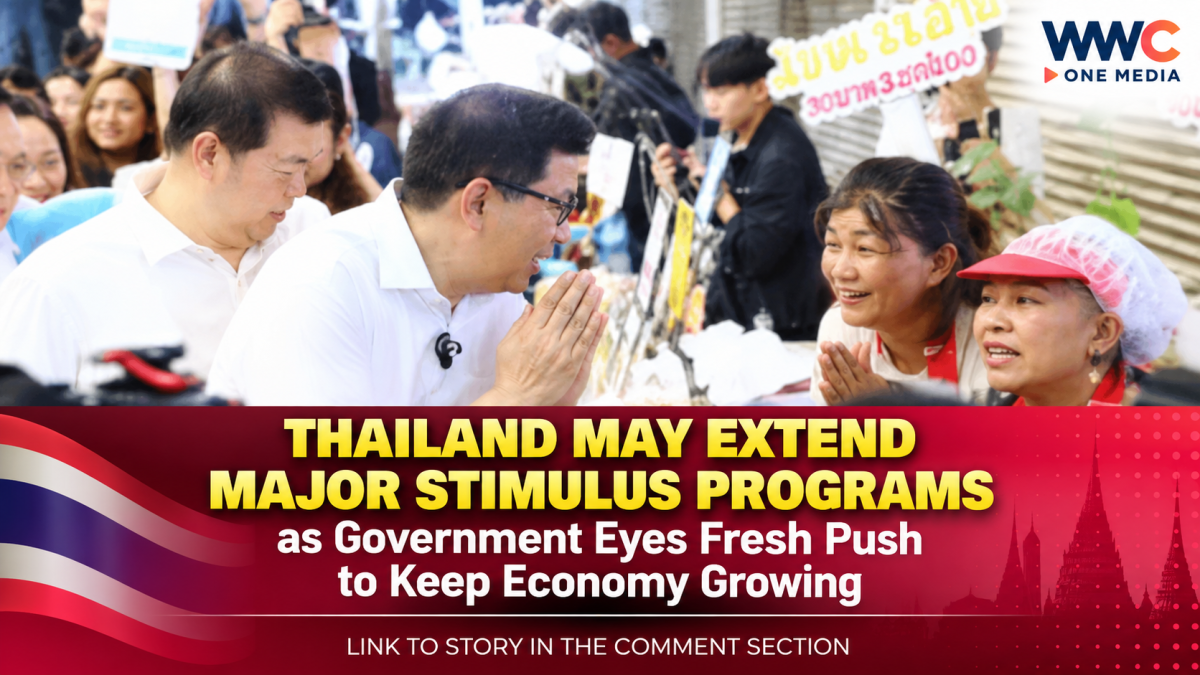
BANGKOK — Thailand’s government is considering extending key economic stimulus measures as policymakers look for ways to maintain domestic spending and support businesses amid an uncertain global economic environment.
The possible extension comes as existing government support programs approach their scheduled end dates, raising hopes among consumers and small businesses that additional assistance could be approved.
Thailand has already relied on several stimulus measures in 2026 to boost household spending, strengthen local businesses and support economic activity. One of the government’s major co-payment schemes currently allows participants to receive state support for purchases from eligible local businesses, with the program scheduled to run through the end of September.
Government Weighs Next Move on Stimulus
Officials are now considering whether certain stimulus measures should be extended or replaced with new programs to prevent a sudden drop in consumer spending once existing assistance expires.
The discussion comes at a critical time for Thailand’s economy.
The Bank of Thailand said economic activity expanded in July, supported by exports, tourism, government spending and stimulus measures. Private consumption also increased, particularly in the services sector, with government programs helping support domestic activity.
That has strengthened the argument among policymakers that continued support could help maintain momentum during the coming months.
Consumers and Small Businesses Could Benefit
An extension of stimulus measures could provide relief for Thai households still facing cost-of-living pressures.
Small businesses and local shops could also benefit if government-backed spending programs continue encouraging consumers to make purchases.
Thailand’s existing co-payment initiative was designed to help consumers pay less while directing more spending toward participating local businesses.
Under the program, the government covers 60 per cent of eligible purchases, while consumers pay the remaining 40 per cent, subject to program limits. The initiative was designed to stimulate local economic activity while easing household expenses.
Tourism Stimulus Also Set to Play a Bigger Role
The government is also preparing additional measures aimed at supporting Thailand’s tourism sector.
A tourism stimulus scheme known as Thai Tiew Thai Plus is expected to begin on Nov. 1, although the program is set to pause during part of the peak year-end travel period.
Tourism remains one of Thailand’s most important economic engines, and recent central bank data showed improving foreign arrivals and tourism receipts, particularly as flight capacity gradually recovered and long-haul travel demand increased.
Thailand Also Launching New Economic Support Measures
The government is not relying solely on traditional consumer stimulus.
Thailand is preparing a 50-billion-baht rooftop solar program, expected to begin in mid-October, aimed at supporting consumers who install solar panels while encouraging investment in renewable energy.
The program could inject additional activity into the economy while supporting Thailand’s longer-term energy goals.
The broader strategy suggests that policymakers are looking beyond short-term cash and consumption measures and toward programs that could stimulate spending while also encouraging investment.
Why Extending Stimulus Matters
The biggest concern for policymakers is what happens when government support programs end.
Stimulus measures can provide a temporary boost to household spending and business activity, but economists often watch closely for signs that demand may weaken once subsidies are withdrawn.
Thailand’s central bank has said the economy faces continuing global uncertainty despite recent improvements in exports, tourism and domestic activity.
That makes the government’s next decision increasingly important.
Will Thailand extend existing programs, introduce new stimulus measures, or shift toward more targeted economic support?
The Bottom Line
Thailand may be preparing to extend key stimulus measures as the government works to keep consumer spending and local business activity moving in the final months of 2026.
Existing programs have helped support domestic consumption, while new tourism and renewable energy initiatives are also being rolled out.
However, the final scope and duration of any extension remain subject to government decisions.
For Thai consumers and businesses, the next announcement could determine whether government support continues — or whether a new and potentially bigger round of economic stimulus is on the way.




Leave a Reply