
SEO keywords: Tesla China, Elon Musk China, Tesla Shanghai factory, Tesla China business, Tesla EV sales 2026, Tesla China strategy, Chinese EV market, Tesla SpaceX merger, BYD Tesla competition
SEO meta description: Tesla’s China strategy is facing renewed scrutiny as rumors swirl around its China business, while slowing domestic momentum and intensifying Chinese EV competition reshape the market.
Tesla’s China Strategy Faces a New Test as Musk’s EV Giant Navigates a Shifting Market
BEIJING — Tesla’s deep ties to China are once again under the spotlight as rumors about the future structure of its China operations collide with intensifying competition from Chinese electric-vehicle manufacturers.
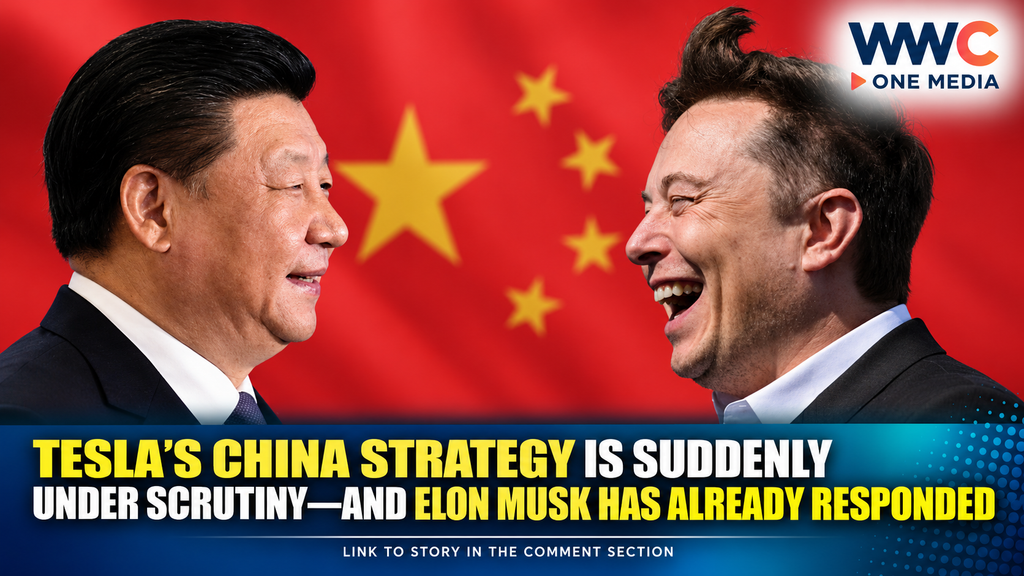
The debate gained momentum after a July report said Tesla was considering separating its China business to help clear a path for a potential merger between Tesla and SpaceX. Reuters reported that it could not independently verify the claim, while Elon Musk subsequently dismissed the report as “fake news.”
That denial, however, has not erased the larger strategic question facing Tesla: how does the world’s most recognizable EV company maintain its position in China while Chinese automakers are rapidly expanding at home and overseas?
China remains too important for Tesla to ignore
Tesla’s relationship with China is unlike that of a conventional export market.
Its Shanghai Gigafactory has become one of the company’s most important manufacturing hubs, producing Model 3 and Model Y vehicles for both the Chinese market and overseas destinations.
Recent Reuters data show just how important that factory remains.
Tesla’s China-made vehicle sales reached 86,166 units in August, up 3.6% from a year earlier and marking a tenth consecutive month of year-on-year growth. But the pace of expansion slowed sharply from July’s 38% increase, while sales fell 7.9% from the previous month.
That makes the Shanghai operation both a major asset and a strategic pressure point.
The bigger problem isn’t simply Tesla’s China sales
Tesla’s challenge is the extraordinary speed at which China’s EV industry is changing.
Domestic manufacturers such as BYD, Geely, Xiaomi and Leapmotor are competing aggressively on price, technology and product variety.
Reuters reported that China’s passenger-vehicle exports surged 77.5% year-on-year in August, reaching 894,000 units, even as domestic passenger-vehicle sales dropped 23.7%. Electric and plug-in hybrid exports were particularly strong, rising 154.7%.
The trend matters for Tesla because Chinese manufacturers are no longer competing only inside China.
They are increasingly taking their vehicles to international markets.
That creates a competitive environment in which Tesla is simultaneously defending its position in China and competing with Chinese brands abroad.
Tesla’s China market share has fallen dramatically
The long-term shift is even more striking.
Reuters reported that Tesla’s share of China’s battery-electric vehicle market fell to 6.6% in the second quarter of 2026, down from more than 15% in 2020.
Tesla’s Shanghai plant is still producing large volumes, but the company’s position relative to the rapidly expanding Chinese EV sector is very different from several years ago.
The implication is important: strong production does not necessarily mean dominant market power.
Tesla can increase output while simultaneously losing share if competitors grow even faster.
Exports are becoming increasingly important
One of the clearest changes in Tesla’s China operation is the growing role of exports.
Reuters reported that more than half of the Shanghai plant’s production was exported in the second quarter—a first for the facility.
That development reflects a broader shift within China’s automotive industry.
Chinese carmakers are also increasingly looking overseas as domestic demand weakens.
Reuters reported that China’s vehicle exports continued to surge in August despite an extended decline in domestic sales. The China Passenger Car Association expects China’s vehicle exports to reach 12 million units in 2026, potentially rising to 18 million to 20 million by 2030.
For Tesla, this creates both an opportunity and a threat.
China provides a powerful manufacturing base for international markets, but the same manufacturing ecosystem is producing increasingly formidable competitors.
The Musk-SpaceX connection adds another layer
The speculation surrounding Tesla’s China business emerged alongside reports about a possible Tesla-SpaceX combination.
The July report suggested that Tesla could separate its China operations to address potential geopolitical and regulatory complications surrounding a Tesla-SpaceX merger.
The issue is particularly sensitive because SpaceX is a major U.S. defense contractor, while Tesla operates wholly owned manufacturing facilities in China. Reuters noted that such a combination could face significant geopolitical and regulatory hurdles.
But there is an important distinction between a reported possibility and an actual corporate transaction.
No confirmed Tesla announcement has established that the company is selling its China business or preparing to do so.
Musk’s rejection of the report therefore remains central to the story.
China is also becoming more important to Tesla’s AI ambitions
Tesla’s China relationship extends beyond vehicle manufacturing.
Reuters previously reported that Musk was pursuing plans involving Chinese driving data as part of Tesla’s broader artificial-intelligence ambitions. Tesla had considered developing a data center in China while also seeking ways to transfer driving data to the United States, a process complicated by China’s data regulations.
That history illustrates why China’s importance to Tesla goes beyond the number of cars sold.
China offers Tesla:
- A massive EV market
- A highly developed battery and component supply chain
- A major manufacturing base
- A large pool of driving data
- A rapidly evolving technology ecosystem
Walking away from that ecosystem would therefore be a much bigger decision than simply exiting a single sales market.
But Tesla is facing a tougher regulatory environment
Tesla and other automakers also face increased scrutiny in China.
In August, Tesla and eight other automakers announced recalls covering roughly 4.3 million vehicles in China, in what Reuters described as the country’s largest automotive recall. The remedies included software updates, warning labels and improved markings around door handles.
The development underscores another reality of China’s enormous automotive market: scale brings opportunity, but it also brings regulatory exposure.
Tesla isn’t simply losing China—it is adapting
The latest figures don’t tell a simple story of Tesla abandoning China.
Quite the opposite.
The Shanghai factory remains productive, China-made Tesla sales are still growing year-on-year, and exports from the facility remain critical to the company’s international operations.
At the same time, Tesla’s declining market share and increasingly aggressive Chinese competitors show that the company can no longer rely on the advantages it enjoyed during China’s earlier EV boom.
That is the strategic tension behind the latest rumors.
The real question facing Musk
The central question may not be whether Tesla will leave China.
The more important question is how deeply Tesla intends to remain embedded in China while reorganizing its global business around AI, robotics, autonomous driving and potentially SpaceX.
For now, there is no confirmed Tesla announcement showing that the company has decided to sell or separate its China operations.
What is confirmed is that China’s importance to Tesla is changing.
The company is increasingly using Shanghai as an export hub while facing tougher competition inside China. Meanwhile, Chinese EV manufacturers are expanding rapidly into overseas markets, creating a competitive challenge on Tesla’s own international turf.
The bottom line
Tesla’s China story is far from over—but the rules of the game have changed.
The Shanghai factory remains one of Tesla’s most strategically important assets. Yet China’s EV industry has evolved from a market Tesla helped pioneer into one where domestic manufacturers are now setting the pace in many areas.
And that leaves Elon Musk facing a difficult balancing act.
Tesla may want more from China—not less—even as the company’s future becomes increasingly global.
For now, the rumored restructuring remains unconfirmed.
But the competitive pressure behind the rumors is very real.
WWC ONE MEDIA G.A


Leave a Reply