
MANILA / BERLIN — October 31, 2026
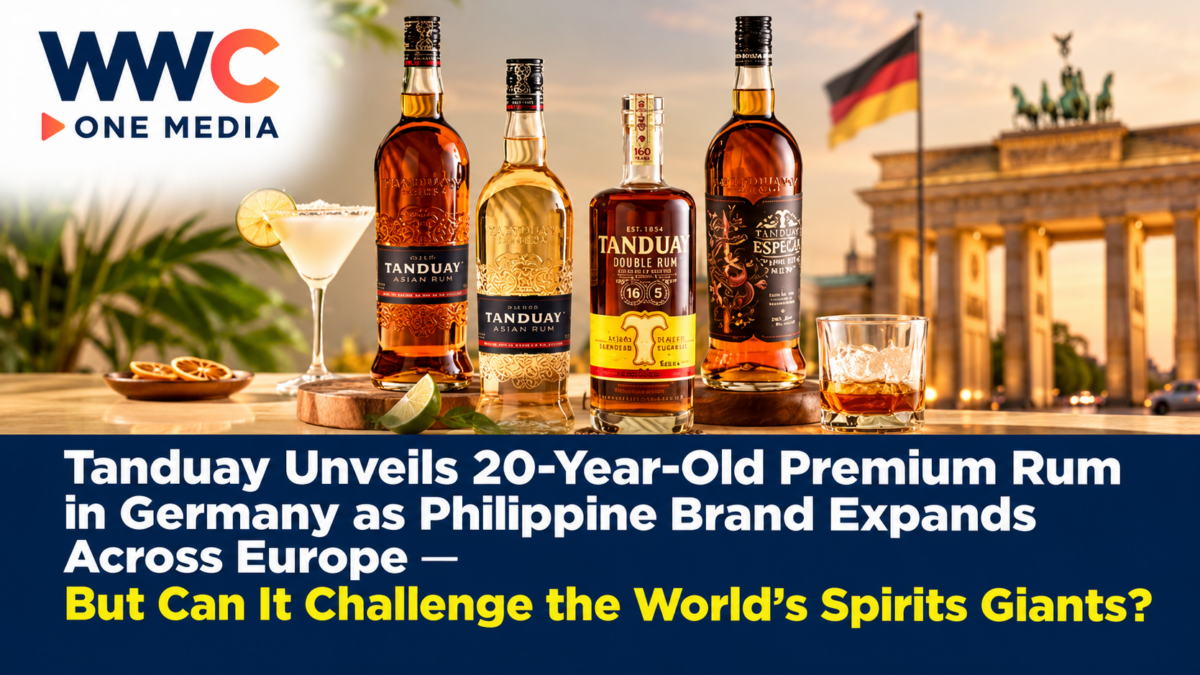
One of the Philippines’ most established spirits manufacturers is pushing deeper into Europe’s competitive premium rum market, showcasing a 20-year-old reserve expression in Germany as it seeks new distributors and greater international recognition.
Tanduay Distillers Inc., part of the Lucio Tan Group, highlighted its premium portfolio at Bar Convent Berlin 2026, held from October 12 to 14 at Exhibition Centre Berlin.
The event brought together bartenders, distributors, manufacturers and hospitality professionals from around the world.
According to an October 31 report by InsiderPH, Tanduay used the gathering to introduce its Reserve Rum – 20 Years, present Philippine rum-making techniques and build relationships with potential European business partners.
The company’s efforts come as it seeks to move beyond its dominant domestic business and develop higher-value international sales.
Earlier this year, Tanduay executives identified Europe as a priority for expansion, including opportunities in Central and Eastern European markets.
The company had also announced an ambition to raise annual international shipments to 100,000 nine-liter cases, approximately double the level reported earlier in 2026.
But international growth will depend on more than an award-winning portfolio or a successful trade-show appearance.
Tanduay must persuade distributors and consumers to choose a Philippine brand in a market already served by established Caribbean, Latin American and international rum producers.
The bigger question is whether Tanduay’s premium strategy can transform its international business into a major earnings driver—or whether fierce competition will make the European opportunity harder to capture than expected.
Tanduay Brings 20-Year-Old Reserve Rum to Bar Convent Berlin
At the center of Tanduay’s latest international push was its Reserve Rum – 20 Years.
The premium expression is made from sugarcane molasses and matured for at least 20 years in ex-bourbon barrels.
According to the company, the long maturation period under Philippine tropical conditions develops a complex flavor profile with notes of caramel, ripe banana, vanilla, cocoa and dried fruit.
Those tasting characteristics are the producer’s descriptions rather than independently established consumer preferences.
The decision to showcase a long-aged rum reflects Tanduay’s effort to compete for attention in the premium spirits category.
Bar Convent Berlin provided access to industry professionals who influence beverage purchasing, distribution and hospitality menus.
However, participating in a trade exhibition does not automatically mean a company has secured new retailers or distributors.
The commercial value will depend on whether discussions lead to actual purchase orders and lasting market relationships.
Why Germany Matters to Tanduay’s European Expansion
Germany is one of Europe’s major consumer markets and an important hub for beverage industry networking.
Bar Convent Berlin is particularly relevant because it focuses on the professional bar and beverage trade.
For companies seeking overseas expansion, such gatherings create opportunities to reach buyers who would otherwise be difficult to contact individually.
Tanduay’s participation also illustrates a change in its international approach.
Rather than depending solely on sales to Filipino communities abroad, the company is seeking wider acceptance among local consumers, hospitality businesses and spirits enthusiasts.
That requires positioning its products on quality, consistency and brand identity.
A long-aged reserve expression may help communicate a premium proposition.
But consumers must still determine whether its characteristics and price offer a compelling alternative to competing international brands.
Tanduay Uses Filipino Heritage to Differentiate Its Portfolio
Tanduay is emphasizing Philippine rum-making traditions as part of its international identity.
The company highlighted its heritage and production techniques during a masterclass led by research and development head Janno Gironella.
The session introduced European industry professionals to its reserve portfolio and methods of production.
Rather than marketing its products exclusively through price, the company is seeking to establish a recognizable story around Philippine craftsmanship.
This approach reflects a broader trend among Filipino businesses entering international markets.
WWC ONE MEDIA previously examined a similar strategy among Philippine fragrance companies in Filipino Perfumes Are Reaching France, Hong Kong and the U.S. — But Their Biggest Advantage May Be Something the World Can’t Copy.
That report examined how Filipino perfumers are developing distinctive identities based on local ingredients, traditions and cultural experiences.
The products are very different, but the business challenge is comparable.
An international brand must convince customers that its identity offers something beyond what existing competitors already provide.
Filipino-Inspired Cocktails Become Part of the Global Branding Strategy
Tanduay also used the Berlin event to present cocktails incorporating Filipino flavors.
Among the featured creations were Chief Lapu-Lapu, Toasted Coconut Ube Sours and a labuyo-inspired Prickly Pear cocktail.
The drinks were intended to introduce European hospitality professionals to flavor combinations associated with the Philippines.
The strategy combines product presentation with cultural storytelling.
It allows bartenders to explore how a rum can be incorporated into different cocktail concepts without relying solely on conventional international recipes.
The approach is consistent with Tanduay’s recent domestic marketing efforts.
WWC ONE MEDIA reported on its local campaign in Tanduay Brings Filipino-Flavored Halloween Cocktails to Poblacion — But Can Its Latest Nightlife Collaboration Make a Bigger Impact?.
That collaboration featured ingredients including ube, pandan, jackfruit, mango and durian.
Although the Berlin event and the Makati campaign were separate initiatives, both demonstrate how the company is using recognizable Filipino flavors to create a distinct identity for its portfolio.
The financial impact of these promotions has not been publicly quantified.
The Danish Distribution Deal Shows Europe’s Expansion Is Already Underway
The Berlin showcase follows earlier international business developments.
In December 2025, Tanduay announced a distribution partnership with Bastard Spirits, a premium-focused distributor operating in Denmark and other Nordic markets.
GMA News, Philippine Daily Inquirer and Manila Bulletin independently covered the announcement.
The partnership offered access to distribution channels serving specialty retailers and hospitality establishments.
It also provided an opportunity to introduce different rum expressions to a market with established international spirits brands.
Tanduay’s 10-Year-Old Rum and Overproof variant were among the products discussed for the Danish market.
However, the publicly available announcement did not establish how many cases would ultimately be sold through the partnership.
The distinction is important.
A signed distribution arrangement creates a route to market, but actual commercial success depends on retailer uptake, consumer demand and repeat orders.
Tanduay Targets Central and Eastern European Markets
Tanduay’s European ambitions extend beyond Germany and Denmark.
In February, international business development manager Roy Kristoffer Sumang identified Slovenia, Slovakia and Hungary among the markets the company was interested in expanding into.
The company had already established relationships in a range of international markets and was seeking to add further countries.
By April, Tanduay had reported entry into markets including Estonia, Italy, Latvia and Lithuania, alongside several other countries.
This indicates that the company’s strategy includes both established Western European destinations and newer opportunities in Central and Eastern Europe.
However, market entry should not be confused with strong nationwide distribution.
A product may technically be available in a country through selected importers or retail outlets without having substantial market share.
For Tanduay, the next challenge is building consistent distribution and demand.
International Sales Remain Small Compared With the Philippine Business
Despite its international ambitions, Tanduay remains heavily dependent on the Philippine market.
In February 2026, company executives said international sales represented less than 1% of total business volume.
They described domestic sales of approximately 23 million nine-liter cases, compared with international shipments around 50,000 cases.
The company identified 100,000 nine-liter cases as an aspirational international volume target.
Manila Bulletin reported that overseas sales had increased by approximately 15% to 20% during the preceding year, according to company officials.
These figures demonstrate both the scale of the opportunity and the challenge.
Doubling exports from a relatively small base would represent meaningful international progress.
However, even 100,000 cases would remain modest relative to Tanduay’s much larger domestic operations.
The European expansion is therefore best viewed as a developing growth strategy, rather than an already dominant part of the company’s revenue.
Why Premium Rum May Offer Better Growth Opportunities
Tanduay is seeking to compete through a broader range of products, particularly those aimed at the premium segment.
The strategy is not simply to sell the largest possible number of cases.
Higher-value products may provide opportunities to improve revenue per unit and strengthen brand recognition.
But premium pricing also raises expectations concerning product consistency, presentation and consumer experience.
European buyers have access to numerous established brands with different production histories and styles.
To secure repeat business, Tanduay must demonstrate that its products can compete on their own merits.
Premium positioning also brings additional costs.
Marketing, distribution, compliance, packaging and brand development can require considerable investment.
The company must balance those expenses against the margins earned from international sales.
Trade Agreements Could Influence the Next Stage of Expansion
European expansion involves more than establishing relationships with distributors.
Philippine exporters must also manage customs procedures, labeling requirements, excise duties, regulatory compliance and other market-entry costs.
The broader trade relationship between Southeast Asia and Europe may affect future commercial conditions.
WWC ONE MEDIA explored this issue in More Than 200 ASEAN-EU Officials and CEOs Are Heading to Manila — But Three Major Trade Deals Are Still Unfinished.
The report examined negotiations involving the Philippines, Malaysia and Thailand as they pursued closer commercial ties with the European Union.
Any future Philippines–EU trade agreement could influence market access for a variety of Philippine products.
However, there is no confirmed basis to claim that such an agreement has already reduced duties on Tanduay’s exports or guaranteed a commercial advantage for its rum portfolio.
Actual benefits would depend on the agreement’s final terms and implementation.
Other Filipino Brands Are Also Seeking New Growth Markets
Tanduay’s strategy reflects a wider ambition among Philippine businesses to strengthen their brands and expand their reach.
Some companies are pursuing foreign distributors.
Others are entering international retail markets, franchising or strengthening domestic operations before seeking overseas opportunities.
WWC ONE MEDIA recently reported on the expansion strategy of one of the Philippines’ best-known consumer companies in Jollibee Eyes 1,500 New Growth Areas Across the Philippines as 71% Target Provinces — But Can the Fast-Food Giant Turn Expansion Into Bigger Profits?.
The restaurant and spirits industries operate under different business models, but both face questions about how expansion can translate into sustainable earnings.
In Tanduay’s case, the international challenge involves specialized distribution networks, imported-product regulation and competition among established drinks brands.
The larger opportunity is to build international recognition for a Philippine-owned company beyond its home market.
Can Tanduay Compete With Established Global Rum Brands?
The international rum industry includes producers with strong identities linked to the Caribbean, Latin America and other established rum-making regions.
Tanduay enters that environment with its own advantages.
These include a long operating history, experience in large-scale production and a portfolio extending into premium-aged products.
The company can also emphasize the distinctive conditions under which rum is matured in the Philippines.
But its advantages must be communicated effectively to consumers who may be unfamiliar with Philippine rum.
International competition is not determined solely by product quality.
Distribution coverage, shelf visibility, professional recommendations and customer familiarity are also important.
A strong appearance at Bar Convent Berlin may help improve recognition among industry professionals.
However, the real test will be whether those connections produce lasting sales.
The Bigger Question: Can Europe Become a Meaningful Earnings Driver?
Tanduay’s European strategy is becoming clearer.
The company has pursued partnerships in multiple markets, promoted higher-value products and used international industry events to build business relationships.
Its Reserve Rum – 20 Years provides a flagship premium expression for this effort.
The Danish distribution agreement shows that the company has already made progress in establishing international commercial channels.
But the numbers demonstrate that the overseas business remains relatively small compared with its Philippine operations.
That means future growth could be significant in percentage terms without immediately transforming the company’s overall financial performance.
The key measures will include international sales volume, revenue, profitability, distributor retention and the number of markets where the brand achieves sustained demand.
Those outcomes have not yet been confirmed for the Berlin showcase.
The Bottom Line
Tanduay’s appearance at Bar Convent Berlin 2026 marked another step in the Philippine spirits maker’s strategy to expand across Europe.
The company showcased its 20-year-old reserve rum, introduced Filipino-inspired cocktail concepts and met international beverage industry professionals.
Its broader European push follows distribution agreements and market-entry initiatives announced earlier in the year.
Tanduay has also expressed ambitions to increase international shipment volumes and develop its premium portfolio.
But the company’s international business remains small compared with domestic sales, and the financial results of the latest European showcase have not been disclosed.
As Tanduay takes its Philippine heritage and premium rum portfolio to some of Europe’s most competitive beverage markets, one question now matters most: Can the company turn international interest into a profitable global business—or will established spirits giants remain difficult to challenge?










