
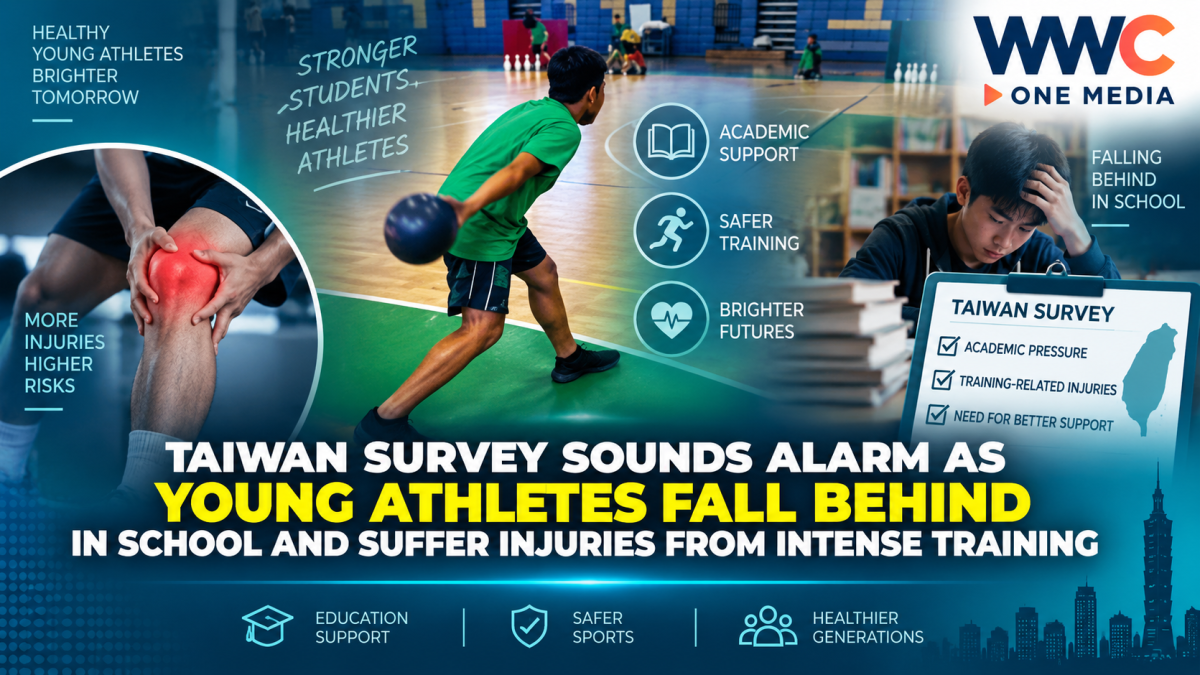
TAIPEI, Taiwan — A new survey has raised serious concerns about the price young athletes may be paying for sporting success, with nearly half of student athletes reporting difficulty keeping up with schoolwork and one in five saying they have needed surgery, long-term treatment or hospitalization because of sports injuries.
The findings have added urgency to Taiwan’s push to reform intensive sports training for elementary-school students, with the government moving to prevent young children from being pushed into excessive training at the expense of their education and well-being.
The survey, released by the Child Welfare League Foundation, found that while many students in sports-focused classes feel a strong sense of achievement from athletic training, the pressure can also lead to missed classes, injuries, exhaustion and declining passion for the sport itself.
Nearly Half Struggle to Keep Up With Schoolwork
One of the survey’s most striking findings was the impact intensive training has on education.
Close to 50 percent of respondents said they had struggled to keep up with their schoolwork because of training and sports competitions.
Meanwhile:
- 38.7 percent said sports training left them with little time to study.
- About 26 percent said they had trained during periods when they were supposed to be attending academic classes.
- Nearly 32 percent said they had taken more than 16 days of leave in a single semester because of competitions and training.
The figures suggest that for some young athletes, pursuing sporting success can mean regularly missing the classroom.
That concern comes as Taiwan continues to perform strongly in international education assessments, making the potential conflict between athletic development and academic learning an increasingly important policy issue.
Some Students Train for More Than Eight Hours a Day
The survey also revealed concerns about the intensity of training programs.
According to the Child Welfare League Foundation:
- 66.6 percent had experienced training sessions lasting more than three hours in a single weekday.
- 18.6 percent had undergone three consecutive hours of training without a break.
- 15.6 percent said they had trained for more than eight hours in a single day.
Taiwan’s regulations generally limit weekday training for students in physical education classes to no more than three hours per day, but the foundation said some schools appeared not to be following those rules.
The findings have intensified questions about whether young athletes are receiving enough protection from excessive workloads.
One in Five Needed Surgery, Therapy or Hospital Care
The physical toll was equally alarming.
More than half of respondents said they found it difficult to recover their energy after training, even when given enough time to rest.
Meanwhile, 20.4 percent said they had undergone surgery, received long-term treatment or been hospitalized because of sports-related injuries.
Even more concerning, about 27 percent said they had been asked to continue high-intensity training while injured.
The findings raise questions about whether competitive pressure is sometimes outweighing the health needs of young athletes.
Young Athletes Are Also Losing Their Passion
The survey found that the impact of intensive training was not limited to academics and physical injuries.
Many student athletes reported growing doubts about their sporting future.
According to the survey:
- 56.4 percent said they had questioned the meaning of their athletic training.
- 46.5 percent said their passion for their sport had gradually faded.
- 47 percent worried that poor academic performance could hurt their future job prospects.
- 17.8 percent worried they lacked other skills and had limited career options.
For students who begin intensive sports training at a young age, the findings suggest a growing fear of being trapped between two difficult futures — struggling academically while also facing uncertainty about whether a sporting career will ultimately succeed.
Taiwan Moves to Reform Elementary Sports Training
The survey was released after Taiwan’s Executive Yuan approved amendments to the National Sports Act aimed at strengthening protections for elementary-school student athletes.
Under the government’s plan, no new sports-focused classes will be established at the elementary-school level.
Existing sports-centered classes are expected to transition toward sports clubs and community-based programs, with the goal of creating a better balance between education and athletic development.
The reforms are intended to prevent elementary-school students from being exposed to excessively intensive sports training while still allowing young people to develop their athletic abilities.
Can Taiwan Produce Champions Without Sacrificing Childhood?
That is now the central question.
Taiwan has produced internationally successful athletes across baseball, badminton, weightlifting, taekwondo and other sports. But the latest survey suggests the system supporting future champions may also be placing some children under intense pressure.
Sport can provide young people with discipline, confidence, teamwork and opportunities for achievement.
But when training becomes so demanding that students miss weeks of school, suffer serious injuries or lose their passion for the sport, the balance may have gone too far.
The government’s proposed reforms appear designed to address exactly that problem.
The Bottom Line
Taiwan’s latest survey paints a troubling picture of life for some young student athletes.
Nearly half have struggled with schoolwork. More than one in five have needed serious medical treatment for sports injuries. And almost half say their passion for their sport has faded.
The findings are now helping drive major reforms to elementary-school sports programs as Taiwan tries to strike a difficult balance between producing future champions and protecting children’s education, health and well-being.
The message behind the survey is simple: winning medals should never mean losing an education, a childhood or a child’s love for the game.
WWC ONE MEDIA J.M.D



Leave a Reply