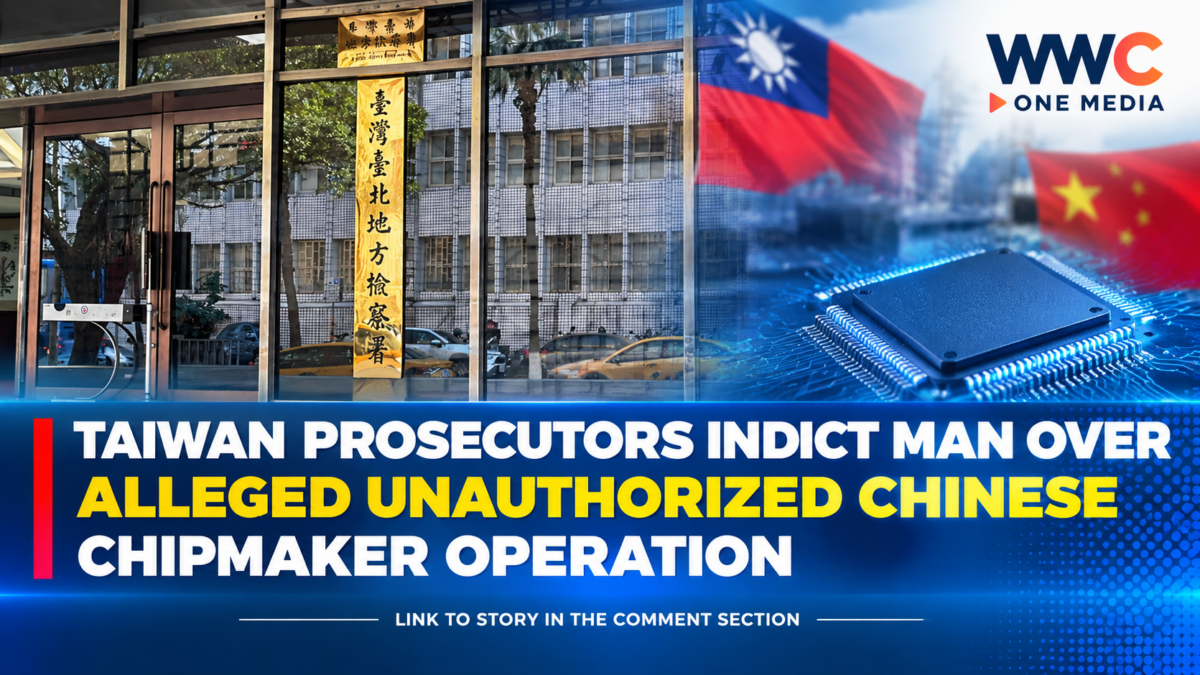
Taiwanese prosecutors have indicted a man accused of helping a Chinese semiconductor company maintain an unauthorized operation in Taiwan, in a case that has drawn renewed attention to the island’s restrictions on Chinese technology firms.
The Taipei District Prosecutors Office said Thursday that Lin Hao-yuan, who headed the Taiwan office of Chinese chipmaker Lontium Semiconductor, was charged under Taiwan’s Cross-Strait Act.
The law requires Chinese companies to obtain government approval before conducting business activities in Taiwan. Prosecutors are seeking an 18-month prison sentence for Lin.
Authorities said unauthorized operations by Chinese technology companies could affect Taiwan’s semiconductor sector, intellectual property and technical expertise.
Lontium was among 16 Chinese technology companies targeted by Taiwan’s Ministry of Justice in investigations launched last year over allegations that firms had established offices and hired local workers without the required authorization.
The company’s Taipei office was raided in July 2025.
According to prosecutors, Lontium, which is based in Hefei and specializes in high-speed interface chips, originally opened an office in Taipei’s Neihu District in 2012. Its board decided to close the office in 2015.
Prosecutors allege that Lontium Chairman Chen Feng later appointed Lin to oversee the company’s Taiwan operations in 2018.
In 2024, the company allegedly rented another office in Taipei’s Zhongshan District and began employing local engineers. Those employees reportedly worked on chip research and design, testing and technical support.
Prosecutors said Lin helped Lontium generate more than NT$191 million (about US$6 million) in revenue in Taiwan while building a local customer base that included companies such as Quanta Computer, Advantech and Chicony Electronics.
The case also involves the company’s chairman. Prosecutors issued an arrest warrant for Chen and confiscated Lin’s salary and bonuses that he allegedly received from Lontium.
Taiwan’s Investigation Bureau has previously said some Chinese companies attempted to bypass local regulations by operating without approval, registering businesses under non-Chinese nationals or employing Taiwanese workers through human-resources and management companies.
The latest prosecution places Taiwan’s semiconductor industry and its rules governing Chinese investment and business operations back in the spotlight as authorities continue examining how Chinese technology companies operate on the island.
The allegations against Lin and Chen remain subject to judicial proceedings, with the courts ultimately determining responsibility based on the evidence presented.
WWC ONE MEDIA G,A