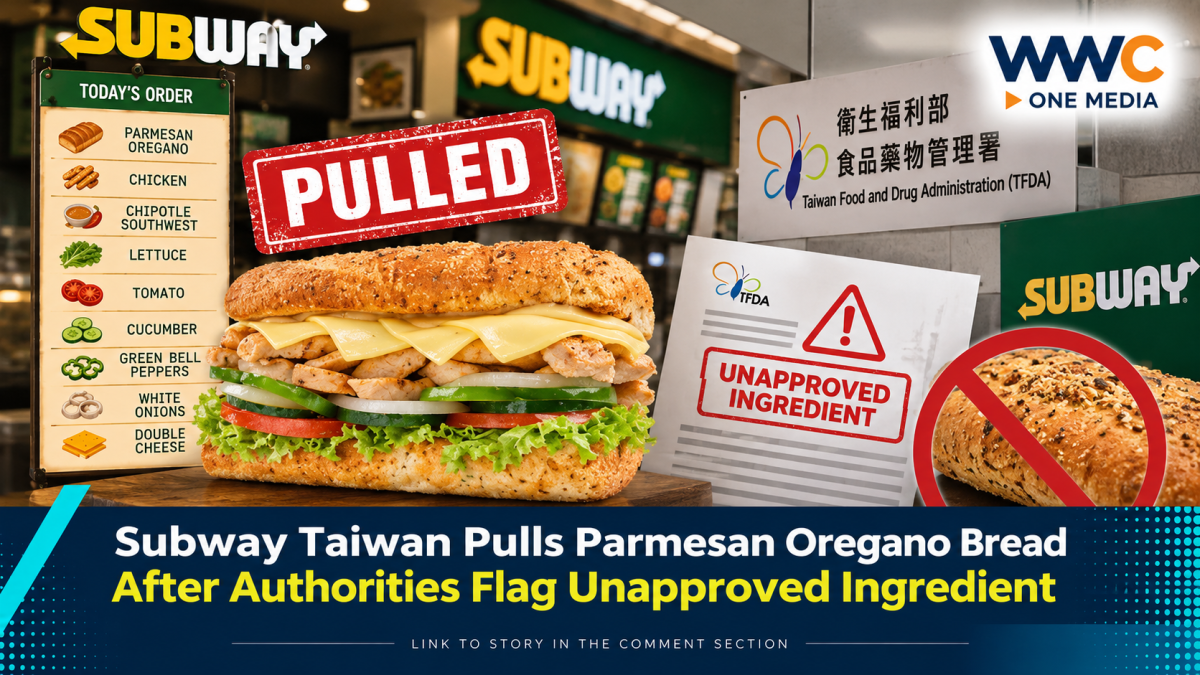
TAIPEI — Subway Taiwan has confirmed that its popular Parmesan Oregano bread was removed from stores after authorities found that an ingredient in its imported cheese powder did not comply with Taiwan’s food regulations, prompting the company to stop using the ingredient and begin recalling affected products.
The disclosure comes after online claims about why the bread had disappeared from Subway outlets in Taiwan. The company had previously attributed the product’s absence to supply and shipping issues, but a subsequent inspection by authorities identified a regulatory problem involving the cheese powder used on the bread.
What Authorities Found
Subway Taiwan said the bread and Parmesan cheese powder used for the product were imported from overseas suppliers.
According to the company, authorities inspected the cheese powder and determined that one of its ingredients did not comply with Taiwan’s regulations governing food ingredients.
Subway said it was notified by the relevant authorities and immediately stopped using the affected powder before proceeding with the required removal and recall of products.
Importantly, Subway has not publicly identified the specific substance involved.
That means reports describing it simply as an “unapproved” or “prohibited” substance should not be interpreted as confirmation of what the substance actually was or what health effects, if any, it may have caused.
Why the Bread Suddenly Disappeared
The Parmesan Oregano bread had reportedly been unavailable since late August.
Store notices initially cited shipping delays as the reason for the shortage.
The situation attracted renewed attention after a person identifying himself as a former Subway employee discussed the product during a livestream and alleged that the bread’s topping contained a substance that was not permitted under Taiwanese regulations. The claims spread online and prompted questions about the product’s disappearance.
CNA reported that the former employee also discussed Subway’s Thousand Island dressing, which had been removed from sale earlier.
However, the two situations involve different food-safety issues, according to Subway’s subsequent statement.
Subway Says It Has Removed and Recalled the Affected Product
Subway Taiwan said it stopped using the affected cheese powder immediately after receiving the authorities’ notification.
The company also began removing related products from stores and carrying out the required recall procedures.
The company said food-ingredient requirements can differ between countries and markets, adding that it respects and follows the findings and regulations of Taiwanese authorities.
Subway also said it would strengthen its ingredient screening and supply-chain management procedures.
The Thousand Island Dressing Is a Separate Issue
The Parmesan Oregano bread controversy has also brought attention back to Subway Taiwan’s Thousand Island dressing, which was temporarily removed from stores earlier this year.
Subway said that incident was connected to an upstream cooking-oil supply issue, rather than the cheese-powder issue involving the bread.
According to the company’s statement, authorities found that soybean oil used in the affected dressing contained benzo[a]pyrene above Taiwan’s legal limit and ordered the affected product to be removed and recalled.
Subway said it subsequently stopped using the affected dressing, carried out removal, recall and disposal procedures, and resumed supply only after replacement products had been tested and confirmed to comply with food-safety requirements.
Two Food-Safety Cases Should Not Be Confused
The distinction is important because the two Subway products were affected for different reasons.
Parmesan Oregano bread:
Authorities found an ingredient in the imported cheese powder that did not comply with Taiwan’s food-ingredient regulations. Subway stopped using the powder and recalled affected products.
Thousand Island dressing:
The company said an upstream soybean-oil issue involved benzo[a]pyrene exceeding the applicable limit, resulting in a recall before the dressing was later replaced and returned to stores.
Neither case, based on the currently available reporting, supports claims that all Subway food products in Taiwan are unsafe.
Why the Exact Ingredient Matters
The wording surrounding the Parmesan Oregano bread is particularly important.
The company has confirmed a regulatory non-compliance finding, but it has not publicly disclosed the identity of the ingredient involved.
That leaves a significant gap between what has been confirmed and what has circulated online.
A former employee’s allegations helped trigger public attention, but those allegations should be distinguished from the findings confirmed by authorities and Subway itself.
Until authorities or Subway publicly identify the substance, its concentration and the relevant regulatory basis, claims about its precise nature or potential health consequences remain unverified.
Subway Faces a Supply-Chain Test
The episode highlights a challenge faced by international restaurant chains: ingredients sourced for one market may encounter different regulatory requirements in another.
Subway said it would strengthen ingredient screening, supply-chain management and food-safety procedures following the incident.
For multinational food companies, compliance therefore does not end with a supplier’s certification. Imported ingredients must also meet the requirements of the market where the finished food is sold.
What Consumers Should Know Now
The confirmed action is that Subway Taiwan has stopped using the affected cheese powder and removed and recalled products associated with it.
The company has not publicly disclosed the exact substance identified by authorities.
Meanwhile, Subway says the Thousand Island dressing issue was separately addressed through removal, recall and replacement procedures.
The developments underscore why consumers should rely on confirmed recall information and official announcements rather than unverified social-media claims when food-safety concerns emerge.
For Subway Taiwan, the Parmesan Oregano bread controversy is now more than a missing menu item—it has become a test of ingredient transparency, supply-chain controls and consumer confidence.
And the biggest unanswered question remains the one consumers are still waiting to have answered: What exactly was the ingredient that failed Taiwan’s food regulations?