
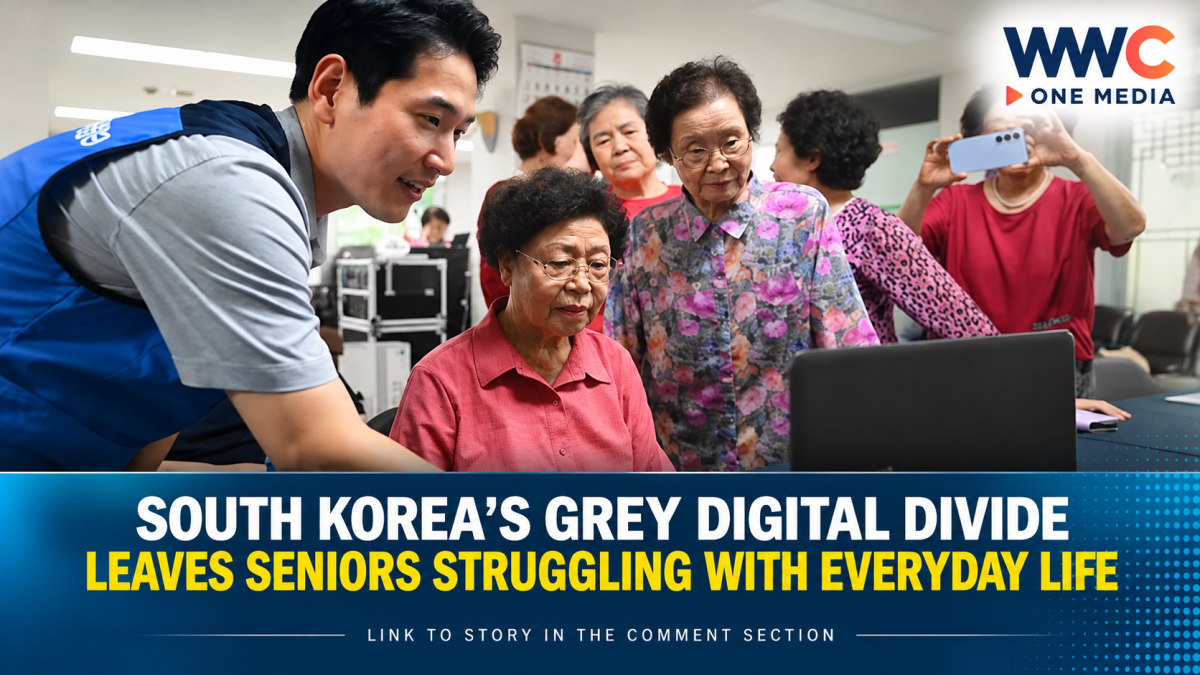
South Korea’s rapid shift to smartphones, apps and self-service kiosks is leaving many older people struggling to access everyday services, creating what has been described as a widening “grey digital divide” in one of the world’s most technologically advanced countries.
For 79-year-old Hwang Sun-hee, successfully placing an online order during a government-organised training session was a small but meaningful achievement. She said older people increasingly find it difficult to manage daily activities without smartphone applications or digital kiosks.
The problem is particularly visible in areas such as transportation and entertainment. Nearly 90 per cent of taxi drivers in South Korea use ride-hailing applications, yet more than 80 per cent of people aged over 60 continue to hail taxis by hand rather than using apps.
Sports ticketing has also exposed the gap. Some baseball clubs began reserving a limited number of tickets for in-person purchases after reports emerged of older fans arriving at stadiums with cash but struggling to operate digital ticket machines.
The challenge goes beyond a lack of access to technology. Older adults may own smartphones but still have difficulty navigating rapidly changing applications, online payments, digital forms and automated services. Research on South Korean seniors has found differences in smartphone literacy based on age and access to information and communications technology training.
The issue has become more pressing as South Korea ages rapidly while its economy and public services become increasingly digital. Tasks that once involved speaking directly with a staff member are now frequently completed through an app, touchscreen kiosk or online platform, leaving people without sufficient digital skills at a disadvantage.
South Korean authorities have responded with programmes designed to teach seniors basic digital skills. Community centres and other organisations are offering training sessions that cover practical activities, including using smartphones, ordering products and navigating digital services. The national rights agency has also called for senior-friendly devices and education programmes to help older people participate fully in an increasingly digital society.
The divide can also contribute to social isolation. Research involving older adults in the Seoul metropolitan area found that smartphone literacy varies significantly among people in their 60s, 70s and 80s, while those who receive information technology training tend to make greater use of smartphone functions.
For South Korea, the challenge is no longer simply getting people connected to the internet. It is ensuring that technological progress does not make basic aspects of daily life inaccessible to those who have difficulty keeping pace.
As more services move online, digital inclusion is becoming an essential part of social participation. For seniors like Hwang, learning how to place an online order may seem like a small accomplishment, but it can represent something much larger: the ability to navigate a society that increasingly assumes everyone is digitally fluent.




Leave a Reply