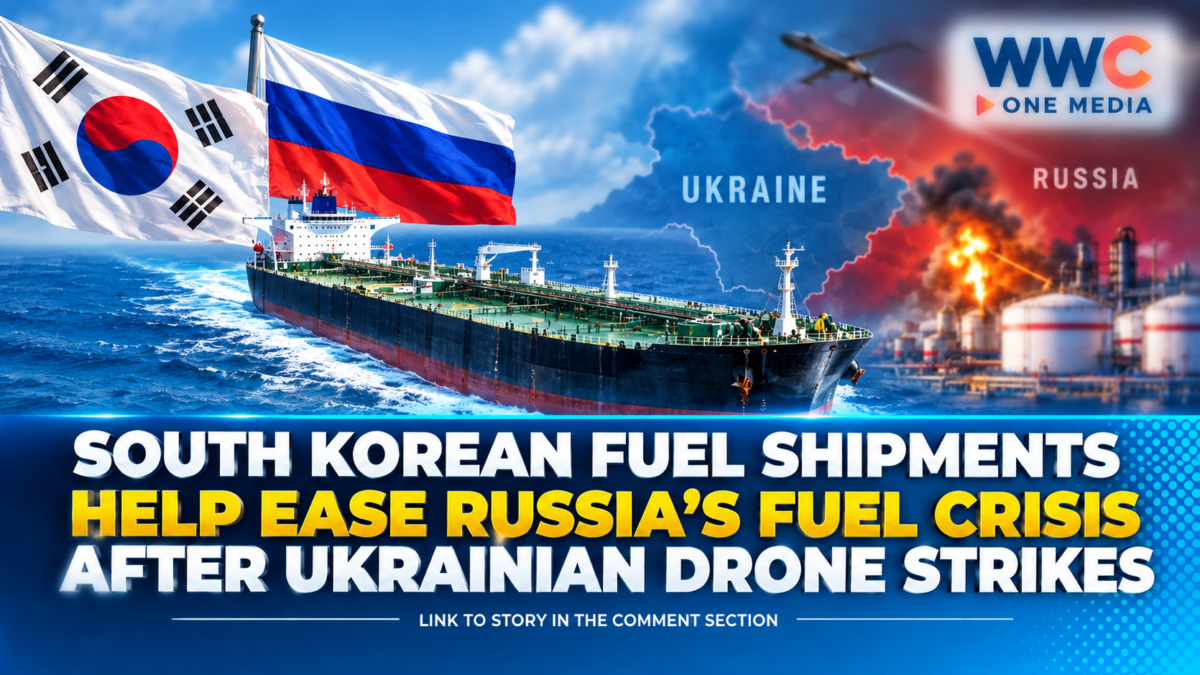
LONDON/SEOUL — South Korean fuel shipments helped ease a growing fuel shortage in Russia after Ukrainian drone attacks disrupted the country’s oil-refining capacity, according to Ukraine’s top sanctions official.
Russia imported more than 176,000 tons of petroleum products from South Korean ports in July and August, with the shipments accounting for about 31% of Russia’s fuel imports in August, Ukrainian sanctions commissioner Vladyslav Vlasiuk said.
The shipments have drawn fresh attention to South Korea’s trade with Russia as Seoul continues to publicly support Ukraine while maintaining strict controls on exports of goods that could have military applications.
South Korean Fuel Arrived as Russian Refineries Came Under Attack
Ukraine has intensified long-range drone attacks against Russian oil refineries and fuel facilities, saying the strikes are intended to put economic pressure on Moscow.
The attacks have disrupted Russian refining operations and contributed to domestic fuel shortages. In response, Moscow imposed restrictions on fuel exports and limited purchases in some regions experiencing shortages.
Vlasiuk said the South Korean shipments arrived precisely as the Ukrainian strikes were reducing Russian refinery output.
In his assessment, the imports helped Russia compensate for the loss of domestic refining capacity.
Seven Tankers Reportedly Carried the Fuel
A separate analysis by The Guardian, based on port records and ship-tracking information, found that more than 176,000 tons of fuel — mostly diesel — were loaded at South Korean ports onto seven tankers during July and August.
The vessels made multiple voyages to Russia’s Far East. The analysis also found that three of the tankers were subject to UK or EU sanctions, while one shipment involved a ship-to-ship transfer in South Korean waters.
The presence of sanctioned vessels has intensified questions about how fuel shipments were conducted and whether they could undermine broader efforts to pressure Russia economically.
However, the reporting does not establish that South Korean authorities violated their own laws. The issue is instead raising scrutiny over how international sanctions and individual national export-control systems interact.
Seoul Defends Its Export Controls
South Korea’s Foreign Ministry said the government supports international efforts to end the war in Ukraine and is enforcing expanded export controls against Russia.
Seoul said it has expanded restrictions beyond strategic goods to include 1,402 non-strategic items considered at high risk of diversion for military use.
The government did not specifically address the individual fuel shipments in its response, according to Reuters.
South Korea has provided humanitarian and non-lethal assistance to Ukraine while avoiding direct transfers of lethal weapons, reflecting its longstanding policy toward countries involved in active conflicts.
The Shipments Come Amid a Diplomatic Dispute
The fuel controversy is unfolding at an already difficult moment in South Korea-Ukraine relations.
The two countries are also locked in a dispute over the transfer of two North Korean prisoners of war to South Korea. Seoul says the transfer was supposed to remain confidential and has sought an apology from Kyiv.
Ukraine disputes Seoul’s characterization of the agreement, although its foreign minister has indicated that Kyiv wants to repair relations.
That diplomatic dispute adds another layer to questions surrounding the fuel shipments.
Russia’s Fuel Problems Could Continue
Russia’s dependence on imported petroleum products highlights the impact that sustained attacks on its refining network can have even though the country remains a major oil producer.
Earlier Reuters reporting found that Ukrainian attacks had already pushed Russia toward importing refined fuel from South Korea, with nearly 30,000 tons shipped in late July in an earlier wave of deliveries.
The latest figures suggest that the flow subsequently became much larger.
For Moscow, the challenge is rebuilding refining capacity and maintaining domestic fuel supplies while Ukrainian attacks continue. For Seoul, the issue presents a different challenge: balancing its support for Ukraine and participation in international sanctions efforts with its own trade and export-control policies.
As the war continues to reshape global energy flows, South Korea’s role in supplying Russia’s fuel market is now facing much closer international scrutiny.
WWC ONE MEDIA G,A