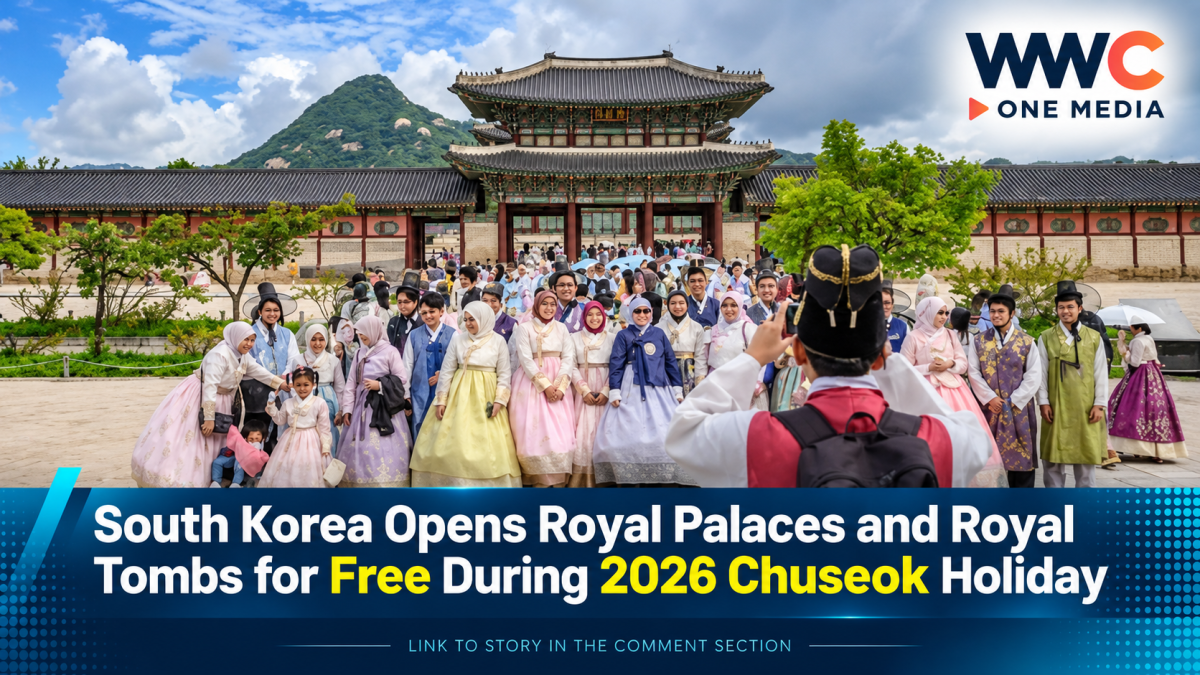
SEOUL — South Korea is giving visitors a rare chance to explore some of the country’s most important royal heritage sites for free during the 2026 Chuseok holiday, with Seoul’s four major palaces, Jongmyo Shrine and all 40 Joseon royal tombs opening their gates without admission fees.
The special access will run for four days, from Sept. 24 through Sept. 27, as the country celebrates Chuseok, one of Korea’s most important traditional holidays.
The Korea Heritage Service said the initiative is designed to encourage people to experience Korea’s royal history and traditional culture during the autumn holiday period.
Four Major Palaces Open Free
Visitors will be able to enter:
- Gyeongbokgung Palace
- Changdeokgung Palace
- Deoksugung Palace
- Changgyeonggung Palace
The special free-admission program also covers Jongmyo Shrine, the Joseon Dynasty’s royal ancestral shrine, as well as all 40 Joseon royal tombs.
One important exception applies: Changdeokgung’s Secret Garden, or Huwon, is not included in the free-admission program.
Chuseok Falls on Sept. 25
Chuseok will be observed on Friday, Sept. 25, 2026, with the main holiday period running from Sept. 24 through Sept. 26. The extended free-entry period for the royal heritage sites runs through Sunday, Sept. 27.
The holiday is traditionally associated with family gatherings, ancestral remembrance and celebrating the autumn harvest.
For travelers, it also provides an opportunity to experience Korea’s historical landmarks during one of the country’s biggest annual holidays.
A Chance to Explore Joseon-Era Korea
The free-admission program covers sites representing different aspects of Korea’s royal history.
Gyeongbokgung, the largest of Seoul’s five grand palaces, is closely associated with the Joseon royal court.
Changdeokgung is particularly known for its architecture and landscaped gardens, while Deoksugung reflects a later period of Korea’s royal history.
Changgyeonggung and Jongmyo Shrine also form important parts of Seoul’s historic landscape.
Beyond Seoul, the 40 royal tombs offer visitors a chance to explore sites connected with generations of Joseon kings, queens and other members of the royal family.
More Than Just Free Admission
The Chuseok period will feature cultural and traditional activities beyond simply opening heritage sites at no charge.
The Korea Heritage Service said the National Intangible Heritage Center will also host a traditional folk-play experience program on Sept. 19, giving visitors an opportunity to experience traditional games and intangible cultural heritage.
The wider Chuseok travel program also includes traditional performances and hands-on cultural activities around the country.
Seoul’s Palaces Are Already Drawing Autumn Crowds
The announcement comes as Seoul’s royal palaces enter a particularly active autumn season.
Gyeongbokgung’s 2026 autumn nighttime viewing program runs from Sept. 2 to Oct. 2, allowing visitors to see parts of the palace after dark. The program includes illuminated areas around Gwanghwamun, Geunjeongjeon and Gyeonghoeru, with traditional music and dance performances scheduled on selected dates.
Meanwhile, Changdeokgung’s popular Moonlight Tour is scheduled from Sept. 10 through Oct. 17, giving visitors an evening route through the palace and Secret Garden. That program is separately ticketed and is not part of the Chuseok free-admission arrangement.
A Major Opportunity for History and Culture Fans
The temporary free admission gives both residents and tourists an unusually broad opportunity to explore Korea’s royal heritage during the same holiday period.
With the four major palaces, Jongmyo Shrine and all 40 royal tombs included, the program spans landmarks connected to centuries of Joseon history.
For travelers planning a Chuseok visit, however, individual operating schedules and special-program requirements should still be checked before visiting, particularly for attractions such as Changdeokgung’s Secret Garden.
As autumn arrives in Korea, the combination of cooler weather, traditional celebrations and free access to major heritage sites is expected to make the 2026 Chuseok period a particularly busy time for cultural tourism.