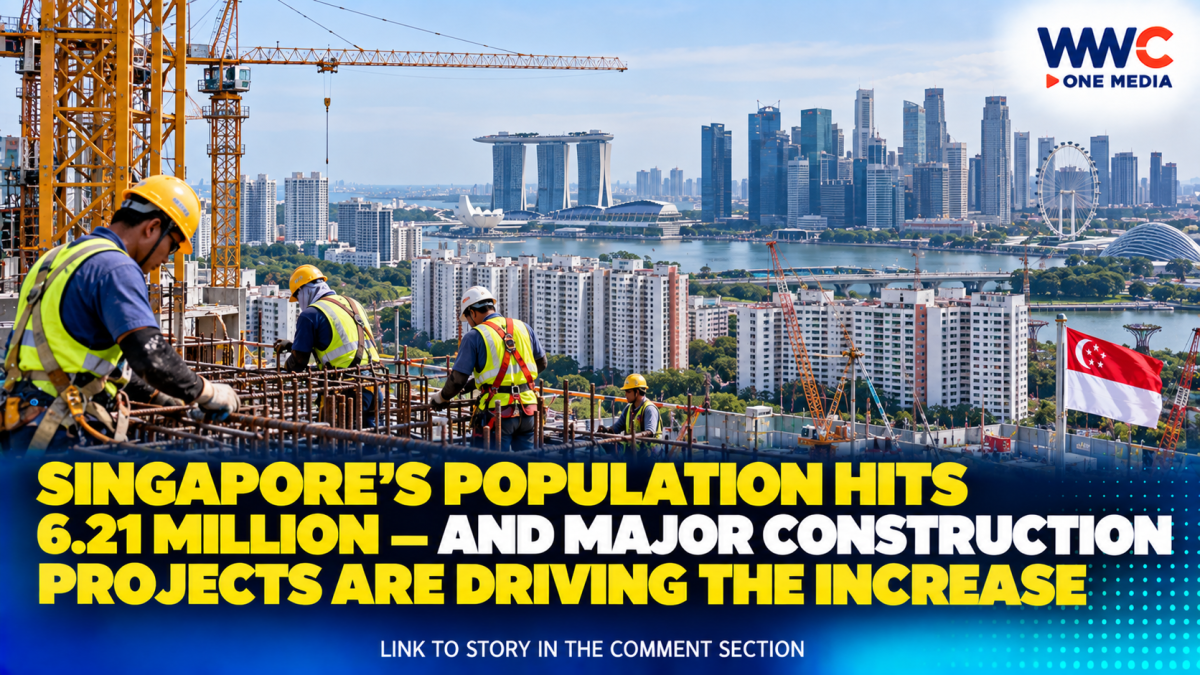
Singapore’s population has climbed to a record 6.21 million, with a growing foreign workforce helping drive the increase as the city-state accelerates major infrastructure and housing projects.
The population stood at 6.21 million as of June 2026, up 1.6% from 6.11 million in June 2025, according to the National Population and Talent Division’s Population in Brief 2026 report released on September 25.
The increase was largely linked to growth in the non-resident population, particularly workers supporting construction and other parts of Singapore’s economy.
Construction Workers Drive Much of the Growth
Singapore’s non-resident population increased 3.7% to 1.98 million in June 2026, from 1.91 million a year earlier.
The increase came primarily from work-permit holders and migrant domestic workers, according to the population report.
The government specifically linked the rise in construction manpower to major projects including Changi Airport Terminal 5 (T5) and the continued expansion of housing supply.
The latest labour-market figures reinforce that trend. Singapore’s Ministry of Manpower reported that non-resident employment grew by 9,200 in the second quarter of 2026, with the increase driven by work-permit holders in construction and manufacturing.
Singapore’s Local Population Is Growing More Slowly
While the overall population rose substantially, Singapore’s citizen population increased by only 0.7%, reaching 3.68 million in June 2026 from 3.66 million in June 2025.
The permanent-resident population remained relatively stable at approximately 550,000.
Singapore also granted 25,094 citizenships and 35,352 permanent residencies in 2025. The government report said the average annual number of citizenships and permanent residencies granted between 2021 and 2025 was higher than during the preceding five-year period.
That means the headline population increase is being shaped by several different demographic trends rather than by citizen growth alone.
T5 and Housing Projects Keep Demand High
Singapore is entering another major period of construction.
The Building and Construction Authority projected S$47 billion to S$53 billion in construction demand for 2026, with additional contracts for Changi Terminal 5, housing, the Marina Bay Sands expansion, hospitals and transport projects among the factors supporting demand.
Changi T5 is particularly significant. The terminal is scheduled for completion in the mid-2030s and is expected to increase Changi Airport’s annual passenger capacity by more than 55%.
As these projects progress, demand for construction labour is expected to remain an important factor in Singapore’s workforce and population numbers.
But Singapore Is Also Getting Older
Behind the population growth is another major demographic shift.
Singapore’s citizen population continues to age, with 21.4% of citizens now aged 65 and above, compared with 13.7% a decade earlier.
The number of citizens aged 80 and above has also reached 152,000, about 60% higher than in 2016.
So while Singapore is adding residents, its population structure is changing at the same time.
The country is simultaneously managing more construction workers and other non-residents, an ageing citizen population, and major infrastructure expansion.
A Population Story Bigger Than the 6.21 Million Figure
Singapore’s latest population numbers reveal a city-state being reshaped by both economic demand and demographic change.
More workers are arriving to support construction and other sectors, while major projects such as T5 and new housing developments continue to expand the country’s physical infrastructure.
At the same time, the ageing of the citizen population is creating a very different long-term challenge.
Singapore has reached 6.21 million people—but the numbers behind that headline tell an even bigger story about where the city-state is heading next.
WWC ONE MEDIA G,A