A 62-year-old woman is set to be charged in Singapore on Sept. 25, 2026, for allegedly taking part in six public assemblies without a police permit, despite previous convictions and a conditional warning for similar conduct.
According to the Singapore Police Force, the woman was previously convicted of participating in unpermitted public assemblies in 2001, 2005 and 2007. She was also issued a 12-month conditional warning in July 2020 under Section 16(2)(a) of the Public Order Act.
Police allege that she subsequently participated in six further unpermitted assemblies between October 2024 and February 2026.
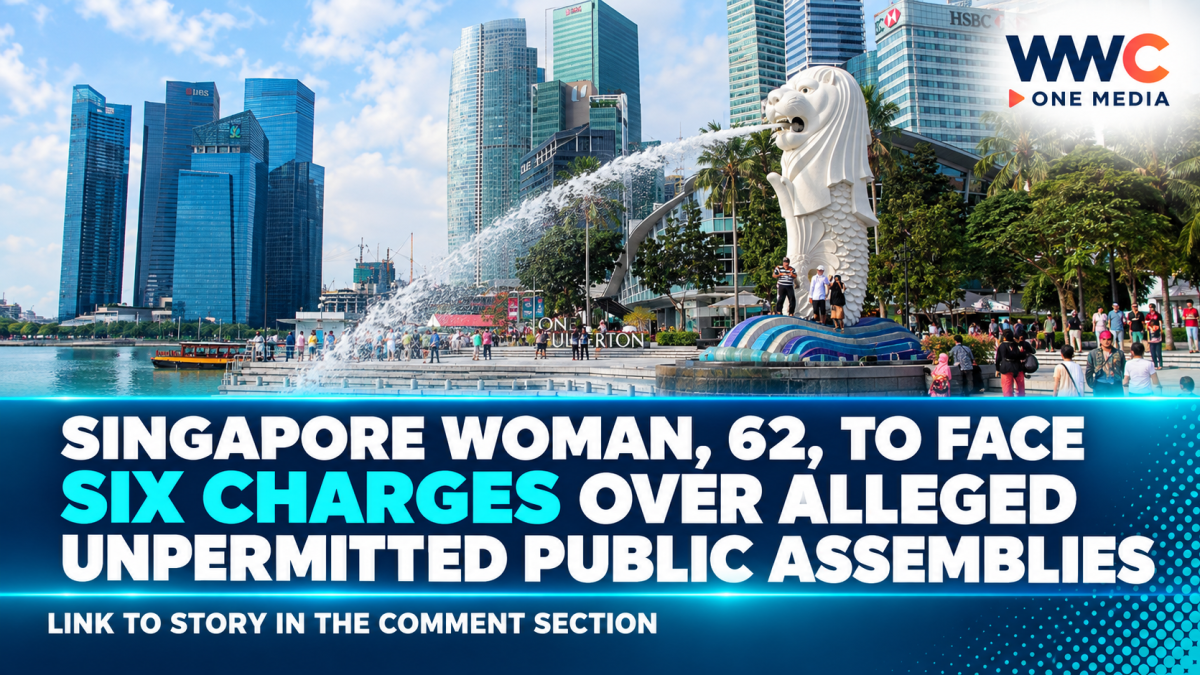
The first alleged incident took place on Oct. 12, 2024, at Merlion Park. Five more incidents were allegedly recorded on June 25, Oct. 10, Oct. 25 and Nov. 24 in 2025, followed by another on Feb. 14, 2026.
The woman will face six counts under Section 16(2)(a) of the Public Order Act, one for each alleged incident.
Singapore law requires a police permit for public assemblies where one is required under the Act. Participating in an assembly without the required permit carries a maximum fine of S$3,000 for a first offence. The legislation also contains separate provisions for repeat offenders, with a maximum fine of S$5,000 for a participant who qualifies as a repeat offender under the statutory definition.
The police said public assemblies and processions are regulated under the Public Order Act, and that enforcement action may be taken when the requirements are breached, including in cases involving repeated contraventions. The Ministry of Home Affairs likewise states that organising or participating in a public assembly without a police permit is a criminal offence.
Police also said permits will not be granted for assemblies advocating the political causes of other countries or foreign entities where authorities assess that such gatherings could stir emotions and lead to public-order incidents.
The latest case does not amount to a conviction. The woman is only being charged over the six alleged incidents, and the allegations will be dealt with through the court process.
The case highlights Singapore’s continued enforcement of its public-assembly rules, particularly when authorities allege repeated breaches. At the same time, the outcome will depend on the evidence presented and the court proceedings.
The bigger question now is what happens when the six new charges reach court—and whether the proceedings will bring further attention to Singapore’s rules governing public assemblies and repeated violations.