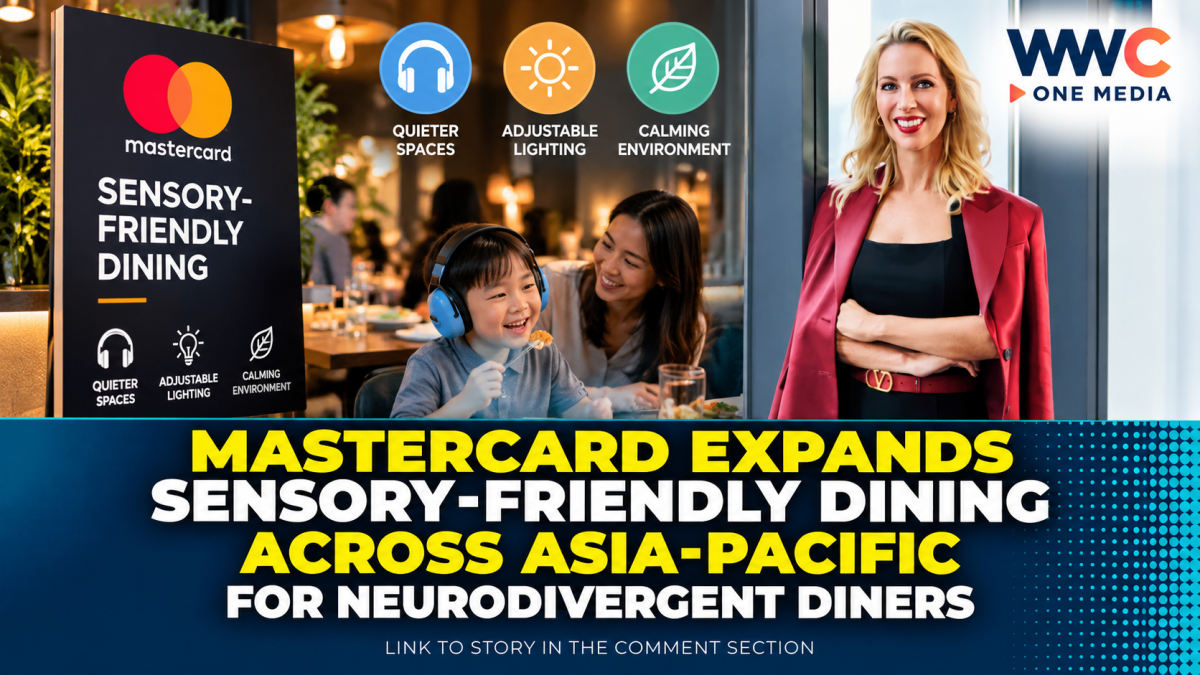
Dining out can be an enjoyable experience for many people, but for neurodivergent diners and their families, unfamiliar environments, intense sounds, strong smells and uncertainty over food can make a simple meal far more difficult.
Mastercard is expanding an initiative across Asia-Pacific designed to make restaurants and other public spaces more predictable and accessible for people with sensory sensitivities. The programme is being driven in part by Julie Nestor, Mastercard’s Asia-Pacific executive vice president for marketing and communications, whose experience raising a neurodivergent child has shaped the company’s approach.
A central part of the initiative is called “Sensory Notes,” a menu system that provides clearer information about dishes before they are ordered. Instead of relying on broad descriptions, the format can explain details such as texture, taste, intensity, preparation and presentation, giving diners a better idea of what to expect.
The programme was first piloted at the 2026 Australian Open before being introduced in Singapore. Mastercard is now working to expand it to additional hospitality partners, including a planned rollout with Conrad Singapore Orchard.
The company has also worked with Accenture Song to develop a tool that allows restaurants to generate a Sensory Notes menu from an existing online menu. Mastercard says the process can take less than 10 minutes, potentially making the system easier for restaurants to adopt without rebuilding their menus from scratch.
The initiative forms part of a broader accessibility effort that began with a focus on hidden disabilities. Mastercard has also worked with St Andrew’s Autism Centre and promoted the use of Hidden Disabilities Sunflower lanyards, which can discreetly signal that someone may need additional understanding or support.
The need for greater awareness extends beyond restaurants. Families with neurodivergent members can encounter difficulties in airports, hotels, shops and other public environments where noise, crowds, lighting and unfamiliar routines can become overwhelming.
For families, knowing what to expect can make a significant difference. Clearer menus can reduce uncertainty before food arrives, while staff awareness can help create an environment where diners do not have to repeatedly explain their needs.
The push toward sensory-friendly dining also reflects a broader change in how hospitality businesses approach accessibility. Rather than treating accessibility only as a matter of physical infrastructure, businesses are increasingly considering less visible needs that can affect whether people feel comfortable participating in everyday activities.
Mastercard’s regional expansion therefore goes beyond changing how dishes are described. It is part of a wider effort to make dining and other public experiences more predictable for neurodivergent people and their families — potentially opening more everyday spaces to people who may otherwise avoid them because of sensory challenges.