SINGAPORE — Singapore is moving to tighten enforcement against illegal ride-hailing services and non-compliant mobility devices, with proposed changes that could significantly increase penalties for drivers operating unauthorised point-to-point transport services.
Under the proposed changes to the country’s transport legislation, drivers who provide illegal point-to-point transport services without the required licence could face a fine of up to S$10,000, more than three times the current maximum fine of S$3,000. They could also face other penalties, including imprisonment.
The proposed measures come as authorities step up efforts to address unauthorised ride-hailing activities and the use of mobility devices that do not meet Singapore’s safety and regulatory requirements.
Illegal ride-hailing penalties to increase
Currently, people caught providing illegal ride-hailing or point-to-point transport services can face a fine of up to S$3,000, up to six months’ imprisonment, or both. Vehicles used in the offence may also be forfeited.
Under the proposed changes, the maximum fine would rise to S$10,000.
The tighter rules would also target the promotion of illegal transport services.
Publishing, forwarding or sharing advertisements for unauthorised point-to-point transport services would become an offence. Advertisers would also be required to comply with directions from the Land Transport Authority (LTA) to remove such advertisements.
The move reflects concerns that illegal operators can use online platforms and social media to connect drivers with passengers while operating outside Singapore’s licensing framework.
Crackdown follows repeated enforcement operations
Singapore authorities have been carrying out increasingly frequent operations against illegal ride-hailing services, including services connecting Singapore and Malaysia.
In one recent operation, LTA officers caught drivers providing illegal cross-border rides and impounded their vehicles. Previous enforcement exercises have also targeted locations such as Woodlands Checkpoint, Tuas Checkpoint, Changi Airport, Marina Bay and other areas where such services may be offered.
Authorities have previously said illegal operators may put passengers at risk because they do not operate under the same regulatory requirements as licensed point-to-point transport providers.
The enforcement campaign has also involved tip-offs from industry groups and members of the public.
Mobility devices also face tighter controls
The proposed transport measures come alongside a separate tightening of Singapore’s rules governing active mobility devices.
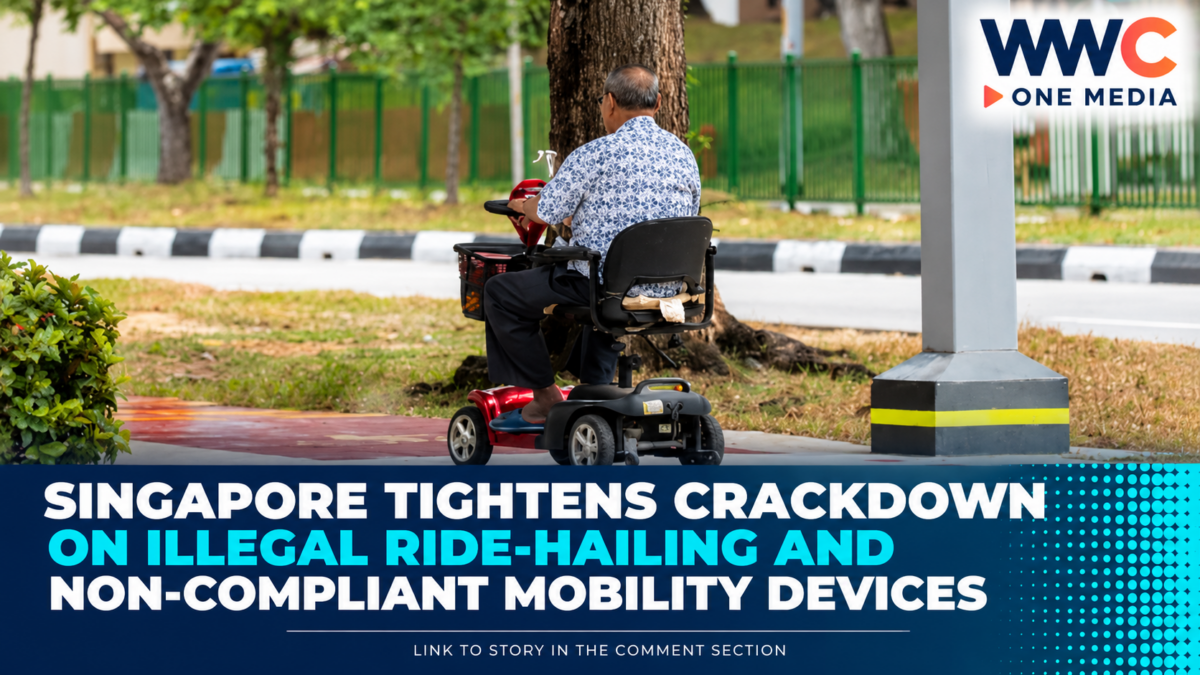
From June 1, 2026, new regulations introduced stronger requirements for mobility scooters and e-scooters.
Mobility scooter users generally need a valid Certificate of Medical Need, although exemptions apply to certain groups, including seniors aged 70 and above and people covered by specified government schemes.
New mobility scooters must also be registered before they can be advertised, displayed or sold by retailers.
The registration system is being introduced in phases.
From Jan. 1, 2029, it will become an offence to use an unregistered mobility scooter on public paths.
Keeping non-compliant e-scooters is now an offence
One of the more significant changes introduced this year concerns non-UL2272 certified e-scooters.
UL2272 is a fire-safety standard for the electrical systems of personal mobility devices.
Previously, riding a non-UL2272-certified e-scooter on public paths or roads was prohibited, but merely keeping such a device was not necessarily an offence.
From June 1, keeping a non-UL2272-certified e-scooter became an offence under the tightened regulations.
The change is partly aimed at reducing the risk of fires associated with unsafe or illegally modified devices.
LTA said PMD-related fires have fallen significantly from their peak of 102 cases in 2019, but such incidents continue to occur, with many involving non-UL2272-certified or illegally modified e-scooters.
More than 600 non-compliant devices seized
Enforcement has already intensified.
In a joint operation involving LTA and the Singapore Police Force, officers detected more than 200 offences and seized more than 100 active mobility devices and motor vehicles during a nine-day operation targeting non-compliant devices.
From the beginning of 2026 up to the time of LTA’s June announcement, authorities had detected and seized more than 600 non-compliant active mobility devices.
LTA also detected 11 offences involving retailers, including the display and sale of non-compliant devices.
The authority said it would continue taking action against retailers and individuals suspected of providing illegal modification services.
Why authorities are tightening the rules
Singapore’s active mobility regulations are intended to address several concerns at the same time: road and path safety, fire risks, misuse of mobility devices and illegal modifications.
The rules also place greater responsibility on retailers.
Retailers are prohibited from displaying or selling certain non-compliant devices and can face significant penalties for breaches. Under the Active Mobility Act, individual offenders can face fines of up to S$10,000 or imprisonment of up to 12 months, or both, for certain offences, with higher penalties for repeat offenders.
Authorities have also warned that illegally modifying devices can make them dangerous to users and other members of the public.
Illegal services and unsafe devices under closer scrutiny
The latest changes show a broader approach by Singapore authorities toward transport-related offences.
On one side, enforcement is targeting people who use vehicles to provide unauthorised commercial transport services.
On the other, authorities are tightening controls over personal mobility devices that may be unsafe, illegally modified or used in ways that breach existing rules.
The changes also increasingly extend beyond the person physically using an illegal service or device. Retailers, advertisers and people promoting prohibited services or products can also come under scrutiny.
For commuters, the message from the authorities is increasingly clear: transport services and mobility devices must operate within Singapore’s licensing and safety framework.
As the proposed penalties for illegal ride-hailing move higher and active mobility enforcement expands, drivers, passengers, retailers and device owners will face greater pressure to ensure they comply with the rules.