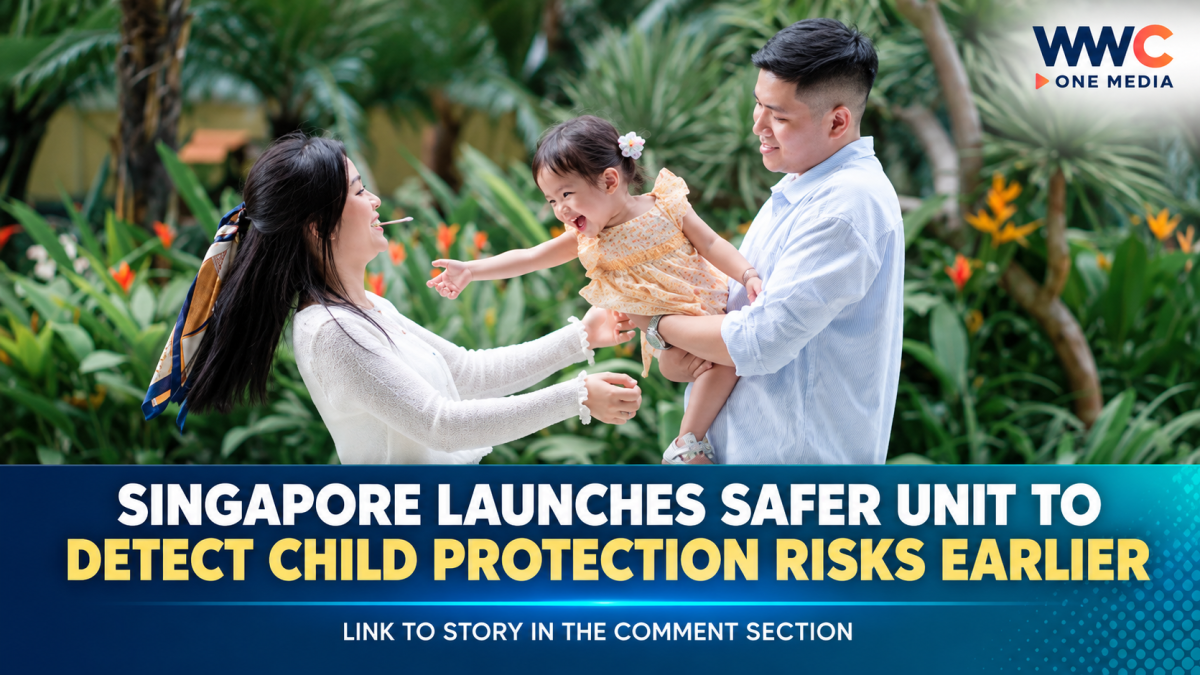
Singapore’s Ministry of Social and Family Development (MSF) has launched a new unit designed to identify potential child protection risks earlier by connecting information held across government agencies and helping social workers intervene before concerns escalate.
Called SAFER, or Sensemaking Alerts for Frontline Engagement and Response, the unit officially launched on Sept 22 after beginning operations in June. It initially focuses on families with children below seven where there are child protection concerns.
SAFER uses a data-driven risk algorithm to bring together relevant information from agencies including the Singapore Police Force, Central Narcotics Bureau and MSF-linked services. Information can include police reports, drug-related offences, sexual offences, preschool attendance or withdrawal and other recent events that may indicate increasing risks within a household.
The system does not decide whether a child has been abused. Instead, trained professionals review alerts, check the available case information and consult existing case managers before deciding whether further action is needed. MSF said safeguards govern the use and sharing of sensitive information, with human judgment remaining central to decisions.
In its first two months, SAFER surfaced about 600 cases for further review. Of these, 70 were flagged to MSF’s Protective Service and child protection case management agencies for additional support or review of existing safety plans. One case had previously been unknown to MSF and other agencies.
One example involved a young child who was suspected of being harshly physically punished. An alert helped a family service centre identify wider concerns involving spousal violence, emotional and financial stress and parenting difficulties. Social workers then developed a safety plan involving relatives, the child’s school and healthcare partners. The centre said the child was no longer being physically punished and the family remained under support.
The creation of SAFER follows a review of the 2020 death of four-year-old Megan Khung, who suffered prolonged abuse before her death. The review found multiple shortcomings and failures in communication between agencies, including instances where established procedures were not followed.
MSF said that if SAFER had existed at the time, Megan’s case could have been identified for review about five months before her death. Several developments, including injuries observed at preschool, her withdrawal from preschool and a police report made by her grandmother, could have triggered alerts for further assessment.
MSF said the unit is intended to strengthen, rather than replace, existing child protection systems. When an alert is received, the Protective Service aims to conduct risk screening and information gathering within three working days. Cases involving immediate safety concerns can trigger a prompt response from the Domestic Violence Emergency Response Team.
The ministry also acknowledged that data-based risk systems can produce false positives. Such alerts are therefore reviewed by professionals rather than treated as automatic findings of abuse.
MSF plans to continue refining SAFER, including exploring whether information from additional government agencies and other social-service areas can eventually be incorporated. The ministry said remaining measures from the broader child protection review are expected to be fully implemented in 2027.