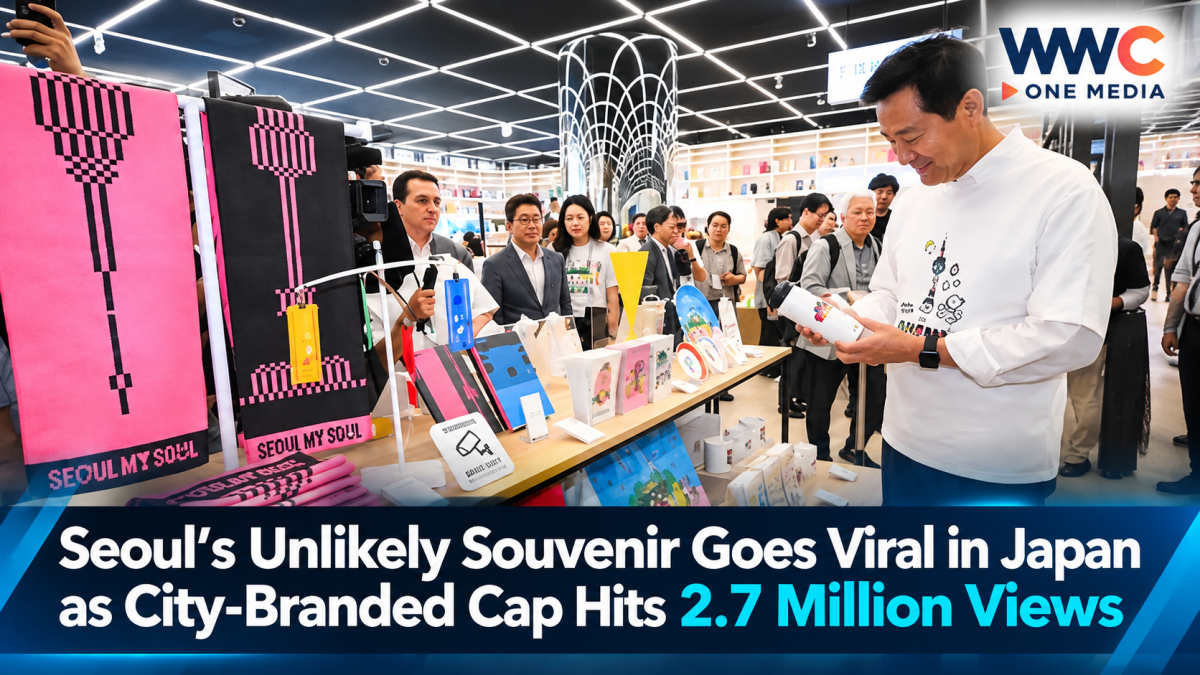
A simple Seoul souvenir has unexpectedly become a social-media sensation in Japan, turning an official city-branded cap into one of the latest Korean lifestyle items attracting international attention.
The Seoul My Soul Belt Cap, created through a collaboration between Seoul’s official SEOUL MY SOUL brand and Korean traditional knot fashion label ONGO, was released on Sept. 3. Just days later, a Japanese user posted a photo wearing the cap on X, formerly known as Twitter.
The post quickly spread, recording 2.7 million views, 32,000 likes, 7,900 reposts and 9,300 bookmarks without paid advertising or promotional spending, according to the Seoul Metropolitan Government.
A Seoul Souvenir Gets a Fashion Makeover
The cap combines a contemporary headwear design with details inspired by Korean traditional knotwork, giving an everyday fashion item a distinctly Korean visual element.
Rather than relying on a conventional souvenir design, the collaboration incorporates elements of traditional Korean craftsmanship into a product that can be worn as part of an everyday outfit.
That combination appears to have helped the item travel beyond Seoul’s souvenir shops and into Japanese social-media conversations.
Yonhap reported that the cap costs 63,000 won, while coverage from other Korean outlets confirmed that the Japanese post generated its viral reach without separate advertising.
Seoul’s Official “Goods” Are Finding an Overseas Audience
The cap’s sudden popularity coincided with Seoul releasing its first Seoul Goods Top 10 ranking, based on foreign consumers’ purchases through online and offline channels during 2026.
The city’s analysis found that consumers in their 20s and 30s made up the core customer group. Merchandise featuring Seoul landmarks, recognizable city imagery and Korean cultural elements showed particularly strong interest among international shoppers.
At the DDP Design Store, the Seoul Sticker Collection ranked first in combined sales, followed by postcards featuring Seoul’s historic gates and palaces. Other popular products included postcards and magnets connected to well-known Seoul locations.
Many of the strongest sellers were relatively inexpensive. Products priced below 10,000 won accounted for much of the top-selling merchandise.
But higher-priced products also attracted buyers.
A 99,000-won traditional Korean robe-inspired raincoat, developed with small businesses, reportedly sold out its prepared inventory. Meanwhile, a 59,000-won mother-of-pearl box continued to sell at the Seoul Gallery shop inside Seoul City Hall.
Character Merchandise Also Draws Foreign Shoppers
The popularity extends beyond fashion.
At six Seoul My Soul shops, products featuring Haechi and Soul Friends — including figures, magnets and pens — have been popular. Online sales have also been strong for character-based merchandise such as Haechi playing cards and White Tiger plush keyrings.
Seoul’s merchandise strategy is also expanding through partnerships with private companies and designers, including collaborations involving customized T-shirts, traditional Korean-inspired food sets and Seoul-themed snacks.
Why Japanese Social Media Matters
The cap’s rise illustrates how quickly social media can change the way travelers discover souvenirs.
Instead of finding products only after arriving at a destination, travelers can now encounter a particular item online and then look for it during their trip.
The pattern is consistent with other recent changes in Korean tourism. Earlier reporting found that foreign visitors increasingly seek everyday Korean experiences and products, with social-media recommendations influencing choices ranging from food and wellness products to local activities.
In the case of the Seoul cap, the attention originated organically from an individual post rather than a formal tourism campaign, according to Seoul officials.
Foreign Visitors Are Already Buying Seoul-Themed Products
The Seoul Gallery store at City Hall, which opened in February, recorded a foreign-visitor share of more than 22%, according to the city.
The data suggests that Seoul-branded merchandise is increasingly functioning as more than a traditional keepsake. For some international visitors, the products are becoming a way to carry recognizable elements of Seoul’s identity into everyday life.
The viral cap may therefore be only one example of a wider shift: Seoul’s city merchandise is moving from souvenir shelves into fashion, social media and international consumer culture.
And with one Japanese post already reaching millions of views, an ordinary Seoul souvenir has suddenly found an audience far beyond the city it represents.
WWC ONE MEDIA G,A