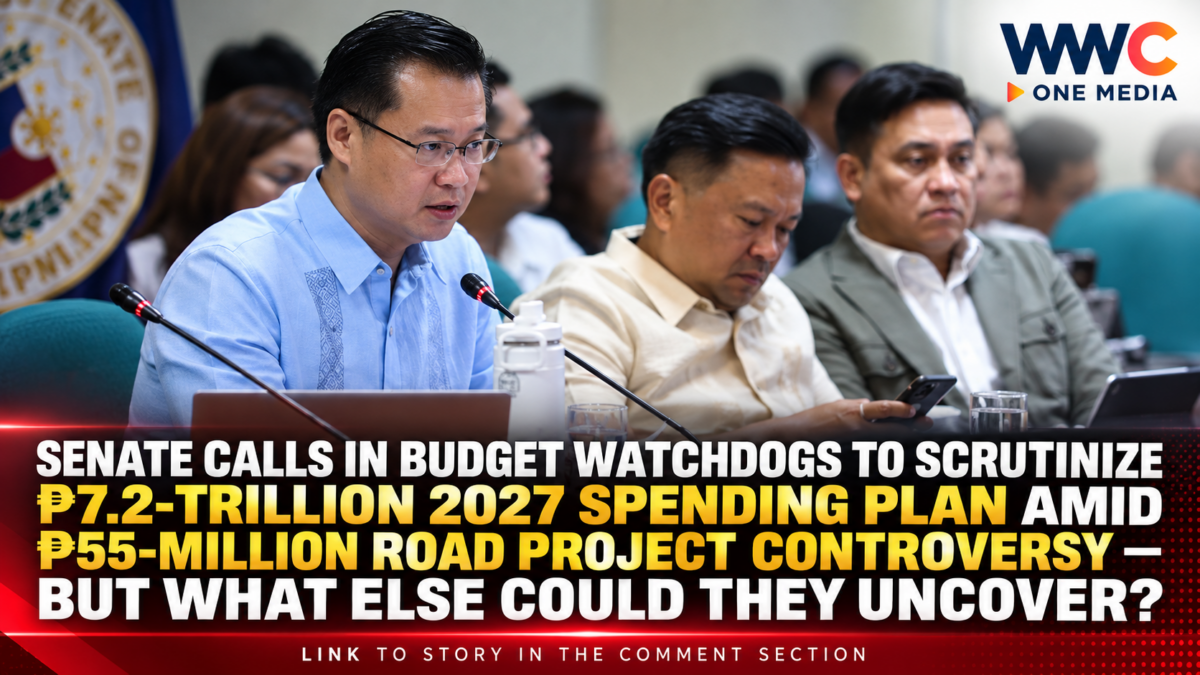
MANILA, Philippines — October 25, 2026 — The Philippine Senate is preparing to open its 2027 national budget review to civil society organizations, marking a significant test of lawmakers’ promises to strengthen transparency, expose questionable government projects, and ensure that trillions of pesos in public funds are spent responsibly.
The Senate Committee on Finance has scheduled a public hearing with civil society organizations (CSOs) for Monday, October 26, at 1 p.m., giving independent budget watchdogs an opportunity to examine government spending proposals and recommend reforms to the budget process.
The consultation comes as lawmakers scrutinize the proposed ₱7.2-trillion national budget for 2027, amid concerns over questionable allocations, poorly documented infrastructure projects, and the public’s ability to monitor how taxpayers’ money is distributed.
But the biggest question remains: Will civil society participation lead to meaningful changes, or will questionable appropriations survive another round of congressional deliberations?
Civil Society Groups Get a Voice in the 2027 Budget
The scheduled hearing will provide civil society representatives with an avenue to present independent assessments of the proposed national budget and recommend stronger safeguards against inefficient or potentially improper spending.
The discussions are expected to focus on greater public access to budget documents, transparent deliberations, clearer project descriptions, and stronger accountability for government agencies requesting public funds.
Senator Panfilo “Ping” Lacson previously welcomed recommendations from civil society groups as the Senate considers reforms intended to improve scrutiny of government expenditures.
The initiative reflects a growing push to give ordinary Filipinos and independent watchdogs greater visibility into decisions involving the national budget.
₱55-Million Road Project Raises Serious Questions
One controversy highlighting the need for tighter budget scrutiny involves an alleged ₱55-million farm-to-market road project reportedly allocated to Quezon province.
According to concerns raised in budget discussions, the project’s listed geographic coordinates allegedly pointed to waters near Brunei rather than the intended project location in Quezon.
The reported discrepancy raises questions about the accuracy of project records and the safeguards used to check proposed infrastructure spending.
However, the coordinate allegation still requires verification against authoritative project documents and relevant government agencies. It does not, by itself, establish that the project is fictitious or that public funds have been misappropriated.
For budget watchdogs, such discrepancies underscore why proposed infrastructure projects should have verifiable locations, clearly defined objectives, documented costs, and transparent implementation details before public money is committed.
Budget Watchdogs Previously Raised Concerns About Access
The Senate’s latest consultation follows earlier complaints from civil society organizations about their limited involvement in budget discussions at the House of Representatives.
In an August report by the Philippine Daily Inquirer, representatives of civil society groups expressed concern over barriers to participating in House deliberations on the proposed 2027 national budget.
Their concerns included unclear participation rules, difficulties obtaining access, and unanswered requests for information.
The planned Senate hearing could provide another opportunity for independent groups to raise questions before lawmakers finalize their proposed changes to government spending.
But public participation alone does not guarantee reform. The impact of the hearing will depend on whether lawmakers act on credible recommendations and correct allocations found to be inadequately supported.
Senate Launches Budget Transparency Portal
The Senate has also established an online Budget Transparency Portal intended to help Filipinos monitor the legislative budget process.
The official platform provides access to committee schedules, budget documents, hearing recordings, and other information connected to congressional deliberations.
It also directs users to independent civil society analysis, including material associated with the People’s Budget Coalition and BetterGovPH.
The initiative could make it easier for journalists, researchers, citizen groups, and taxpayers to examine proposed allocations and track important decisions.
Still, the availability of documents is only one measure of transparency. The public must also be able to understand how allocations are changed, why amendments are introduced, and whether spending decisions are supported by credible evidence.
Senate Faces Pressure Over House Budget Changes
The broader debate over the 2027 budget has also intensified following questions about adjustments made during House deliberations.
Earlier in October, Lacson indicated that the Senate could restore or revise billions of pesos in allocations changed by the House of Representatives.
Among the areas identified for closer examination were adjustments involving foreign-assisted projects, which can carry financial and contractual implications for the government.
The Senate’s review therefore goes beyond identifying questionable individual projects. It also involves examining whether spending changes are legally justified, financially sound, and aligned with national development priorities.
Any differences between the House and Senate versions of the budget would ultimately need to be reconciled through the bicameral conference process before the final appropriations bill could be sent to the President.
What Happens Next?
According to the Senate’s published budget timetable, the October 26 civil society hearing will be followed by further legislative deliberations, with plenary interpellations scheduled to begin in late November.
The public hearing could become an important opportunity for watchdogs to identify inconsistencies, recommend disclosure requirements, and press lawmakers to strengthen safeguards against misuse of funds.
The challenge for Congress is whether those recommendations will produce substantive changes before the 2027 national budget is enacted.
With trillions of pesos on the line, the stakes extend beyond political disagreements between the Senate and the House.
For taxpayers, the issue is straightforward: public money must support legitimate, properly documented programs and projects that deliver measurable benefits.
The Senate is promising greater scrutiny. Civil society groups are being invited to participate. But whether those efforts will finally prevent questionable budget allocations remains to be seen.