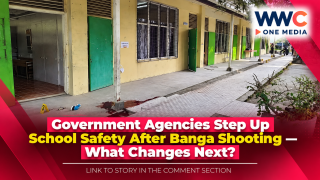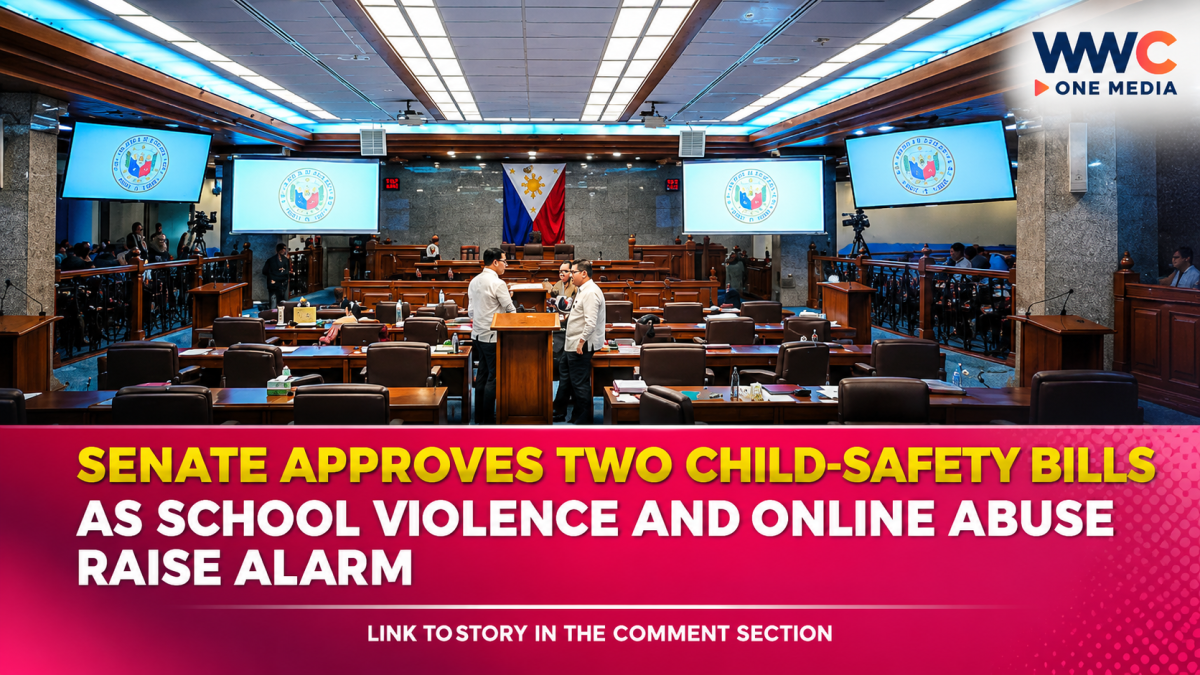
The Philippine Senate has unanimously approved two measures aimed at strengthening protection for children against violence, abuse and exploitation in schools and online, as authorities respond to a series of incidents involving young people.
The Senate approved Senate Bill No. 2426, or the proposed Comprehensive School Safety Act, and Senate Bill No. 1819, or the Safeguarding Against Grooming, Inducement and Predation, and Building Accountability for Technology-Facilitated Abuse or Exploitation (SAGIP BATA) Act, on third and final reading on September 21.
The Comprehensive School Safety Act would require the Department of Education, together with government agencies, local governments and other stakeholders, to establish a National School Safety Framework.
The framework would cover the prevention of threats, emergency response and recovery following incidents affecting students and school personnel. Schools would also be required to create localized safety plans and update them every three years.
Among the measures that schools could adopt are closed-circuit television cameras in classrooms and common areas, counseling and psychological support, additional security measures, emergency response systems and anonymous reporting channels.
The bill also contains provisions concerning the use of mobile devices during class hours.
The second measure, the SAGIP BATA Act, focuses on emerging threats faced by children in digital spaces, including online grooming, sexual exploitation and technology-facilitated abuse.
The proposal would expand investigative tools for authorities dealing with online threats and strengthen coordination with technology platforms and foreign law-enforcement agencies. It also includes provisions on age assurance and age verification and would require covered online platforms to maintain a legal representative in the Philippines who can receive lawful government orders and requests.
The measures have gained renewed attention following several school shooting incidents this year.
Senator Risa Hontiveros has argued that the latest cases demonstrate the need for stronger tools to detect online grooming and recruitment into violent activities. The PNP has also expressed support for the two measures and said it is prepared to work with DepEd, local governments and communities if the proposals become law.
The proposed online safeguards are not limited to conventional forms of child exploitation. Lawmakers are also looking at how digital platforms can be used to expose young people to violent or harmful communities, including what authorities describe as nihilistic violent extremism.
At the same time, the school-safety bill takes a broader approach by requiring schools to prepare for threats before, during and after an incident rather than relying only on security personnel or emergency response after violence occurs.
The two bills now move to the next stages of the legislative process after clearing the Senate. Their final provisions will depend on how the measures are reconciled with corresponding legislation and ultimately enacted.
For parents, schools and online platforms, the debate is increasingly shifting toward how to identify warning signs early while protecting children’s privacy and ensuring that safety measures do not unnecessarily restrict legitimate access to technology.
The bigger question is whether the proposed framework can translate into faster intervention, stronger school preparedness and more effective protection for Filipino children both inside classrooms and in the digital spaces where they increasingly spend their time.