
MANILA, Philippines — The impeachment trial of Vice President Sara Duterte could be wrapped up as early as November, according to Manila 6th District Rep. Bienvenido “Benny” Abante Jr., who argued that the House prosecution has already presented enough evidence for the Senate, sitting as an impeachment court, to convict her.
But Abante’s November projection is not an official deadline or schedule set by the Senate. It is his assessment of how quickly the proceedings could move if the impeachment court allows the trial to be shortened.
Speaking at a Saturday News Forum in Quezon City, Abante said the prosecution had already established what he considered a sufficient case, particularly under Article IV of the impeachment complaint, which centers on allegations of grave threats and inciting to sedition.
The lawmaker said the prosecution could potentially seek to conclude its presentation without exhaustively going through every allegation.
That possibility gives the November timeline added significance—but whether the trial actually ends then will ultimately depend on the Senate impeachment court, the evidence still to be presented, and the defense’s opportunity to respond.
Why November Is Suddenly Being Mentioned
The Senate impeachment court opened Duterte’s trial on July 6, 2026. The proceedings have since moved through allegations involving threats against President Ferdinand Marcos Jr., First Lady Liza Araneta Marcos and then-House Speaker Ferdinand Martin Romualdez, as well as accusations involving the handling of confidential funds.
By August 12, the trial had reached its 15th day, with Commission on Audit auditor Xylene Mae del Campo questioned extensively about the Office of the Vice President’s confidential funds.
The Senate’s own coverage of the proceedings showed that the confidential-funds issue remained a major focus on Day 15.
Philstar’s account of the same proceedings reported that senator-judges examined testimony concerning confidential funds used by the OVP and the Department of Education, while Duterte’s defense challenged aspects of the Commission on Audit findings.
This means the case has not simply become a question of whether prosecutors believe they have enough evidence. The defense continues to challenge the prosecution’s presentation, while senator-judges are actively examining witnesses and documents.
The Confidential-Funds Battle
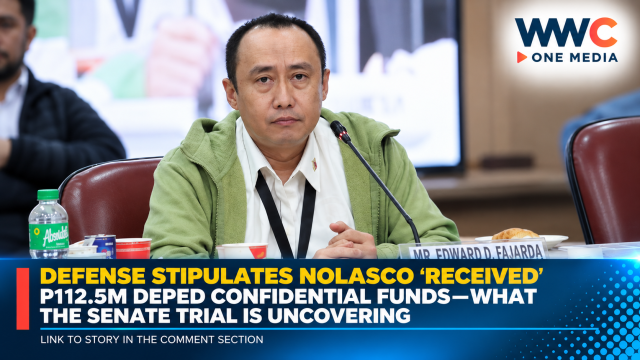
One of the central issues now before the impeachment court involves P612.5 million in confidential and intelligence funds released in 2022 and 2023 to the OVP and DepEd while Duterte was Vice President and Education secretary.
According to reporting on Abante’s remarks, P500 million went to the OVP and P112.5 million to DepEd. More than P400 million was flagged by the Commission on Audit as questionable, while about P73 million in disallowances had been ordered returned to the government with finality.
During Day 15, COA auditor Del Campo testified about the handling and disbursement of the confidential funds. The proceedings also exposed disagreements over whether certain expenses could properly be charged against confidential funds.
The defense has disputed the prosecution’s characterization of the transactions and questioned the COA findings, making the confidential-funds allegations one of the most closely watched portions of the trial.
Article IV Remains a Major Flashpoint
The other major front is Article IV, involving allegations arising from Duterte’s November 2024 remarks in which she spoke about an alleged contingency involving President Marcos, his wife and Romualdez.
The prosecution has treated the statements as evidence supporting its allegations of grave threats and inciting to sedition. The defense, however, has consistently challenged the prosecution’s evidence and interpretation of Duterte’s statements.
Reuters reported when the trial began that the allegations involving the threats were among the central issues being presented to the Senate and noted that the outcome could have major consequences for Duterte’s political future, including her potential 2028 presidential bid.
The Trial Is Moving—But the Finish Line Is Not Officially Set
The Senate has already adjusted the trial calendar as proceedings progressed. In July, the impeachment court shifted to a Monday-to-Wednesday schedule for August, with sessions running from 10 a.m. to 3 p.m.
More recently, the impeachment court has been considering changes to the daily schedule, including the possibility of moving proceedings to the afternoon. That discussion underscores that the Senate continues to manage the pace of the trial rather than simply following a fixed timetable.
Against that backdrop, Abante’s November estimate should be read as a political assessment rather than a confirmed verdict date.
The distinction is important.
The Senate—not the House prosecution panel—will determine when the evidentiary phase is complete and when the case is ready for judgment. The defense must also be given its opportunity to present its case and respond to the accusations.
What Happens If the Senate Convicts Duterte?
The stakes extend far beyond the current administration.
Duterte’s impeachment trial is being closely watched because a conviction could remove her from the vice presidency and carry consequences for her eligibility to hold public office, potentially reshaping the political landscape ahead of the 2028 presidential election. Reuters has likewise highlighted the connection between the impeachment outcome and Duterte’s political ambitions.
Duterte has denied the allegations against her, while her defense team has repeatedly argued that the prosecution has failed to establish its case with competent evidence. Earlier in the proceedings, the defense challenged the prosecution’s evidence concerning the alleged threats and questioned the reliability and interpretation of evidence presented against the Vice President.
That makes the coming weeks potentially decisive.
If the prosecution succeeds in persuading the impeachment court that it has presented sufficient evidence, the trial could move faster than originally expected. If the defense continues to challenge witnesses, documents and the legal basis of the allegations, however, the November projection could prove overly optimistic.
The Bottom Line
November is now being floated as a possible finish line—but it is not yet the Senate’s official verdict date.
Abante believes the prosecution has already presented enough evidence to justify conviction and suggested that proceedings need not drag into December. Meanwhile, the Senate impeachment court is still examining evidence, including the controversial confidential-funds transactions, while Duterte’s lawyers continue to contest the prosecution’s claims.
With the trial already well into its second month, the question is no longer simply whether the Senate will reach a verdict.
The bigger question is how much more evidence the impeachment court will demand before it is ready to make one of the most consequential political decisions in the Philippines in 2026.

Leave a Reply