
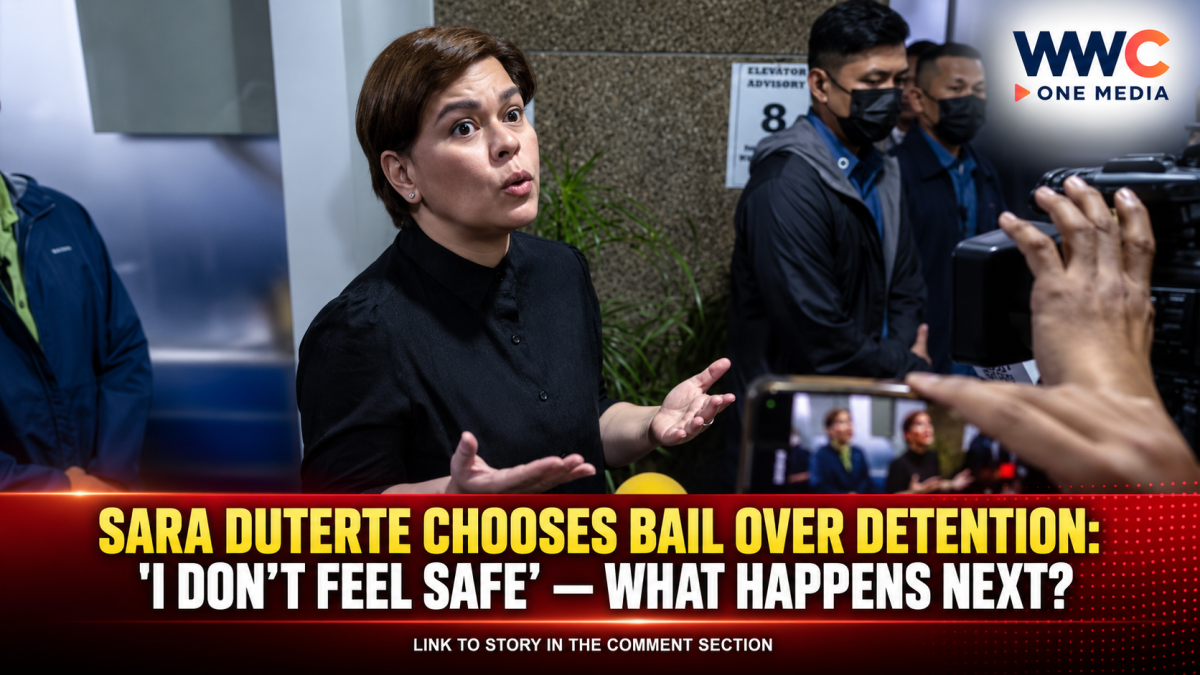
MANILA, Philippines — Vice President Sara Duterte posted P360,000 bail on Saturday, September 5, a day after a Quezon City court issued a warrant for her arrest over three counts of grave threats involving President Ferdinand Marcos Jr., First Lady Liza Araneta-Marcos, and former House Speaker Martin Romualdez.
Duterte said her lawyers advised her that posting bail would be safer than remaining in police custody.
“My lawyers spoke with me and advised me to post bail, instead of remaining in a separate confinement while in police custody,” Duterte said in a statement posted on Facebook.
She appeared at the Quezon City Regional Trial Court Branch 98 with her lawyers, Paul Lawrence Lim and Michael Poa, to complete the bail process.
The court had set bail at P120,000 for each of the three counts, bringing the total to P360,000. The Associated Press reported that court staff also took Duterte’s fingerprints as part of the process.
Duterte raises safety concerns
Duterte said her lawyers recommended civilian protection rather than confinement in a detention facility, where she claimed her security would be less guaranteed.
She also said she was concerned about the safety of her mother and children.
The Vice President previously told reporters outside the court that she did not feel safe around police personnel and asked journalists to accompany her as she left the premises. Reuters reported that Duterte accused authorities of harassment and questioned what the administration intended to do with her.
Interior Secretary Jonvic Remulla, however, said police had accorded Duterte the respect due to her position. He expressed regret that the pressure surrounding her legal and political troubles appeared to be affecting her perception of the situation.
Why was Duterte arrested?
The arrest warrant stemmed from three counts of grave threats filed against Duterte over statements she made during an online press conference in November 2024.
During that appearance, Duterte said she had spoken to an alleged assassin and instructed the person to target Marcos, his wife, and then-House Speaker Martin Romualdez if she herself were killed.
Duterte has denied that her remarks constituted threats.
The Quezon City RTC found probable cause to hold her for trial on all three counts. The charges were filed in connection with the Cybercrime Prevention Act, according to reports from Inquirer and News5.
Her lawyer, Paul Lawrence Lim, said Duterte had no intention of evading the law and would continue pursuing all legal remedies available to her.
Bail does not end the criminal case
Posting bail does not mean Duterte has been cleared of the allegations.
The bail allows her to remain out of detention while the criminal proceedings continue. The court will still determine the merits of the charges through the judicial process.
University of the Philippines College of Law Assistant Dean Paolo Emmanuel Tamase previously explained to Inquirer that the Vice President does not enjoy the same immunity from suit that the sitting President has. He also noted that the criminal case and the impeachment proceedings are separate processes.
The distinction is important because Duterte is simultaneously facing an impeachment trial before the Senate.
Criminal case adds another layer to Duterte’s political battle
The arrest warrant comes as Duterte’s political and legal battles continue to escalate.
The House of Representatives impeached her in May, while the Senate is now conducting her impeachment trial. The allegations against her include issues involving public funds and her controversial statements about Marcos, his wife and Romualdez. Duterte has rejected the accusations.
Reuters described the arrest as another escalation in the political conflict between the Marcos and Duterte camps, who were once allies during the 2022 elections before their relationship deteriorated.
The criminal case could also have significant political implications. AP reported that a conviction could affect Duterte’s ability to hold public office and potentially derail her plans to seek the presidency in 2028.
For now, Duterte remains out on bail as she faces both the criminal proceedings and the separate impeachment battle.
The next major question is how the grave-threats case will proceed in court—and whether the latest legal development will further reshape Duterte’s political future.
WWC ONE MEDIA J.M.D
Leave a Reply