
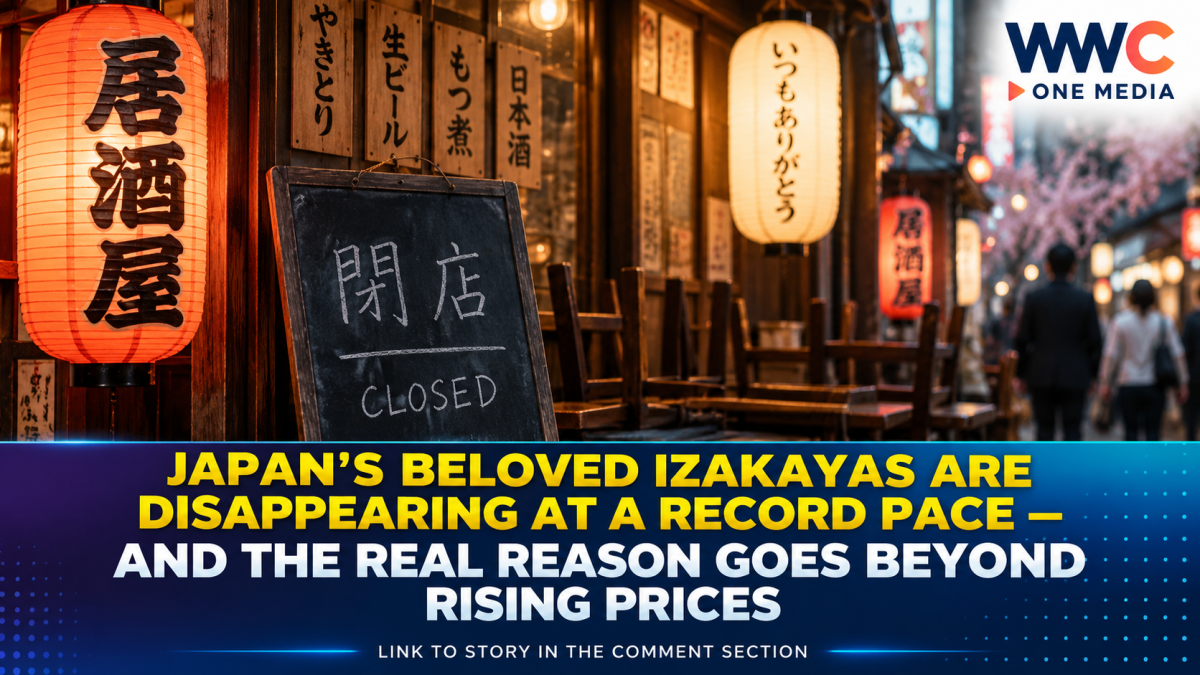
Japan’s beloved izakaya pubs are facing one of their toughest periods in decades, with a record number of businesses collapsing as higher costs, weaker domestic drinking habits and changing consumer behavior squeeze small operators.
The latest figures paint a troubling picture: 118 izakaya businesses went bankrupt during the first half of 2026, according to Tokyo Shoko Research (TSR). That was the highest first-half total since comparable records began in 1989 and the first time the figure surpassed 100 in the first six months of a year.
But the pressure has not stopped.
Fresh TSR data released on September 4 showed 16 izakaya and beer-hall businesses went bankrupt in August alone, a 300% increase from the same month a year earlier. Overall, 80 food-service businesses failed in August, up 42.8% year over year — the highest August figure in 30 years.
The numbers reveal a deeper problem
The crisis is particularly severe among smaller establishments.
Of the 118 izakaya bankruptcies recorded by TSR during the first half, 115 involved businesses with fewer than 10 employees, representing 97.4% of the total. Sales weakness was cited in 105 cases, or 88.9%, while including accumulated losses brings the proportion associated with deteriorating business performance to 94.9%.
That means this is not simply a story about restaurants suddenly becoming unpopular.
It is a story about a traditional business model being squeezed from several directions at once.
Food, wages, rent, utilities and alcoholic beverages have all become more expensive, while many customers have become increasingly reluctant to absorb higher menu prices. TSR says izakayas are caught between rising operating costs and increasingly price-conscious customers.
Customers are drinking — but differently
One of the biggest challenges is the changing culture surrounding after-work drinking.
Large corporate gatherings, second rounds and late-night drinking have failed to return to their pre-pandemic levels. At the same time, younger consumers are showing less enthusiasm for alcohol, putting additional pressure on businesses whose traditional model depends heavily on drinks and group gatherings.
TSR noted that price increases have also reduced the appeal of inexpensive all-you-can-drink deals. Consumers who once might have gone out several times a week are increasingly cutting back, going out less frequently or choosing cheaper, shorter drinking experiences.
That creates a difficult equation for independent izakaya owners:
Raise prices and risk losing customers — or hold prices down and watch margins disappear.
Another major survey confirms the restaurant industry is under pressure
The izakaya figures are part of a broader crisis across Japan’s food-service industry.
Teikoku Databank reported that 473 restaurant operators went bankrupt during the first half of 2026, the highest first-half total on record and the fourth consecutive year of increases. The combined liabilities reached approximately ¥24.59 billion.
Within that total, businesses classified as “bars and beer halls,” a category dominated by izakaya-type establishments, accounted for 125 bankruptcies — up 19% from the previous year and another record high.
The difference between TSR’s 118 izakaya figure and Teikoku Databank’s 125 “bars and beer halls” figure is important: the organizations use different classifications and methodologies, so the numbers should not be treated as contradictory. Together, however, they point in the same direction — the traditional Japanese drinking establishment is under exceptional financial pressure.
Why are tourists not saving every izakaya?
Japan’s tourism boom might appear to offer a lifeline.
Foreign visitors have been pouring into Japan, and Japanese food remains one of the country’s strongest tourism attractions. Teikoku Databank cited government tourism data showing that eating Japanese food ranked as the top purpose among foreign visitors in its referenced 2025 survey.
But the benefits of inbound tourism are not evenly distributed.
Popular restaurants in major tourist destinations can benefit enormously from international demand, while smaller neighborhood izakayas that historically depended on local workers and corporate customers may not see the same increase in foot traffic. TSR’s latest data specifically points to the contrasting fortunes of famous establishments and tourist areas versus neighborhood restaurants that have lost traditional customer demand.
That creates an increasingly visible divide within Japan’s restaurant industry:
Tourism is booming — but some of the neighborhood businesses that helped define everyday Japanese dining are still struggling.
The squeeze could get even tighter
Another concern is the potential effect of future changes to Japan’s consumption-tax system.
TSR has warned that a proposed temporary reduction in the consumption tax on food for home consumption could potentially make eating at home relatively more attractive compared with dining out. The actual effect remains uncertain, but restaurant operators are watching the policy closely.
At the same time, labor shortages remain a major structural problem for restaurants.
Teikoku Databank said the food-service industry continues to face serious staffing challenges, while rising food, energy and labor costs are squeezing operators that lack the purchasing power and scale of large chains.
Small restaurants are bearing the biggest burden
The data also highlights a growing divide between large restaurant chains and independent operators.
Large companies can use their scale to negotiate costs and adjust prices more easily. Smaller restaurants have much less room to maneuver — particularly when their customers are highly sensitive to price increases.
TSR’s August figures reinforce that vulnerability: 91.2% of food-service bankruptcies that month involved businesses with capital below ¥10 million, while 37.5% involved individual businesses.
For many neighborhood izakayas, the problem therefore isn’t simply whether customers still want to drink.
It is whether enough customers are willing to pay today’s prices often enough to cover today’s costs.
Japan’s iconic pub culture reaches a turning point
The izakaya has long been more than a place to drink. It has served as a social hub for colleagues, friends and communities — particularly after work.
But Japan’s changing workplace culture, demographic shifts, evolving attitudes toward alcohol and the lasting effects of the pandemic are altering how people socialize.
The latest bankruptcy figures suggest that this transformation is no longer just a cultural trend.
It is becoming a business survival issue.
And while Japan’s tourism boom is creating new opportunities for restaurants that can capture foreign demand, the latest numbers suggest that simply waiting for customers to return may not be enough for thousands of smaller establishments.
The question now is whether Japan’s traditional izakaya can reinvent itself — or whether the rising cost of running these neighborhood pubs will continue to erase a familiar part of Japanese everyday life.
WWC ONE MEDIA M.J.E




Leave a Reply