MOSCOW / WARSAW — November 11, 2026
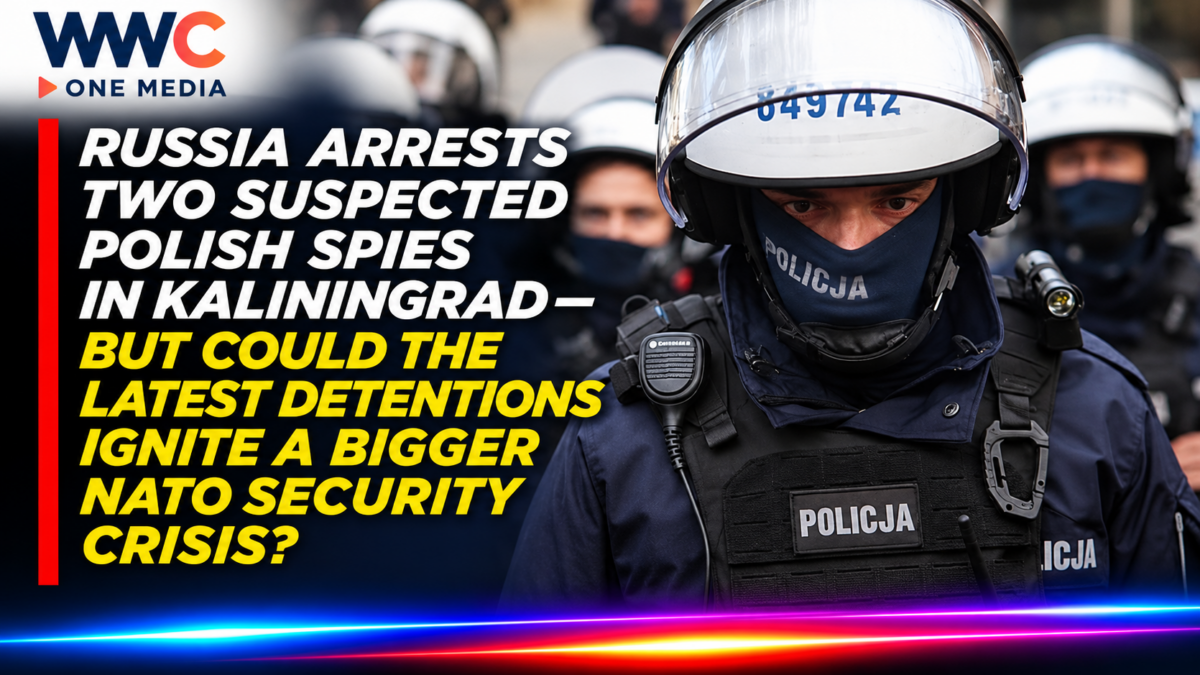
Russia’s Federal Security Service (FSB) says it has arrested two people accused of working for Polish intelligence and collecting information about military facilities in the strategically sensitive Kaliningrad region, raising fresh questions about security along NATO’s eastern flank.
The announcement, reported by Russia’s state news agency Interfax and independently carried by Reuters on Wednesday, comes amid growing espionage concerns and escalating security tensions between Moscow and Warsaw.
According to Reuters, the FSB described the two detainees as agents of Polish intelligence services. The agency alleged that they had gathered information about Russian military installations in Kaliningrad, a heavily strategic Russian territory on the Baltic Sea.
The FSB also reportedly issued warnings to seven Polish citizens and three Russian nationals over alleged contacts with Polish security services.
However, important details remain undisclosed. The identities of the two detained individuals, the specific military facilities allegedly targeted, and the evidence supporting Russia’s accusations have not been independently established in the available reporting.
The allegations should therefore be treated as claims by Russian authorities, not as proven espionage convictions.
Why Kaliningrad Is at the Center of the Latest Spy Allegations
Kaliningrad is no ordinary Russian territory.
The heavily militarized exclave sits along the Baltic Sea, separated from mainland Russia and bordered by NATO members Poland and Lithuania.
Its geographical position makes it strategically important to Moscow and particularly sensitive to NATO’s regional security calculations.
The region hosts important Russian military infrastructure and provides Moscow with a significant military presence in the Baltic region.
Because of its location, developments in Kaliningrad can quickly become part of broader disputes involving Russia, Poland, Lithuania and NATO.
The latest arrests therefore carry significance beyond the detention of two individuals.
They highlight the continuing intelligence competition between Russia and neighboring NATO countries at a time when European governments remain concerned about espionage, sabotage and covert operations.
Russia and Poland Have Recently Accused Each Other of Espionage
The announcement comes against a backdrop of increasingly serious intelligence-related investigations in both countries.
Just days before Russia announced the Kaliningrad arrests, Polish authorities disclosed a separate investigation involving six people suspected of helping Russia obtain military components.
According to reporting by Deutsche Welle and Euronews on November 5, Poland detained five Polish nationals and one Russian woman over allegations involving espionage and the illegal supply of military-use materials to Russia.
Polish authorities said four of the six suspects had been charged with espionage and placed in pretrial detention.
Investigators alleged that the group had helped transport components used in ammunition and weapons systems into Russia, including through Kaliningrad.
The suspected operation reportedly involved activity across Poland, Lithuania and Russia between June 2023 and December 2025.
Polish investigators estimated that the value of the illegally transported components exceeded 2 million Polish zloty.
These are separate investigations, and there is no verified evidence establishing that the latest Russian arrests are directly connected to Poland’s earlier case.
Nevertheless, the timing highlights the increasingly difficult security environment along the Russia-Poland border.
Poland Has Also Increased Security Along the Russian Border
The latest announcement follows a series of security concerns in Poland’s northeastern border region.
On November 2, Notes from Poland reported that Polish police had launched a special security operation along the border with Russia’s Kaliningrad exclave after receiving information about possible sabotage.
The operation involved additional police officers, including counterterrorism personnel, in areas near the Russian border.
Polish authorities said the measures were coordinated with the military, border guards and security services.
Bloomberg also reported on November 3 that Prime Minister Donald Tusk said Polish security forces had intervened after detecting suspicious activity near the Kaliningrad border.
Tusk described the incident as a possible attempted provocation.
These developments illustrate why the latest espionage allegations are likely to attract attention from security officials across Europe.
However, the available reports do not establish that the border incidents, Poland’s espionage investigation and Russia’s latest arrests form part of one coordinated operation.
Why the Arrests Matter to NATO
Poland is a member of both the European Union and NATO, making its relationship with Russia an important part of European security.
Since Russia launched its full-scale invasion of Ukraine in February 2022, Warsaw has become one of Kyiv’s major supporters and a key route for Western military and humanitarian assistance.
Poland has repeatedly raised concerns about Russian intelligence activity, sabotage and other threats to its national security.
In an earlier report, WWC ONE MEDIA examined how <a href=”https://wwconemedia.com/germany-detains-four-in-polish-starlink-sabotage-investigation-as-tusk-blames-russia-but-europes-next-hybrid-war-threat-could-be-even-bigger/“>the investigation into the suspected Starlink infrastructure sabotage in Poland</a> raised questions about the vulnerability of critical communications networks.
The broader concern is that modern security threats are not limited to conventional military confrontations.
Espionage, cyber operations, sabotage and covert recruitment can create serious problems without either side formally declaring war.
The latest Russian announcement adds another layer to those concerns.
But the arrests do not automatically mean that NATO will take military action. An espionage case inside Russian territory is not, by itself, an armed attack against a NATO member.
The Baltic Region Is Facing Growing Strategic Pressure
Kaliningrad has repeatedly featured in disputes over European military security.
Russia considers the region strategically essential, while Poland and Lithuania view developments there through the lens of their proximity to Russian military infrastructure.
Moscow has also issued warnings concerning what it describes as potential threats to the exclave.
In October, WWC ONE MEDIA reported on <a href=”https://wwconemedia.com/russia-warns-nato-it-could-use-nuclear-weapons-over-kaliningrad-but-the-bigger-escalation-is-already-unfolding-in-kyiv/“>Russia’s warnings about a possible threat to Kaliningrad and its nuclear rhetoric toward NATO</a>.
Those statements underscored how sensitive the territory has become in the wider confrontation between Russia and Western governments.
The latest espionage allegations should be understood within that broader environment, although they do not establish that a military confrontation is imminent.
What Happens Next?
For now, several important questions remain unanswered.
Russia has not publicly provided independently verifiable evidence establishing that the two detainees were working for Polish intelligence.
The available reporting also does not identify the alleged targets, explain how the information was collected or detail the legal proceedings facing the suspects.
A response from Polish authorities specifically addressing the November 11 arrests was not confirmed in the reports reviewed for this article.
Further statements from Moscow or Warsaw could clarify the circumstances surrounding the detentions.
The case could also become another point of diplomatic friction between the two neighboring countries.
For NATO, the immediate concern is not simply the number of people detained. It is what the accusations reveal about the increasingly tense intelligence and security environment surrounding the alliance’s eastern border.
The bigger question is whether these arrests will remain an isolated espionage case — or become another flashpoint in the growing confrontation between Russia and NATO.