
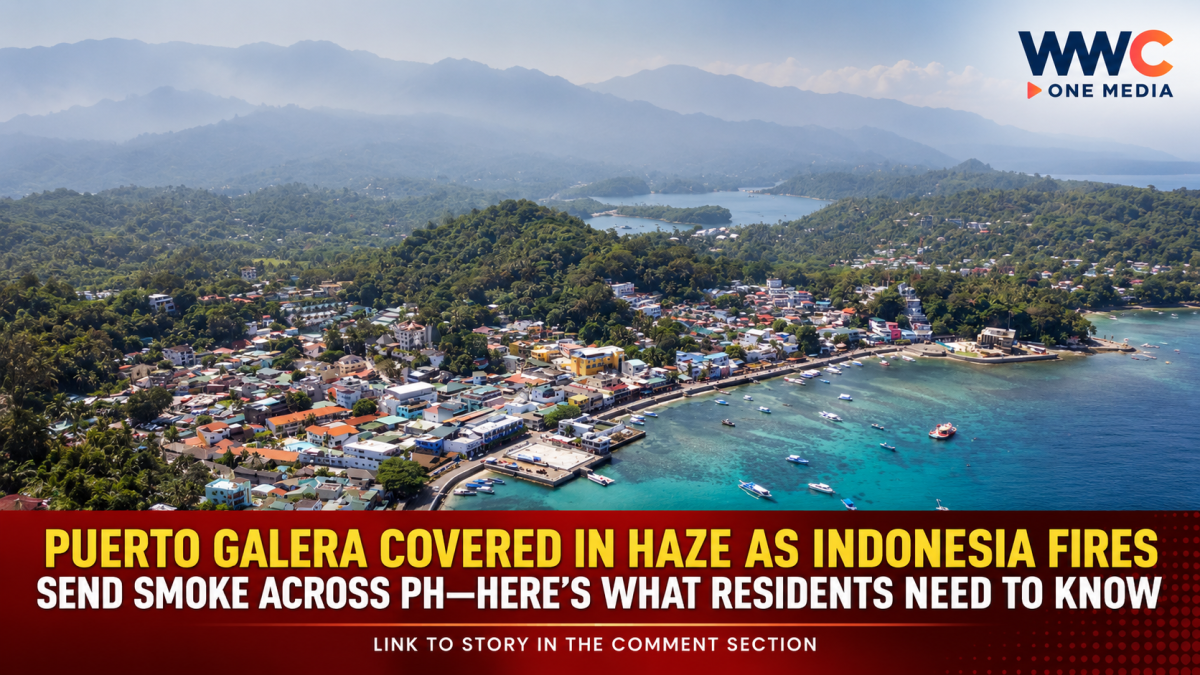
PUERTO GALERA, Oriental Mindoro — Residents and visitors are being urged to take extra precautions as haze linked to forest and peatland fires in Indonesia continues to affect parts of the Philippines, including Puerto Galera.
The Puerto Galera Municipal Disaster Risk Reduction and Management Office (MDRRMO) warned that what may appear to be ordinary mist is actually a concentration of fine particles and pollutants in the air.
The advisory comes as smoke from fires in Kalimantan, Indonesia, is being transported toward parts of the Philippines by the southwest monsoon, or habagat.
Haze can affect breathing
According to the Puerto Galera MDRRMO, exposure to the haze may cause eye irritation, coughing, sore throat, headaches, dizziness, difficulty breathing, asthma attacks, allergic reactions and fatigue.
Children, older adults, pregnant women, people with allergies, and outdoor workers are among those who may be particularly vulnerable.
The warning is consistent with an earlier advisory from the Oriental Mindoro Provincial Health Office, which said prolonged exposure to haze may irritate the eyes, nose and throat and aggravate asthma and other respiratory or cardiovascular conditions.
Health authorities have emphasized that minimizing exposure to polluted air is one of the most important precautions residents can take while haze persists.
Why is smoke from Indonesia reaching the Philippines?
The Philippine Atmospheric, Geophysical and Astronomical Services Administration (PAGASA) previously explained that smoke particles from fires in Kalimantan can be carried across the region by prevailing winds associated with the southwest monsoon.
The Department of Environment and Natural Resources-Environmental Management Bureau (DENR-EMB) likewise linked the haze affecting parts of the country to transboundary smoke and PM2.5, or fine particulate matter measuring 2.5 micrometers or smaller.
Because PM2.5 particles are extremely small, they can penetrate deep into the respiratory system, making elevated concentrations particularly concerning for people who are sensitive to air pollution.
The DENR-EMB said affected areas have included parts of MIMAROPA, CALABARZON, Central Luzon and Metro Manila, although conditions can change depending on wind direction, rainfall and the continuing activity of fires in Indonesia.
What should Puerto Galera residents do?
The MDRRMO advised residents to:
- Stay indoors as much as possible when haze is noticeable.
- Keep doors and windows closed to reduce the amount of polluted air entering homes.
- Wear a properly fitting mask when going outdoors.
- Avoid strenuous outdoor activities while haze conditions persist.
- Drink plenty of water.
- Avoid smoking and burning garbage or other materials that could add more smoke to the air.
- Motorists should keep vehicle windows closed and use the air-recirculation setting when driving through hazy areas.
The Department of Health has also advised people who need to go outdoors during periods of poor air quality to consider an N95 mask or equivalent respirator, which provides better protection against fine airborne particles than ordinary face coverings.
Don’t ignore serious symptoms
Authorities are reminding residents not to dismiss symptoms that become severe.
People experiencing serious difficulty breathing, chest pain, prolonged coughing, severe headache or dizziness, confusion, or unusual discoloration of the lips or face should seek immediate medical attention or proceed to the nearest healthcare facility.
The situation remains dependent on weather conditions and the continued movement of smoke from Indonesia. Government agencies are continuing to monitor air quality and have urged the public to rely on official advisories rather than unverified information circulating online.
For Puerto Galera residents, the message from local authorities is straightforward: limit exposure, protect vulnerable family members, monitor air-quality updates and seek medical help if serious symptoms develop.
WWC ONE MEDIA J.M.S




Leave a Reply